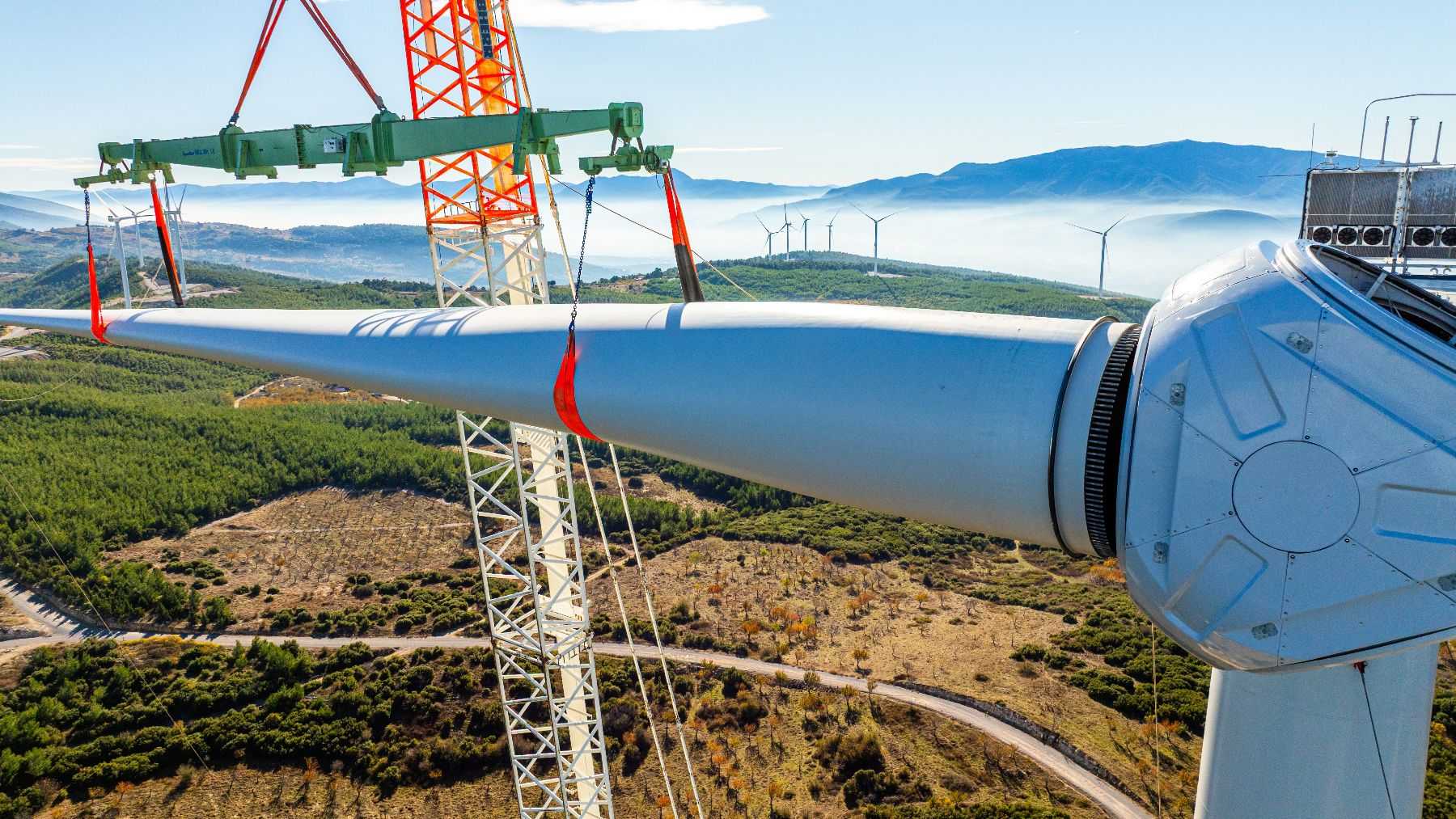
Turbine noise has been an increasing concern for a number of developments.
There have even been instances where minor tweaks to the sound emitted have caused a scheme to fall away.
As such, greater interest has developed in previously neglected aspects of the turbine.
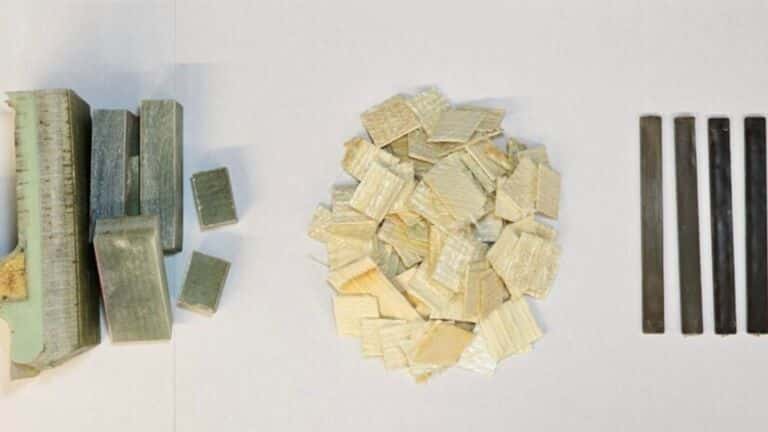
FeatherEdge is an owl-derived solution applied to the trailing edge of a wind turbine blade.
The aim was to affect the sound field radiated from the turbine. When trialed in Germany, this led to the discovery of something else.
How blade-edge airflow became a focal point
By modifying the flow exiting the blade’s trailing edge, the FeatherEdge device aims to reduce turbine noise.
The geometry is derived from biological sources linked to the (near) silent operation of owls.
However, for wind energy schemes, noise is a concern that extends much further afield.
Requirements relating to setbacks and local sensitivities will typically dictate the maximum permissible noise.
Accordingly, there is an incentive to optimize the sound field further downrange from the machine.
This prompted detailed consideration of the downstream behavior of the acoustic signal.
Attention shifted beyond the immediate source location
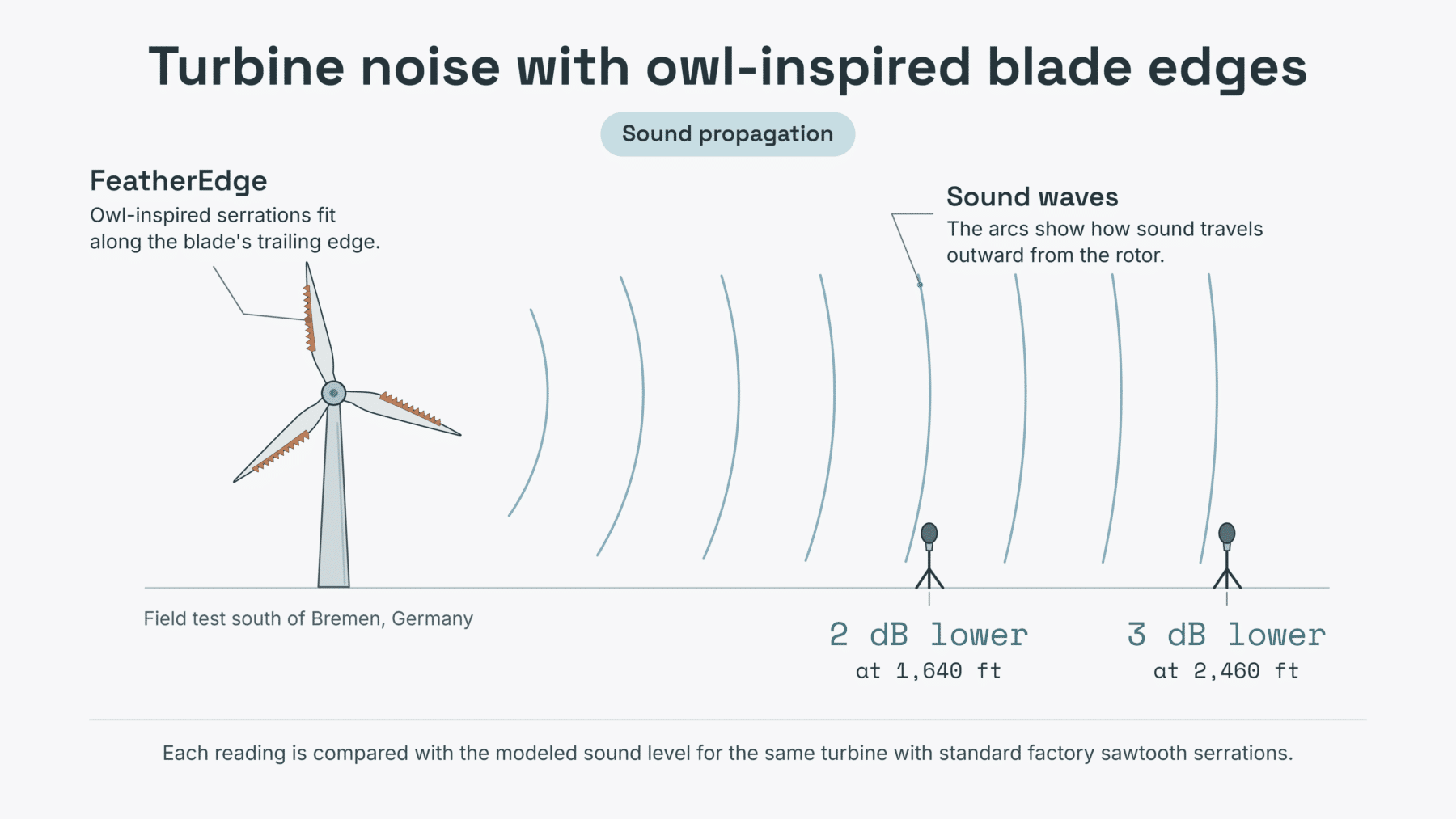
The study took place at an active, utility-scale wind farm in Germany.
A 6 MW-class turbine was selected for the trial.
All adjacent machines were switched off for the duration of the soundings.
Consequently, each data point could be attributed solely to the trial unit.
The wind farm is located on agricultural land south of the city of Bremen.
Measurement positions were established at various distances from the trial turbine.
The final question then became how the sound field varies with distance.
An unexpected pattern emerged farther from the turbine
In the immediate vicinity of the turbine, sound level decreases of 2.1 dB were noted.
For a typical site operating speed of 9 m/s (at rotor center), the corresponding value was 1.2 dB.
Interestingly, as distance increased, this continued to increase.
A 2 dB decrease was seen at 500 m, which grew to 3 dB at 750 m (2,460 ft).
The authors attribute this to the lower frequency components of the sound.
Across frequencies below 1,000 Hz, mean decreases of 5.4 dB were seen close to the test unit.
At the most distant measurement point, this value increased to 9.2 dB, while individual 1-octave bands recorded decreases greater than 6.6 dB.
Biome Renewables attributed these findings in part to an element of downstream propagation.
Comparison with theoretical models revealed notable gaps
The measured data was assessed alongside predictions from a range of propagation models.
Discrepancies were noted in several frequency bands.
Some lower frequencies were consistently underpredicted, while values around 1,000 Hz came out higher than those recorded in the field.
Similarly, differences were evident at higher frequencies.
Ground effect was identified as a candidate for further investigation.
Overall, the data presented gives good insight into the net impact but limited information about why.
ENERCON is planning further validation work.
One uncertainty has yet to be resolved
Clearly, the technology has attracted significant follow-up.
Following the trial, Biome Renewables and ENERCON signed a memorandum of understanding supporting qualification and integration of the device.
A suite of additional activities will be required.
Further trials will be undertaken using ENERCON E-160 EP5 turbines in Germany.
These will include International Electrotechnical Commission (IEC)-compliant acoustic tests covering a variety of regimes.
Engineering assessments will also cover robustness, manufacturing and suitability for fitment.
Broader deployment now depends on harder answers
A key question is whether similar results can be achieved on other turbine designs or under different site conditions.
Nonetheless, it is clear that manipulation of the trailing edge has the potential to generate a down-range acoustic benefit.
How robust this will prove to be across the sector is yet to be seen.
Read the whole thing?
Get the week's signal, not the noise
Our sharpest reporting on energy, climate and nature — free, once a week.