The third-largest of Japan’s five main islands, the island of Kyushu, is known for several things, including the country’s most active volcano, Mount Aso, its hot springs and sand baths, and Wagyu beef. The latest addition to the list is vanadium, which is the future of power. With vanadium and this ‘bunker,’ Japan can officially declare war on China and lithium.
The future of clean power is in Japan
Sumitomo Electric Industries is a Japanese company that specializes in worldwide manufacturing and supply of a variety of products that focus on optical fiber cables and electric wires. One of its most significant ventures includes the completion of an energy storage system at Kurokiyama Solar Power Plant in Minamikyushu City, Kagoshima prefecture, on the island of Kyushu.
The venture followed after the authorities of Minamikyushu City implemented the goal of having ‘Zero Carbon City’ status by 2050 in February 2022. The goal forms part of a bigger nationwide goal that was declared by the Japanese government in 2020, which entails zero emissions by mid-century.
This energy storage system is a positive step forward in Japan’s future of clean power. It is also unique, as it utilizes an entirely different battery than one would expect. But we cannot help but wonder what it will have in store for China’s future with lithium batteries. It seems Japan has declared war on China and lithium with its new energy storage system.
The energy storage system of the future
Kurokiyama Solar Power Plant oversees commercial power usage in Minamikyushu, providing power to 10 commercial and industrial (C&I) facilities through dedicated power lines. The microgrid stores solar energy and delivers the stored power to the local grid during nighttime. Beyond supplemental supply, it is also a lifesaver during power failures and cases of emergencies such as natural disasters. In those cases, the microgrid becomes a crucial backup power source, especially when supplying power to evacuation centers.
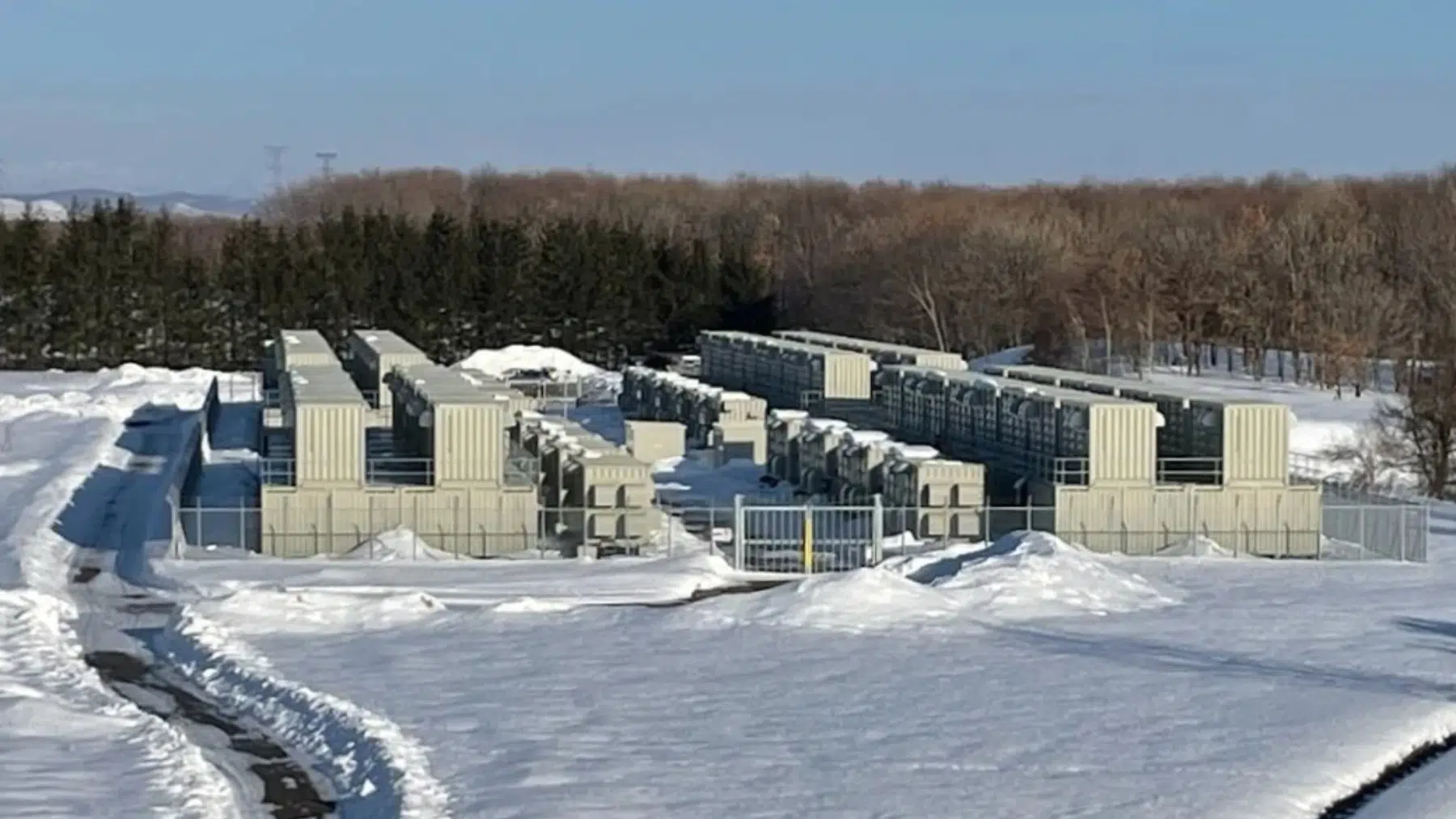
Unlike the lithium batteries so often used by China for energy storage, Sumitomo Electric opted for something different for the Kurokiyama Solar Power Plant. The plant’s energy storage system comprises a vanadium redox flow battery (VRFB) system. This 250 kW vanadium battery boasts a 4.5-hour duration flow and has a storage capacity of 1,125 kWh.
According to Sumitomo Electric, vanadium batteries are the future for these reasons:
- They are fully commercialized
- Available for small- and large-scale installations
- Lifecycle of 20 years+
- Lower levelized cost of storage
- Easy storage scalability
- High level of safety and chemically stable
- Recyclable vanadium and non-toxic materials
Deploying bigger can be better
The Hokkaido Electric Power Network (HEPCO) oversees the supply of power in Hokkaido, Japan. It is one of the power plants that has been combining renewable energy sources into the grid, including solar and wind power. Unfortunately, the grid has limited capacity. Enter Sumitomo Electric and vanadium.
In April 2022, the company introduced a bigger 51 MWh VRFB system at the Minami-Hayakita Substation, easing HEPCO’s integration of the new 162 MW wind power capacity into the Hokkaido grid. Not only does the VRFB system stabilize the grid and decrease variations in power production, but by using grid-side storage batteries, it also lowers the required number of batteries across the grid. This, in turn, decreases operational expenses and enhances the grid’s total management efficiency.
Japan’s VRFB system, or ‘bunker,’ proves that vanadium is the country’s future of clean power. The HEPCO and Kurokiyama Solar Power Plant projects highlight the country’s commitment to integrating renewable energy storage capacity into the nationwide power grid, thereby contributing to the broader renewable energy goals. Vanadium batteries have proven to have many advantages beyond their obvious clean energy storage and supply.
Disclaimer: Our coverage of events affecting companies is purely informative and descriptive. Under no circumstances does it seek to promote an opinion or create a trend, nor can it be taken as investment advice or a recommendation of any kind.
Read the whole thing?
Get the week's signal, not the noise
Our sharpest reporting on energy, climate and nature — free, once a week.