Nothing grew on that plain to begin with.
It was a high cold plateau of sand and gravel where wind moved the surface faster than any seed could hold on to it.
Then somebody roofed it in glass.
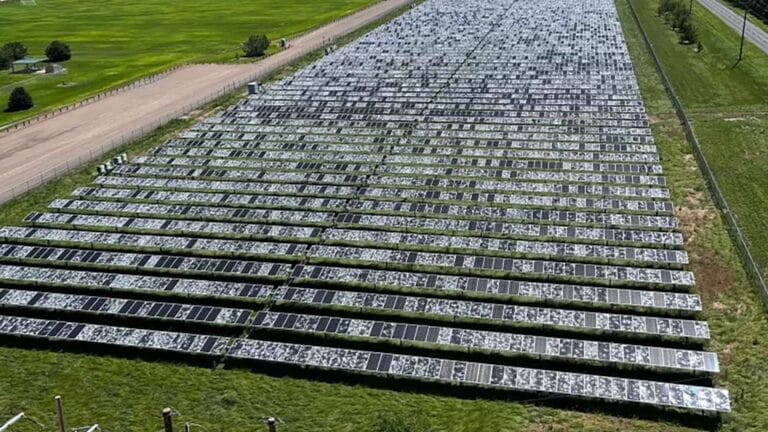
The panels were installed to make electricity, and the ground beneath them started doing something nobody had specified, which is growing grass.
The problem arrived later.
It grew tall enough to reach the lower edge of the modules and shade the glass, so the plant that made the meadow was losing output to it.
Why a solar array behaves like a windbreak
Three things change under a panel.
The first is shade, which cuts the direct heating that drives water out of bare soil during the middle of the day.
The second is wind.
Row after row of tilted panels breaks the flow across an open plain, and slower air at ground level means less scouring and far less moisture stripped off the surface.
The third is water the array brings with it.
Condensation runs off the glass at night and cleaning crews wash the modules on a schedule, so every row delivers a thin line of water to the ground along its length.
The plain this happened on
The site sits high.
It lies in Gonghe County in Qinghai Province at roughly 9,800 feet, on a plateau where the air is thin and the sun is fierce.
The starting condition was extreme.
The plain was described as 98.5 percent desertified before construction, which is close to the definition of nothing living there at all.
Altitude does some of the work.
Thin air at that height means stronger sunlight reaching the modules and colder average temperatures, which is a good combination for a technology that loses output as it warms.
The build is enormous.
The developed area covers about 162 square miles, roughly two thirds of the land area of Chicago, with dozens of separate operating companies inside one fence line.
What the ground did about it
The change took about a decade.
Construction started early in the 2010s and the ground response was documented as the array spread, which is unusually long observation for a site this remote.
Vegetation cover is the headline measurement.
It now runs above 80 percent across the site, on ground that was effectively bare within living memory.
The grass is measured by weight.
The park produces something like 118,000 tons of grass a year, which is a harvest figure rather than a landscaping one.
The panels are not the only water source.
A hydroelectric dam sits on the river beside the plain and its reservoir has been paired with the array for years, so the region already ran two kinds of generation side by side.
The soil changed underneath it.
University measurements found water content up sharply beneath the modules and soil quality improved by a full classification step, which is the slow part of any recovery.
The sheep numbers are not what they look like
One figure gets repeated everywhere.
Twenty thousand sheep is the number that travels with this story, and it is not the number of animals actually working the site.
Two different quantities got merged.
Roughly 4,000 sheep were reported grazing there, while the annual grass yield would feed something closer to 200,000 animals.
That gap is the interesting part.
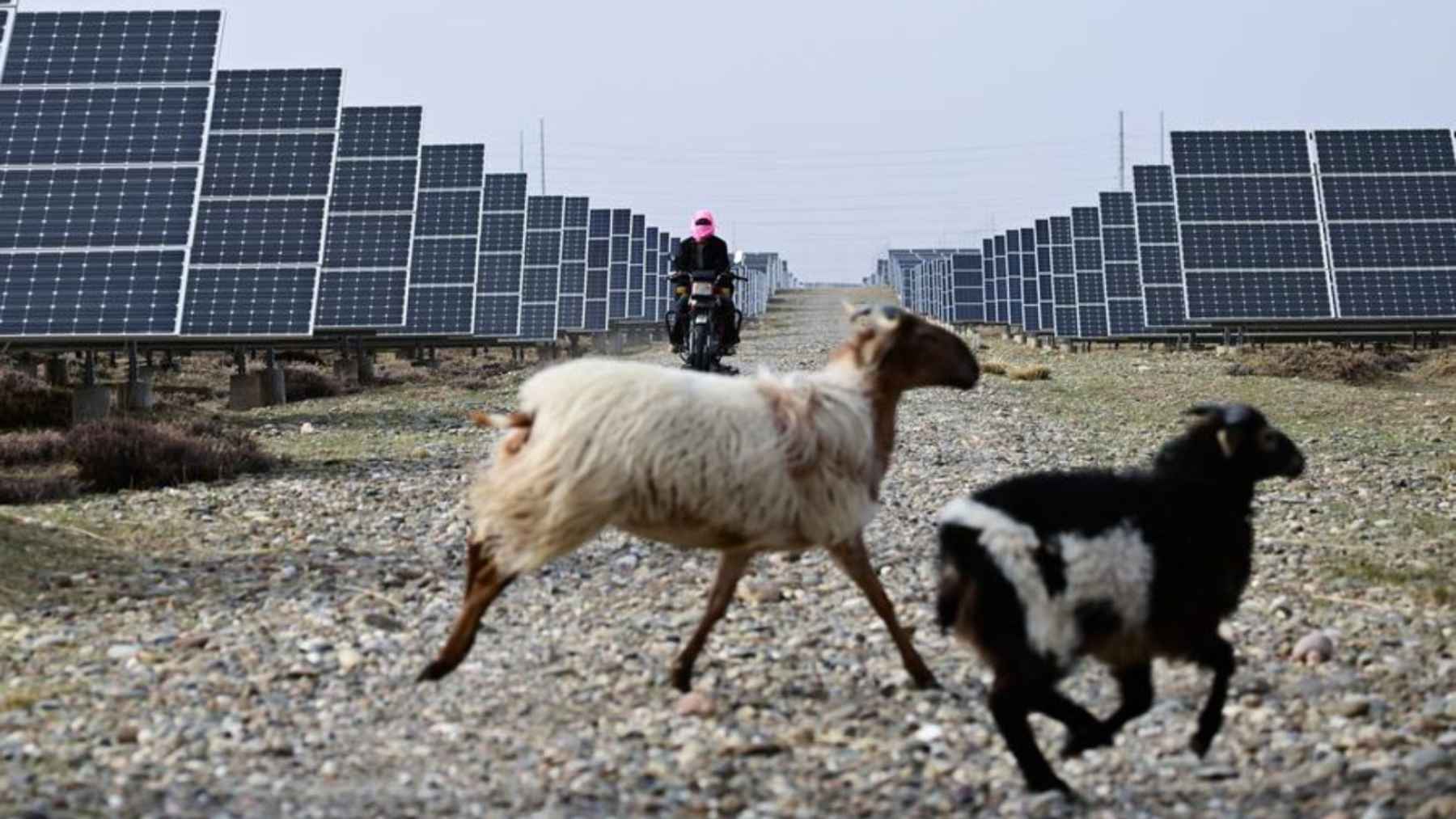
The site grows far more forage than it currently eats, which turns a maintenance problem into a grazing resource the surrounding herders can be paid to use.
The panels had to be raised for it.
Mounting height was increased so animals could walk the rows without damaging cabling, and the park now runs as two businesses on one footprint.
The problem sheep cannot solve
Nobody planted any of it.
The grass came in on its own once the conditions changed, which is why this reads as a side effect rather than as a restoration program with a budget line.
The power still has to leave.
Installed capacity at the site reached about 21 gigawatts, in a province whose own demand is a fraction of what that much generation produces.
One line carries the answer.
An ultra high voltage direct current link runs east across the country for close to a thousand miles, built specifically to move renewable power out of this region.
Even that is not enough.
A single corridor sets a hard ceiling, and everything generated above it is either stored, curtailed or simply never produced, which no amount of grazing changes.
The ecology is the easier half.
Shade and shelter fixed the soil in about a decade, while moving the electricity is a grid problem measured in construction decades, and one account puts the grass ahead of the wires.
Which leaves the odd summary.
A field of desert panels accidentally built a pasture, and the hardest thing on that plain is still a piece of wire.