
Walk past any construction site in America and you see it: freshly poured concrete, smooth and grey, holding up the frame of someone’s future home.
It is the most unremarkable thing in the world.
But something invisible is leaving those sites every time it rains, and researchers have started finding it somewhere almost nobody thought to look.
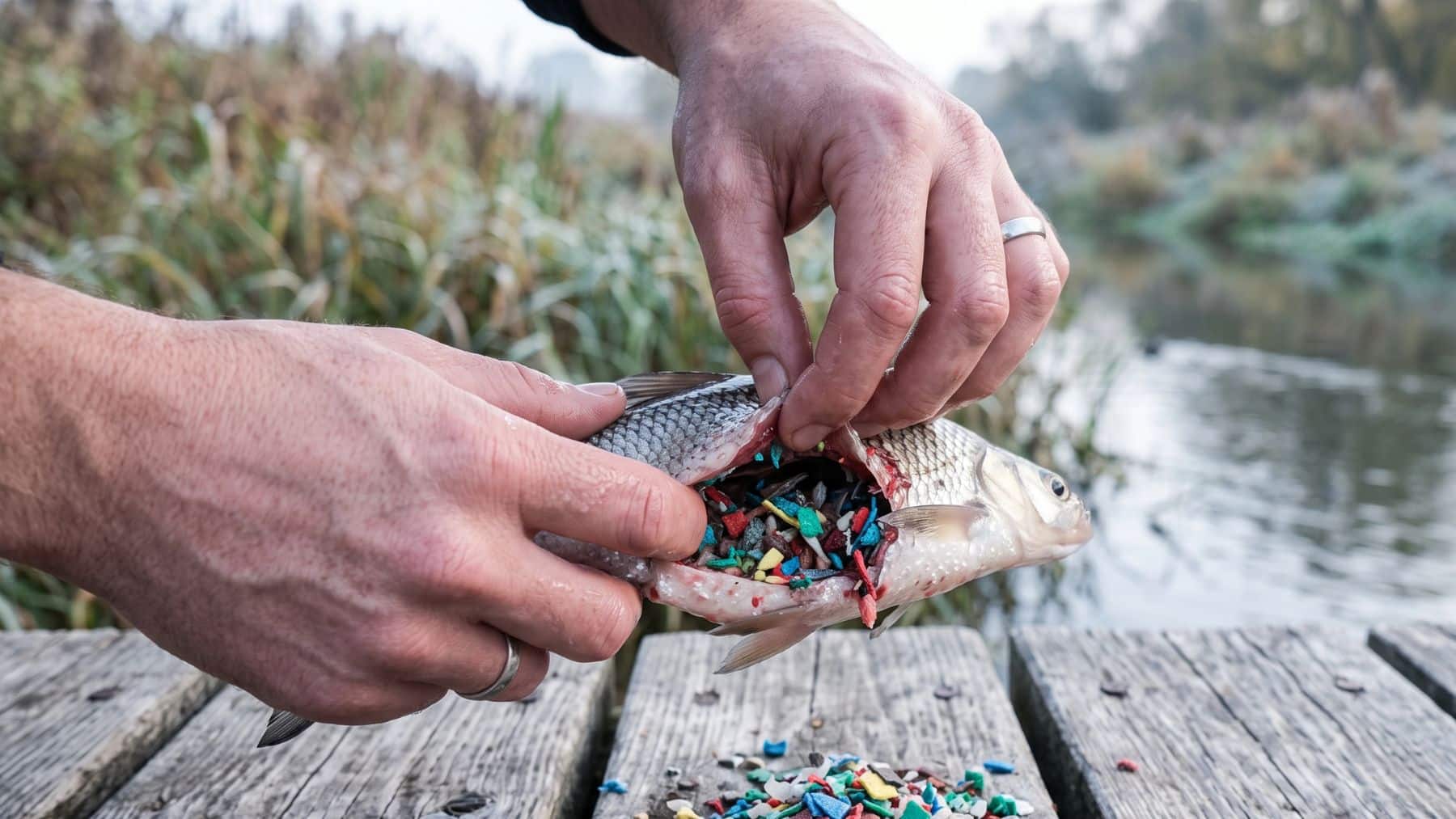
The trail leads from the curb to the storm drain, down through the creek, and straight into the belly of a river fish.
The material that built modern America
Concrete is everywhere, and the numbers behind it are almost impossible to picture.
Second only to water, concrete is the most consumed material on earth, with around three tons used per year for every single person on the planet.
That means bridges, sidewalks, parking decks, foundations, dams and drainage channels, all poured and set and left to weather.
A typical family home requires significant quantities of concrete to build, and a single mile of highway takes thousands of tons more.
It is so familiar that most people never think about what happens to it after the crews pack up and leave.
That oversight, it turns out, has consequences that stretch far beyond the job site fence.
What gets added to the mix that nobody talks about
Modern concrete is not the simple stone like material most people picture.
The drive to build longer lasting, more resilient structures has led the industry to embrace synthetic polymers such as polyethylene terephthalate, polypropylene and polyvinyl chloride.
These additives turn up in waterproof coatings, composite panels and fiber reinforcement, making concrete smoother to pour and longer lasting.
The construction industry consumes between 17 and 20 percent of all plastic globally.
Plastics appear in pipes, flooring, paint, insulation and claddings across every modern build.
Every one of those materials sits on or inside the buildings all around us, and every one of them can break down.
The breakdown does not wait for a building to be demolished, either.
When it rains, something leaves the site
Picture a construction site after a summer downpour.
Water sheets across the slab, picks up residue from cutting, mixing and grinding, and heads straight for the nearest drain.
Stormwater runoff is increasingly recognized as a critical pathway for introducing tiny plastic particles into marine and freshwater environments, threatening both ecosystems and human health.
In freshwater systems, microplastics come from urban runoff, industrial discharges and the fragmentation of larger plastic debris.
Construction sites feed directly into that flow.
These are particles smaller than a sesame seed, often invisible to the naked eye, carried by moving water until they settle somewhere downstream.
The more plastics are used in construction, the more microplastics are released, and researchers say the contribution from building sites is significant.
The thing nobody expected to find in the river
Here is where the story takes the turn that stops researchers cold.
Microplastic pollution has emerged as a pervasive threat to freshwater ecosystems worldwide, with growing evidence of contamination in fish that serve critical ecological, economic and nutritional roles.
Scientists examining fish caught downstream of built up areas have found plastic particles from construction materials lodged in organs, gills and digestive tracts.
One integrated assessment of microplastic contamination in a riverine ecosystem found remarkable concentrations downstream of an urbanized area, with the liver and kidney displaying the highest concentrations.
After entering freshwater, microplastics can be stored in tissue for a long time, causing physical damage to organisms and generating a serious threat to entire ecosystems.
The catfish. The bass. The trout a family catches on a Saturday morning.
The plastics from the construction site three counties away may already be inside it, and engineers who study porous concrete say the same material could also become part of the solution.
A surprise that is also, quietly, a way forward
The story does not end at the riverbank, and it is not all bad news.
Engineers are now investigating how concrete’s own surface chemistry might trap microplastic particles rather than releasing them.
Some cities are already redesigning their stormwater systems around this idea, using engineered barriers at drains to catch particles before they ever reach a creek.
The construction industry has started developing tighter site practices, better fencing around pour areas and sediment traps that capture the first rush of rainwater.
None of these fixes is complete yet, and scientists are careful to say the full picture is still forming.
But the fish downstream of the next big build have a stake in how fast the industry moves.
The most familiar material in America is hiding a real consequence, and the crews who pour it every morning are also the ones best placed to stop it reaching the water.


