
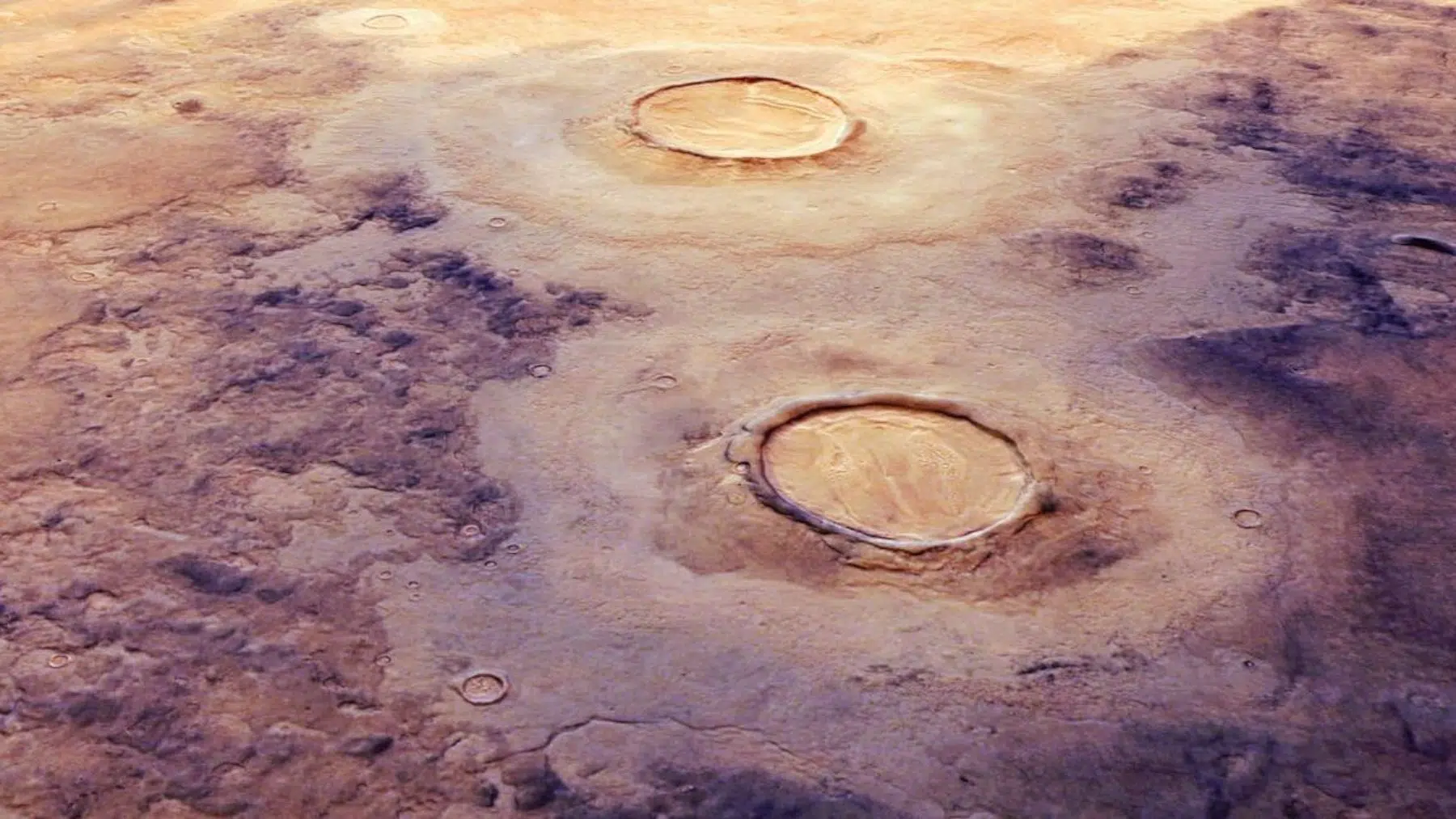
A groundbreaking revelation has come about: scientists have found what happens to be a 4 billion-year-old beach on the red planet, Mars. China’s Zhurong Rover detected this. Now, everything we know about Mars is put to the test because it looks like there is a new theory surrounding the planet’s history. The concept of Mars having water once upon a time is not new.
However, the discovery of ancient shorelines and similarities to Earth might trigger the fact that this red planet could have potentially had lakes and rivers and perhaps oceans too! The question is, what happened to the water, and is there a chance that Mars supported life just like Earth? There are answers surrounding those questions, but with this new discovery, we might have to sit and re-internalise.
A beach on planet Mars that is unexpected
Today, the planet is a chilly desert of rock and dust, but 4 billion years ago, that was not the case. What the Zhurong Rover is expressing based on its findings is that Mars had climate and weather conditions that supported life. For instance, on Earth we have the sun, rain, snow and more; all these play a role in sustaining life, oceans, rivers, and both animals and human beings. Therefore, Mars was probably like that as well.
In other words, the geological structures found are very similar to the nature of Earth. The first indication of one of those long-lost beaches on Mars discovered shallow sandy slopes that were perfectly preserved some 33 feet (10 meters) below the Martian surface. The rover’s ground-penetrating radar detected extensive sand layers that appeared to have been swept up by ocean waves and sloped gently upward towards the rocky shore.
A more earthlike nature is what Mars had, one that could sustain liquid water. The main and still debatable question is: what could have happened that was so tragic that caused all that to go away? One of the theories surrounding that question is that Mars lost its atmosphere, which caused all its life-giving nature to be stopped away over millions of years. But if a beach existed, there was supposed to be a sign of marine ecosystems too.
The golden question: How did the water on Mars end?
Mars is trending and scientists are giving more attention because they believe there is hope to live there since it has an earthlike attribute. As for where the water went, researchers believe it was trapped beneath the icy surface of the planet. Other scientists, on the other hand, believe that the waters might have escaped into the atmosphere due to atmospheric loss.
In a nutshell, these previous waters, rivers, oceans and beaches believed to have once existed are a strong case, making scientists believe that there is hope. But, as I mentioned earlier, there should have been marine ecosystems, and perhaps through their research, scientists could have identified fossils of fish or marine species too, and this is something that has not yet been discovered or recorded.
A new phase in the life search
The discovery of a 4-billion-year-old Martian beach is beyond the intriguing feeling we get when we learn about it, but it reshapes how we perceive the planet Mars, and it also gives us a better understanding of what we are dealing with. Now, scientists can further their research and NASA’s Perseverance Rover and other research tools can be utilised to explore more about the red planet.
Now that Zhurong is no longer active, according to earth.com, the one-year evidence it gave us has changed a lot more than we would have imagined and now we know that Mars was once home to beaches and oceans. Perhaps more missions, research and exploration will one day tell us how the planet transformed from a home that contained waters to a dry, icy place.
Read the whole thing?
Get the week's signal, not the noise
Our sharpest reporting on energy, climate and nature — free, once a week.


