
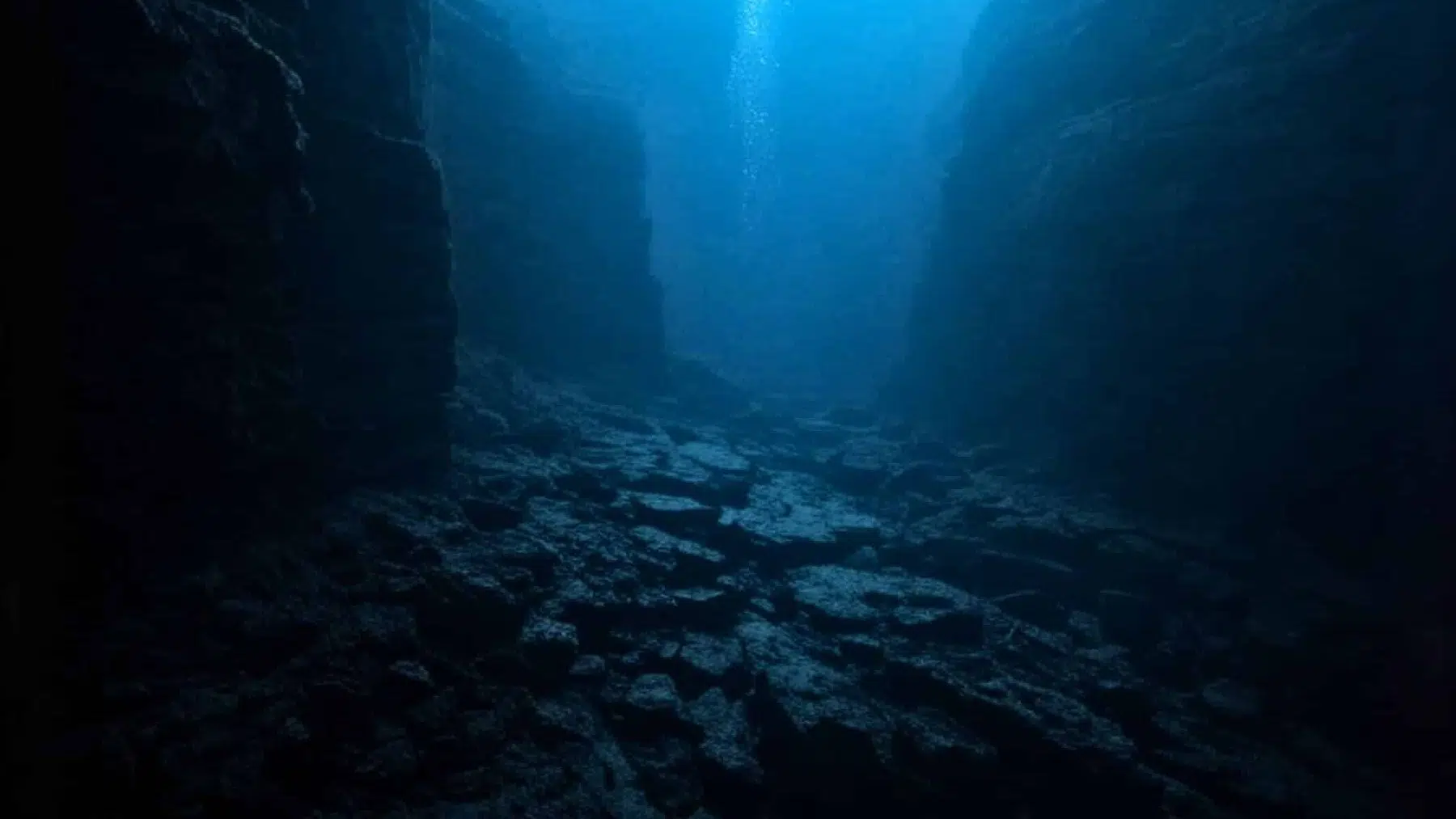
A group of scientists ventured into an adventure and performed one of the first deep-sea mining activities on the Pacific Ocean’s seabed, and this was in the year 1979. In doing so, they did not expect that their work would still be visible today. Over four decades later (44 years), the seabed marks can still be identified. Since researchers returned to the same place, they have reported that strange signals were detected at the bottom of the Pacific Ocean. Something unpleasant. This experiment was carried out in the Clarion Clipperton Zone, according to Oceanographic, and the recovery process has taken too much time.
The ocean floor was lost in time due to a mining experiment casting long shadows
Experts have expressed deep worry regarding the long-term effects of deep-mining activities. If, after 44 years, a seabed is still not fully recovered or at least recovered at about 70%, then it means this is a wake-up call for all scientists and geologists. Additionally, in a world that is demanding ocean mining due to the growth of technology and its resources found under the sea, it is concerning and places us in a compromising position.
For context’s sake, this is what transpired: German scientists disturbed the marine environment when they went down to extract resources by utilising heavy machinery in 1979. This was about 4,000 metres deep into the seabed to mine what they needed. However, this harmed the ocean environment so badly that more than four decades later, the marks are still visible.
As reported by Oceanographic, a team of scientists was led by Professor Daniel Jones at the National Oceanography Centre and co-led by the Natural History Museum, and when they visited the mine, it was detected that after all these years, the effects are still visible, and the ocean life and marine life were disturbed as well. The ocean floor has not bounced back.
What they found was a dark ocean world with no animal activity and a noticeable emptiness of life. One could refer to a haunted ocean house with “ghosts”. This is clear evidence that ocean mining is harmful, and since some battery materials or resources, such as nickel and cobalt, according to Daily Galaxy, are required, there has got to be another way to extract them without “permanently” harming the seabed.
Perhaps it will not last for long. Indications of life: The seafloor’s recolonisation
While it has been 44 years and confirmed, there have been signs of recovery. A report by Daily Galaxy: small, movable organisms are starting to repopulate the disturbed area, including xenophyophores, which resemble amoebas. Researchers have observed them coming back to the mining marks, and these marks represent among the first signs of returning marine life to the disturbed area.
There is no need to get excited because the process is slow. When something is damaged, it takes time to bounce back. Furthermore, the marine species want to ensure they are safe to repossess that part of the ocean and start a new life without machines digging again and destroying life. Scientists state that larger creatures remain absent, as they are more sensitive to disturbances compared to the small creatures.
Deep signals: What scientists are actually hearing
In this case, the strange signals detected at the bottom of the Pacific Ocean are the absence of expected ocean life. The acoustic monitoring equipment used by researchers detected silence and no oceanic movement. The common chirping and clicks were not detected.
What does this mean? Does it mean marine life in that area has become extinct? Despite all the negative results and effects of these activities, some still claim that ocean mining plays a significant role as a potential solution to supply the crucial metals required for advancing global technology, while other experts contest that opinion.
Read the whole thing?
Get the week's signal, not the noise
Our sharpest reporting on energy, climate and nature — free, once a week.


