

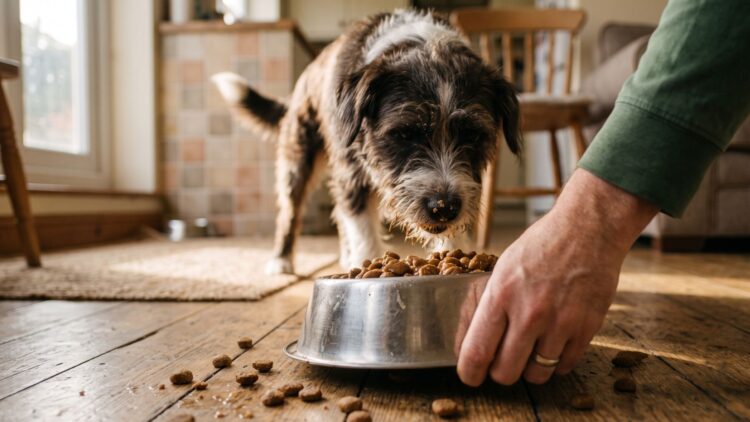
Picture a golden retriever, nose deep in a steel bowl, working through a pound of beef based kibble the way it does every single morning.
It is one of the most familiar scenes in America, playing out in 90 million households right now.
And it is tied to something most dog owners have never once considered while scooping that bowl.
A wave of new research has just put a hard number on that link, and it has left scientists wondering why no one added it up sooner.
The number hiding in your dog’s dinner bowl
Scientists recently calculated the carbon footprint of nearly 1,000 commercial dog foods.
The study ran on the British market, the closest large mirror of America’s, where the same meat heavy recipes fill the bowls.
Researchers read the ingredient labels and nutritional data to work out the emissions baked into every recipe.
The results were striking enough to make headlines.
A premium fed dog’s diet, the study found, can carry a bigger carbon footprint than its owner’s own meals.
The reason is diet, since most dogs eat meat heavy meals, and meat production, especially beef, drives heavy emissions at every stage.
Cattle release methane, a potent greenhouse gas, and are often raised on land cleared of the very trees that absorb carbon dioxide.
That single bowl on your kitchen floor pulls on a supply chain that stretches across continents.
A population bigger than you think
The scale only lands when you zoom out from that one bowl.
Nearly one billion dogs and cats now live in more than half of all households on Earth.
Their combined weight outweighs every remaining wild land mammal on the planet.
Every wild deer, elk, wolf and bear put together weighs less than the pets sharing our sofas.
As of 2023, pet ownership in the US reached 66 percent of households, up from 56 percent in 1988.
And all those carnivores need feeding every day, from the same livestock industry scientists have urged people to lean on less.
Pets now eat around a fifth of the world’s meat and fish, a figure that reframes the whole conversation.
Why this number keeps getting missed
The strange part is not that the emissions are large.
It is that almost no one sees them.
Dog and cat diets stay oddly exempt from the climate scrutiny aimed at human food, even though they lean on the same system.
People tend to overrate small visible steps like recycling and underrate the emissions tied to bigger choices, like frequent flying or a meat heavy pet.
Someone reaches for a reusable bag and feels they have done their part.
Meanwhile the 40 pound bag of beef kibble in the garage goes completely unexamined.
It is not a judgment, it is a blind spot, and researchers say noticing it is the first step toward changing anything at all.
The deep ocean twist almost no one expected
Here the story takes a turn nobody sees coming.
Many owners, aware of beef’s reputation, switch their dogs to fish based food, sure they are choosing something lighter on the planet.
The ocean angle turns out to be far more complicated.
A study in Singapore found that pet food labelled only as “ocean fish” often contained shark.
Of 144 samples tested, about a third held shark DNA, most often the blue shark, along with the silky shark and the whitetip reef shark, both listed as vulnerable on the IUCN Red List.
Deep ocean predators, some pushed toward extinction, were riding the supply chain right into a bag on a pet store shelf.
Companies likely buy bulk fish meal from tangled supply chains without knowing what species are inside.
The label says “ocean fish”, and the contents can be something else entirely.
What owners can actually do
The good news is that even partial changes carry real weight.
Researchers are careful not to frame this as a reason to stop loving your dog.
Shifting toward chicken based or certified sustainable formulas lowers the footprint sharply, since faster growing proteins need far less fuel to produce.
Not every pet weighs the same on the planet, since a rabbit carries a tiny footprint and a cat usually less than a large dog.
Insect based and plant supplemented formulas are entering the US market fast, and early analyses suggest a footprint dramatically smaller than beef.
Choosing a certified brand, the way some owners already watch the invasive species pressure behind everyday products, is one more lever most people never knew they held.
The dog in that morning scene is not the villain here.
The invisible supply chain behind every bowl is the part worth a closer look, and the fix asks you to give up nothing, only to choose the next bag with a little more awareness.