This country is home to some interesting events, such as the annual Nobel Peace Prize giving. When it comes to the Winter Olympics, this country does not hold back, boasting one of the highest totals of gold, silver, and bronze medals won. Now, it also homes a floating solar farm with a full-scale prototype producing energy at sea in harsh offshore conditions. This marks the country’s step forward into a future of clean, sustainable power, leaving the traditional approaches to renewable power production behind.
The traditional approach for renewable energy production is not as advantageous
According to Civil Engineering Explained, certain regions experience environmental and geographic challenges when it comes to traditional solar energy. Large-scale solar farms require significant land, which can cause friction with existing uses such as agriculture. Land clearing and altered drainage also result in habitat destruction and inevitably disrupt local ecosystems.
Traditional wind farms in this country face challenges such as visual and noise pollution, wildlife impact, and intermittency, as per a YouTube discussion by Undecided with Matt Ferrel. This is why experts in the country have turned to the sea for power, but not to offshore wind, as some would think. It floats and is powerful, and its advantages are something else.
This country is looking to the sea for power
They say it takes a village. The partnership between Moss Maritime and Saipem has led to the development of an offshore floating solar prototype in Norway. Saipem, an energy engineering company, has collaborated with Norwegian manufacturer Kystteknikk and other subcontractors in bringing the prototype to life, as part of a joint effort that also involves Equinor, examining how wind, waves, and currents impact offshore installations.
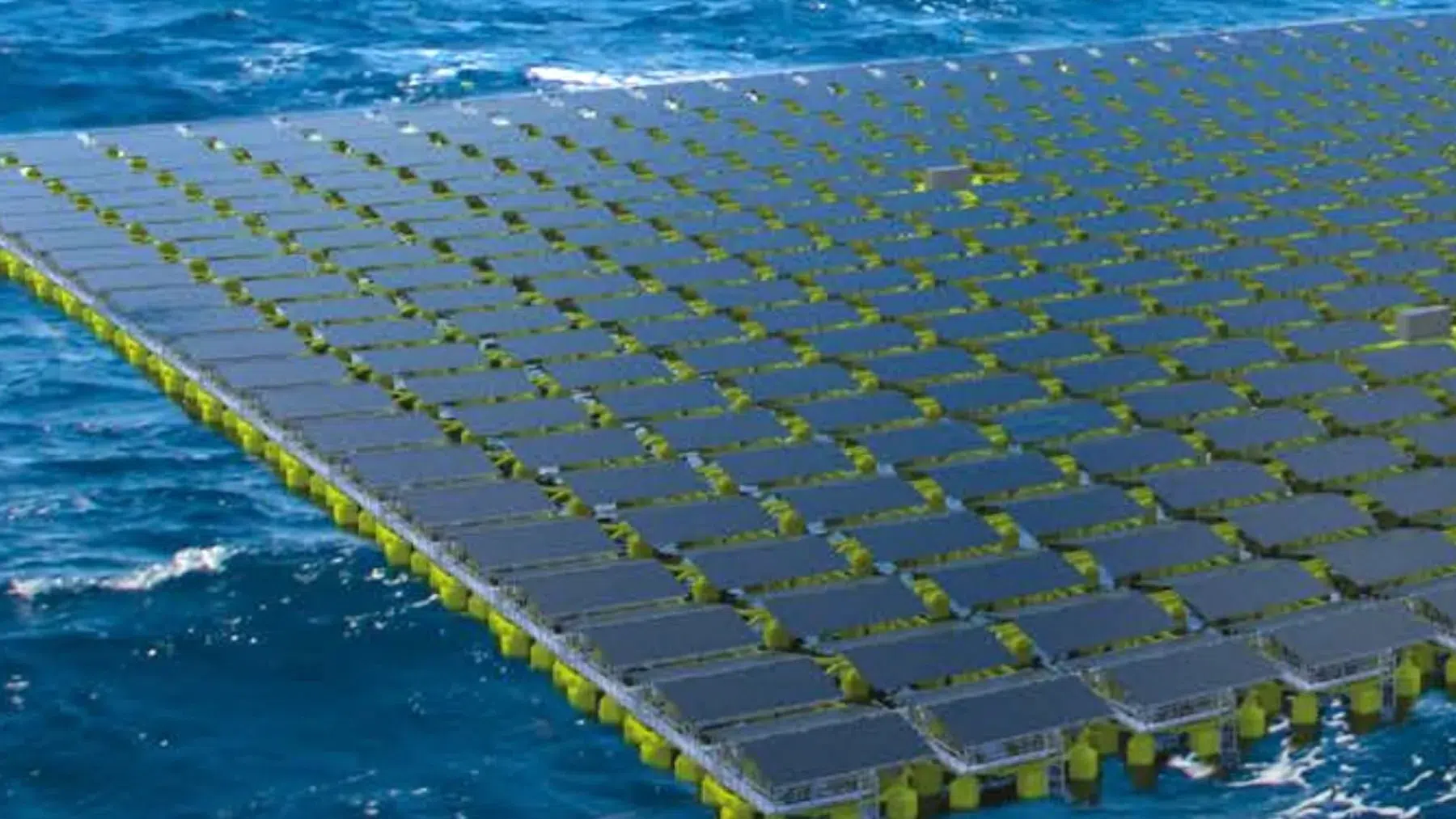
Offshore wind turbines are beneficial, but some believe offshore wind can cause a strange behaviour in whales, which is one of the reasons Moss Maritime is looking to the sea for a different power. Moss Maritime is a Norwegian subsidiary of Saipem, and the country’s high seas will now feature Moss Maritime’s innovative XolarSurf, a floating, sun-capturing platform.
According to Interesting Engineering, it will supply the aquaculture industry with much-needed energy and the capability to produce energy far from shore. Its modular and scalable design will make the use of solar technologies much easier, as well as their adoption. Each floater unit has a capacity of 35 to 45 kWp of installed power.
Offshore solar for the win in Norway
“Compared to floating wind turbines, floating solar power technology is simpler, engineering costs are lower, and structures are easier to build. Floating solar power is also well-suited for mass production, which will have a positive impact on price and deployment.” – Moss Maritime Engineering Vice President Alexander Minge Thøgersen
Thanks to the collaborative effort with Saipem and Equinor, Moss Maritime was able to develop and place its sun-catching platforms in open water, taking up no land. XolarSurf’s modular design also increases its flexibility, as it enables relocation, transport, and reuse. According to TCD, the 968,000-square-foot floating solar array can operate in harsh conditions, such as waves up to 26 feet, thanks to its flexible frame that absorbs wave contact while the unit continues to generate sustainable solar energy.
As Moss Maritime’s pilot installation is being tested near the island of Frøya in Norway, it could open new doors as a scalable solution for rough waters and result in the rise of more floating solar farms in similar environments. This renewable energy technology will revolutionize the solar industry, as the need for land is eliminated, decreasing habitat loss and conflict with other sectors. Floating solar energy can be a pioneer in the world’s energy transition, promising an eco-friendly and economical future.
Disclaimer: Our coverage of events affecting companies is purely informative and descriptive. Under no circumstances does it seek to promote an opinion or create a trend, nor can it be taken as investment advice or a recommendation of any kind.
Read the whole thing?
Get the week's signal, not the noise
Our sharpest reporting on energy, climate and nature — free, once a week.