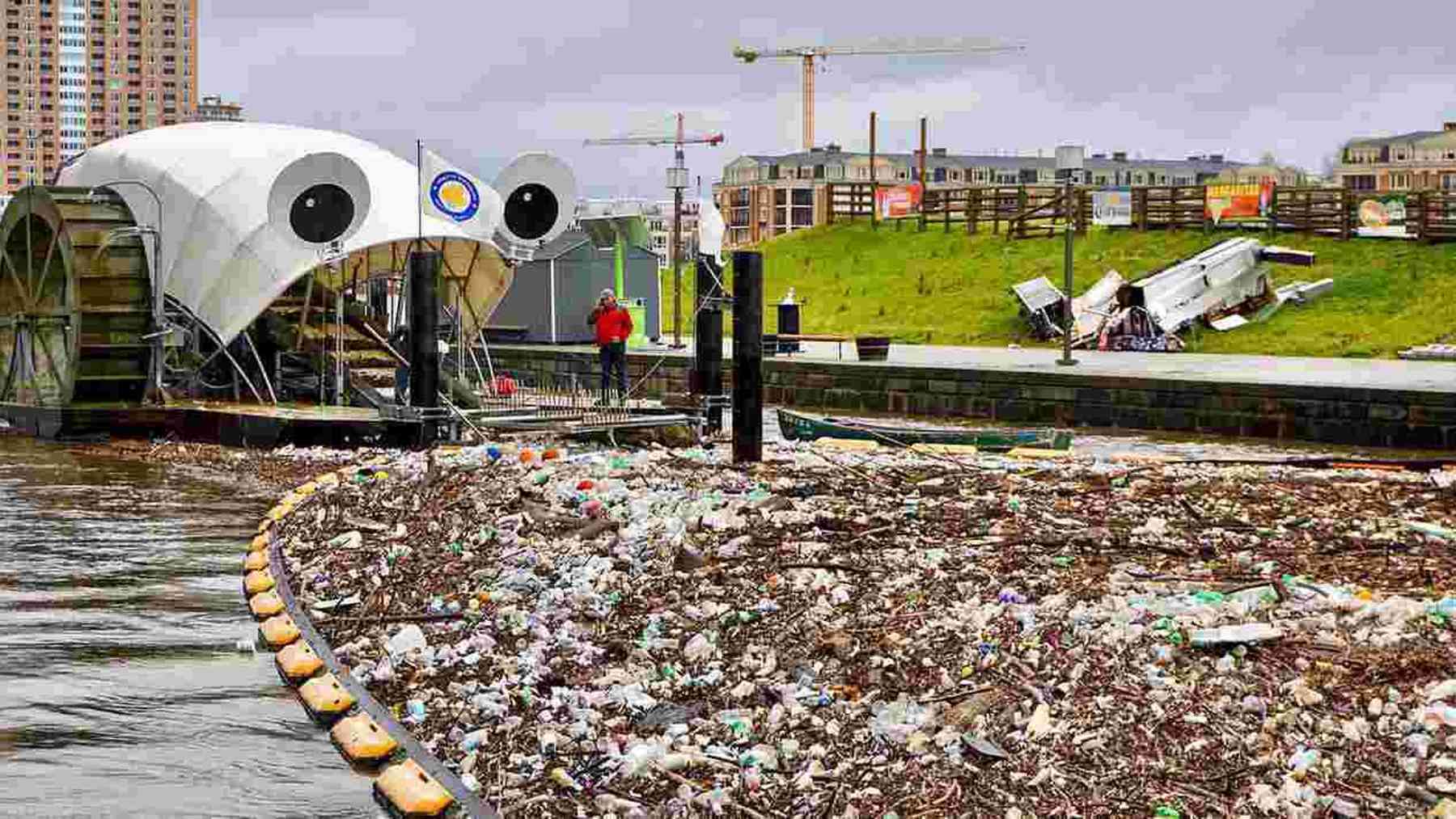
The rain stops over Baltimore, and the googly eyes keep turning.
Below the conveyor belt, the water is thick with bottles and wrappers.
Then something rounder rides the rake teeth up toward the dumpster.
Soccer balls, tennis balls, basketballs, counted in the same tally as the foam cups.
Nobody designed a harbor machine to double as a lost and found for neighborhood pickup games.
But that is roughly what has happened at the mouth of the Jones Falls.
How does a water wheel end up full of sports equipment?
The machine known as Mr. Trash Wheel sits where the Jones Falls empties into Baltimore’s Inner Harbor, and it was never built to chase anything. Moored in place, it is powered by a water wheel and solar cells, and rakes trash from the harbor onto an onboard conveyor belt which routes it into a dumpster on the vessel. The current and the sun do the work.
So when a storm sweeps a city’s streets, the route is short and unfiltered. As the project’s director has explained it, trash washed into storm drains is not filtered and goes directly into local streams and the harbor. A ball that rolls off a schoolyard and into a gutter is on the same path as a bottle.
That geography is the whole trick. The Jones Falls watershed drains 58 square miles of land outside Baltimore and is a significant source of trash entering the harbor, and garbage collected by the wheel could come from anywhere in it. Every storm drain in that sprawl of rowhouses, parking lots and playgrounds feeds the same narrow mouth.
What does the harbor actually look like after a storm?
Picture the hood lifting as the rake clears, water sheeting off a tangle of bottles and wrappers. The haul scales with the weather: one major storm can fill as many as 20 dumpsters, and the wheel’s daily capacity has been estimated at 25 tons.
Mixed into that ordinary flood of containers is a stranger inventory. Crews have pulled out a guitar, a keg, and a live ball python that later found a home through adoption. The sports balls are not a record breaking oddity but a steady pattern. The running count of balls stood at 10,719 as of this year.
How big did the record haul actually get?
The scale only becomes clear once the dumpsters are weighed. In one especially wet month the wheel did more than have a busy stretch, and the result was later certified as a world record for the job it does.
It cleared 63.3 US tons of trash from the mouth of the river between April 1 and April 30, and was recognized years later in the Guinness World Records book for the most floating debris removed by a trash interceptor in one month, as reported at the time. That is more than 126,000 pounds out of one short stretch of river in thirty days.
The record has not been approached since. Collection totals since then have tracked rainfall, and the director credited increases in street sweeping and the distribution of residential trash cans for keeping the numbers down. The wider fleet still adds up: the multi wheel family has collected over 2,000 tons from the Inner Harbor, a scale of removal that echoes efforts elsewhere, including a floating barge that pulls storm trash from a Baltimore stream in a single day.
Where does all of that catch end up going?
Once a dumpster is full, it rides a short barge trip to shore. Debris collected by the wheels has been trucked to a waste to energy incinerator in South Baltimore, where it is burned to generate electricity instead of drifting on into the Chesapeake Bay.
Meanwhile the balance of what gets caught has been shifting. The easiest items to spot have started disappearing from the haul.
Maryland’s statewide foam ban took effect a few years ago and Baltimore’s citywide plastic bag ban followed a year later, and since then foam litter caught in the wheel has fallen by 90 percent and plastic bag litter by 72 percent, according to one account of trash trap data. That makes the machine a steady sensor for a city’s habits, not unlike how sensors strapped to wild animals have revealed pollution patterns invisible to fixed monitoring stations.
When a law changes what people carry to the park, the dumpster reports back a few years later. No ban governs sports balls, and they keep arriving.
What is left to figure out about the harbor’s trash problem?
None of this means the harbor is clean, and the people who run the wheel do not claim it is. A single machine at one river mouth cannot catch what enters elsewhere across 58 square miles of drainage, and litter still slips past on days the wheel is down for repairs.
The director of the Waterfront Partnership’s Healthy Harbor Initiative framed the record that way himself, calling it “a bittersweet milestone. It’s further proof that the trash wheel technology is extremely effective, but it also highlights how much still needs to be done to reduce the amount of litter in the Harbor.”
Even so, the running tally gives Baltimore something rare, a real measurement of its own runoff, bobbing in plain sight behind a painted set of eyes. Anyone walking the Inner Harbor promenade can watch the next ball ride up the belt. For now the machine keeps turning, waiting for the next storm to decide what shows up.
Read the whole thing?
Get the week's signal, not the noise
Our sharpest reporting on energy, climate and nature — free, once a week.