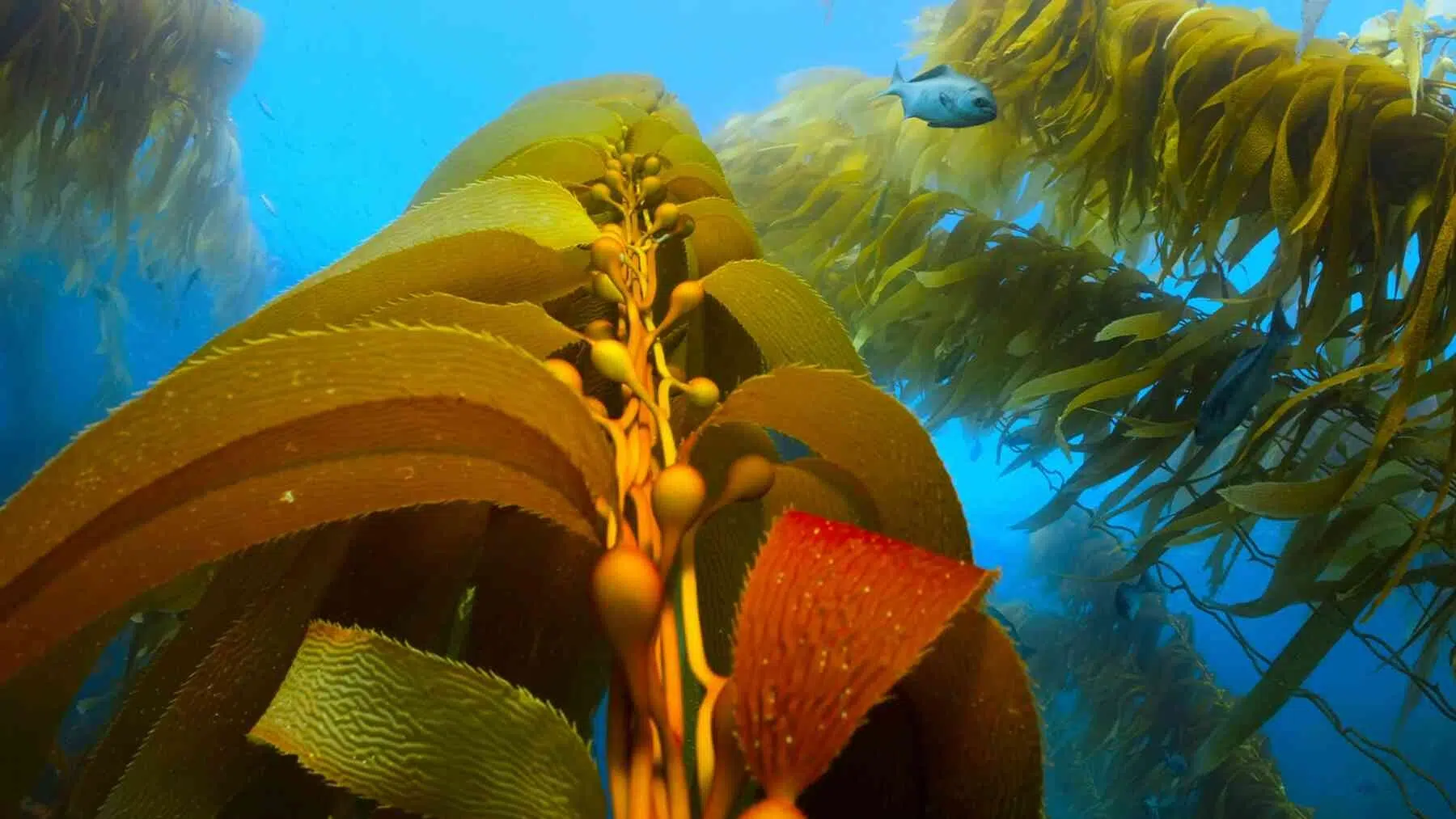
Kelp forests were once an “underwater canopy” of tall, living, moving plants covering substantial parts of Maine’s sea floor.
Now, they are mostly just short, compact versions of their past selves.
Although the difference is hard to see at first, it becomes more noticeable the moment you look for it. If there was enough open space, it now looks almost too full to see clearly from the surface.
Why are Maine’s kelp forests unable to recover after being replaced by algae?
How the kelp forest began to change
The change was that kelp was no longer able to keep providing those functions over time.
It created habitat for fish and other marine organisms and gave structure to the water around it.
This ability was lost as the ecosystem began to break down because of changes in the ocean. As it declined, both its habitat role and its structure were reduced.
It also stopped moving with the current as the plants continued to die and failed to grow back across large areas of the coast.
That movement helped create a “living shelter” on rocky reefs.
Some areas still showed living kelp, but much of the coastline that once supported it was either dead or had bare spots left behind.
In those places, the open space was taken over by mats of algae spreading outward in small patches.
These can look similar to other changes that happen in ecosystems over long periods of time.
A replacement that reveals what had changed
The appearance of this mat of algae may seem natural at first, but it reveals a critical change.
It can even appear to be an acceptable substitute for kelp in the same area.
A closer look shows that it does not provide the same value or serve the same role. One clear difference is that it stays flat against the surface beneath it.
It attaches itself firmly by forming thick, dense layers over that surface.
Unlike tall kelp, which creates structure and provides habitat for juvenile kelp, this mat does not offer that same support.
It does not create any environment in which young kelp can develop or grow.
This discovery is shown in the study “Turf algae redefine the chemical landscape of temperate reefs, limiting kelp forest recovery,” published in Science.
The hidden process preventing recovery
Once an area is covered by this mat of algae, it becomes harder for anything else to take hold.
It does not provide conditions that support juvenile kelp.
Even if all existing adults die off, the space does not open up again.
No new growth can occur in what has become a densely packed environment.
Before this shift, the death of adult kelp allowed rapid recolonization into open space. Now, that same space remains occupied and no longer supports new growth.
What is stopping the kelp from coming back?
A hidden barrier preventing growth
The change does not stop at what is visible on the seafloor. It goes beyond the structure you can see and affects more than just the surface.
It changes the conditions in the surrounding area in ways that are not immediately clear.
Over time, those changes build up and become harder to notice.
The mats of algae do more than block space on the seafloor. They also release chemicals into the water around them.
These prevent young kelp from settling and growing.
This means the area is not just occupied by algae on the surface but is also becoming harder for kelp to return over time.
If these changes quietly block kelp from returning, how many other ecosystems are already changing in ways we don’t notice?
Read the whole thing?
Get the week's signal, not the noise
Our sharpest reporting on energy, climate and nature — free, once a week.