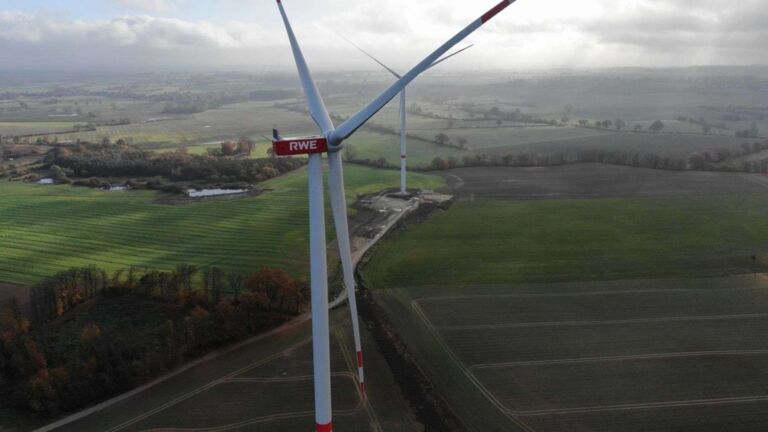
Most of the eastern Irish Sea is a floor with nothing standing on it.
Sand, gravel and a thin scatter of shell, worked flat by tide and swell, running for miles without a ledge, a crevice or a stone worth the name.
For a lobster that landscape is a place to cross.
The animal is not short of food out there. Worms, small bivalves and carrion are spread across the sediment in usable quantities.
What it is short of is somewhere to be during the hours it is not feeding.
Shelter is the limiting item.
A lobster is looking for a roof, not a meal
The species spends daylight wedged into a hole and comes out to forage in the dark, which makes hard structure the thing that decides where it can live.
On a natural reef the holes come free. Boulders, cobble and rock ledges create a continuous supply of crevices in a range of sizes, and an animal that outgrows one moves to the next.
On open sand there is no such supply, so a population is capped not by how much there is to eat but by how many holes exist.
Put a pile of quarried rock down on that sand and the ceiling moves. The food was always there. The accommodation was not.
This is why the same structure that changes nothing on a rocky coast can change a great deal in a sandy bay.
Context decides the effect.
What the collar around a monopile is for
The rock was never put there for the lobsters. It was put there because moving water digs.
A steel tube driven into sand interrupts the flow around it, accelerating the current at the base and scooping out a pit that would otherwise deepen until the foundation loses its grip.
The fix is a skirt of graded stone laid around the base, a filter layer of smaller rock under a heavier armor layer, spread wide enough that the digging happens at the edge rather than against the steel.
The result is an accidental reef. Angular rock, deep gaps, a range of hole sizes, in a place where none of that existed before construction.
Each one covers a tiny fraction of the seabed it sits in, which makes it the only hard ground for a considerable distance in every direction.
Nobody drew it as a reef, nobody sized the stone for an animal, and nobody was asked to.
Function created habitat by accident.
Thirty three tagged animals and one fisherman’s logbook
Researchers working at a wind farm about nine miles off the north Wales coast fitted acoustic transmitters to 33 European lobsters of 3.4 to 4.4 inches carapace length, at three locations, between late June and mid October of 2021.
Receivers logged every approach and every departure. More than half of all detections fell within 115 feet of the scour protection, and 55 percent of the animals were present for at least 70 percent of the study period.
The sharper figure is the one that gets left out. Thirty nine percent of the tagged lobsters were detected across the entire period.
A separate paper worked the problem from the fishery side, using logbooks kept by a single potting vessel inside a wind farm over seven seasons.
Landings per pot were significantly higher at turbines where scour protection was present, with modeling putting the difference at about 1.47 times.
Two methods point the same way.
Why a concentration is not automatically a gain
The honest reading is that these studies show where lobsters are, not how many there are.
An animal that would otherwise be spread thinly across open ground and gathered onto a known pile of rock is easier to find, easier to pot and easier to remove, in the way that a structure that changes a seabed or a population counted once becomes a number without context.
The tracking ran for a single summer, at one site, on 33 animals, and the logbook study rests on one operator working his own grounds.
The full residency analysis is set out in the published tracking study including the detection distances.
Attraction is not production.
The part a designer could actually change
What makes this worth more than a curiosity is that the rock is a specification, not a fact of nature.
Stone size, grading, layer depth and the width of the apron are all chosen by an engineer for scour performance, and the shelter that comes out of those choices is currently a side effect nobody optimized.
Larger gaps, a wider range of stone sizes and a deeper armor layer would cost little and would change the number of usable crevices, which the team behind the work raised directly.
The boulders at each turbine were an engineering answer.
They became the only address.
Read the whole thing?
Get the week's signal, not the noise
Our sharpest reporting on energy, climate and nature — free, once a week.