Deep in the Pacific Ocean, giant bubblegum corals form tree-like fan structures without a hard central trunk or solid bony skeleton. For decades, marine biologists struggled to explain how these towering organisms withstand punishing deep-sea currents without snapping or collapsing under hydrodynamics.
Recently, scientists aboard an ocean expedition explored a distant seamount and discovered a new species that appears to explain this structural enigma. There’s actually a secret skeletal framework embedded throughout its soft body.
The paradox of the skeleton-less giants
Unlike shallow reef-building stony corals that construct thick calcium carbonate skeletons, octocorals like bubblegum corals rely primarily on microscopic calcified spicules, known as sclerites, scattered throughout their soft tissue. While these sub-millimeter spicules provide surface texture, they cannot offer the rigidity needed to support fan structures several feet high in surging deep-water currents.
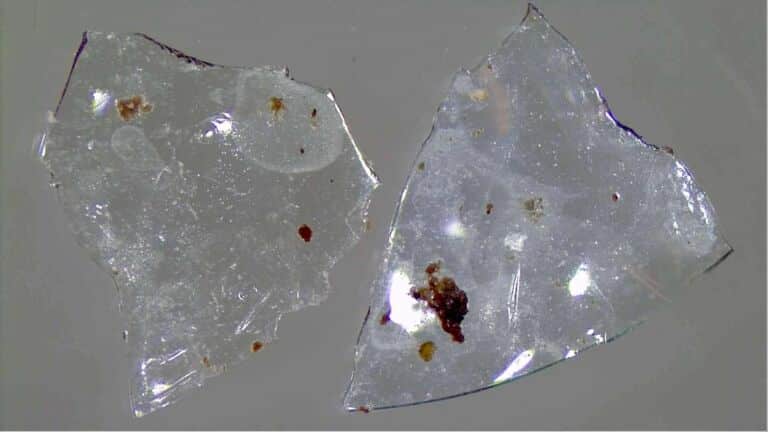
Researchers aboard the research vessel Falkor (too) discovered the new coral species, named Paragorgia quitinosa, at a depth of nearly 2,200 feet along the Nazca Ridge in the southeastern Pacific Ocean. Using the remotely operated vehicle SuBastian, the team collected a pristine specimen to analyze its anatomical framework. When scientists dissolved the coral’s soft outer tissue using a chemical bleach solution, expecting to find only loose microscopic spicules, an intact, flexible network of tubular channels remained perfectly preserved. High-resolution 3D X-ray scanning confirmed that these continuous canal walls traverse the entire branching structure.
A fluid pressure system in the deep
To determine how this internal network functions, researchers analyzed its microscopic architecture. Bubblegum corals do not operate like a rigid pillar. Instead of relying on a solid trunk, the colony maintains shape through fluid pressure generated inside its canal network.
Small, specialized polyps called siphonozoids, force seawater continuously through the internal channels. This pressure inflates the flexible internal tubing, while millions of calcified sclerites embedded around the canals provide localized stiffness. Combined with fluid pressure from inside the colony, this mineral-provided spicule support gives each branching arm both tensile strength and flexible elasticity so that currents can bend but not break the whole colony.
Unexpectedly, their 3D imaging of the specimen also revealed reproductive tactics – developing eggs were found only within the small siphonozoid polyps instead of within feeding polyps, shedding light on reproductive methods of these deep-sea creatures.
The chitin reveal and evolutionary meaning
Chemical analysis and spectroscopy (electron microscope, infrared analysis, gas chromatography) suggest what the material of these stiffened canal walls was: beta- chitin. This tough, flexible biopolymer is famous for constructing the hard outer exoskeletons of insects, crabs, and lobsters.
This discovery represents the first indication of a visible chitin structural scaffold inside octocorals. Instead of producing a rigid mineral backbone, Paragorgia quitinosa builds around its water filled canals a flexible framework of chitin that stiffens its radiating limbs enough to allow them to remain perpendicular to the sea floor over 2,200 feet down.
Evolving a lightweight scaffold
While this discovery solves a long-standing biomechanical paradox, researchers emphasize what the study does and does not demonstrate. Bubblegum corals aren’t covered with chitin just to look pretty, however, the substance doesn’t indicate that these corals have a rigid or ossified core.
The results have no bearing on the behavior of shallow water reef-building corals that are completely dependent on weighty skeletons made of calcium carbonate. Rather, this research reveals that soft-bodied deep sea octocorals developed a remarkably lightweight framework that enabled them to ingeniously adapt to extreme bottom water movements.
The full study can be read here: Sánchez, J.A., Easton, E.E., Garcia, N. et al. A new bubblegum coral from the Nazca Ridge reveals chitin as the structural scaffold of skeleton-less Paragorgia colonies. Sci Rep (2026). https://doi.org/10.1038/s41598-026-71127-8
Read the whole thing?
Get the week's signal, not the noise
Our sharpest reporting on energy, climate and nature — free, once a week.