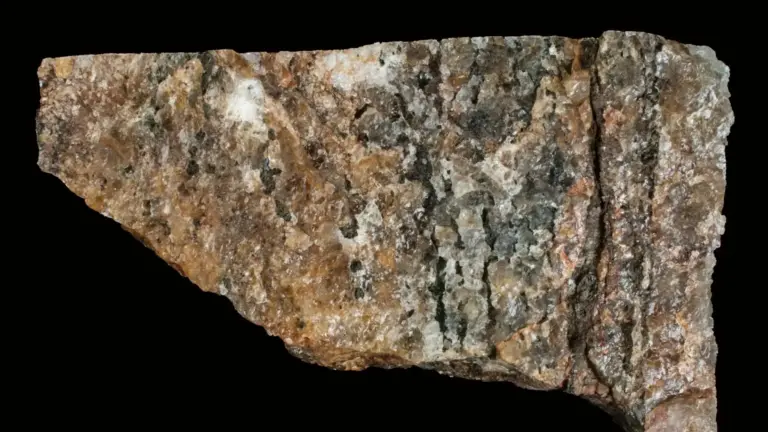
Large areas of the world’s oceans have yet to be mapped or explored.
OceanX and researchers from the National University of Singapore (NUS) set out to solve this problem with their “Monsoon Rise” expedition.
Monsoon Rise is a seamount chain located on the bottom of the Indian Ocean.
Even today, scientists know surprisingly little about this part of the Indian Ocean.
This information-gathering process was part of a larger initiative to better understand biodiversity in the deepest parts of Earth’s oceans. Scientists’ results were twofold.
On the positive side, they identified at least 20 species that could be new to science.
However, on the negative side, they found pollution.
A little-known ecosystem entered scientific records
A team of scientists went on a 22-day deep-sea expedition to explore what lay there.
During the course of the expedition, scientists utilized three methods to study the seamount chain: submersible dives, remotely operated vehicle (ROV) exploration, and environmental DNA sampling.
Their primary objective was straightforward: to establish the first comprehensive baseline of biodiversity in the Monsoon Rise seamount chain.
The NUS expedition marked a significant milestone for marine science in Singapore.
It was the country’s first major deep-sea scientific expedition since signing onto the Biodiversity Beyond National Jurisdiction Agreement.
The mission was supported by a S$6 million grant from Singapore’s National Research Foundation.
Part of the mission also focused on strengthening deep-sea research capacity across the region.
Exploring the area, however, was only half of the battle.
The majority of the adventure awaited them once they reached deeper waters.
Dozens of species may have never been recorded before
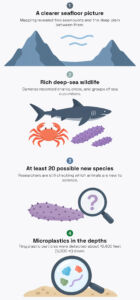
Researchers began by mapping the seafloor. The resulting map included over 6000 km².
At the same time, scientists gathered over 2000 specimens from the area.
The numbers continued to grow. So did the surprises.
Amongst the specimens, scientists identified at least 20 new-to-science species.
As many of those continue to be analyzed, further studies will reveal if they become formally recognized as new species.
Collecting additional samples continues to provide scientists with insight into the level of biodiversity found in deep-sea environments.
A clearer picture of life in the deep ocean emerged
Seamounts are now widely acknowledged as critical centers of marine biodiversity.
The National University of Singapore described the findings as a major step forward in documenting a previously unexplored region of the High Seas.
With every additional sample collected, scientists add another piece to the puzzle as they seek to fully understand all aspects of Monsoon Rise’s ecosystem.
Although the expedition provided proof that new species exist in the deep ocean, they also uncovered evidence of pollution in that same ocean.
Pollution reached one of the ocean’s most remote environments
While collecting samples for their new species discovery, researchers also observed microplastic pollution in the deep ocean.
Microplastics were found roughly 5,000 meters (16,000 feet) beneath the ocean surface in a remote region of the Indian Ocean where few environments have been studied in detail previously.
These findings illustrate that pollution caused by humans can travel great distances to reach otherwise untouched ecosystems.
Marine organisms consume the plastic debris, which subsequently travels through various ecosystems.
One expedition revealed two very different realities
The dual discoveries highlight two starkly contrasting concepts.
On one hand, researchers documented organisms that potentially have never been documented prior to their collection during this expedition.
On the other hand, they also found examples of human activities polluting one of the world’s most distant environments.
This expedition expanded upon our current understanding of this region and clearly illustrated how much of the deep ocean remains unexplored and how widespread humanity’s influence on it is, even in remote environments.
Read the whole thing?
Get the week's signal, not the noise
Our sharpest reporting on energy, climate and nature — free, once a week.