Water has been sitting quietly within a lined reservoir located close to Central Point, Oregon.
However, things are about to get much more exciting for the water.
This is a collaborative effort between the Medford Irrigation District and the Bonneville Environmental Foundation.
It is going to bring a completely new way to create clean power in the Pacific Northwest.
The reservoir provides an open location with ample sunlight for solar generation.
The floating structures will be secured in place using a mooring system connected around the reservoir.
When one reservoir serves two purposes
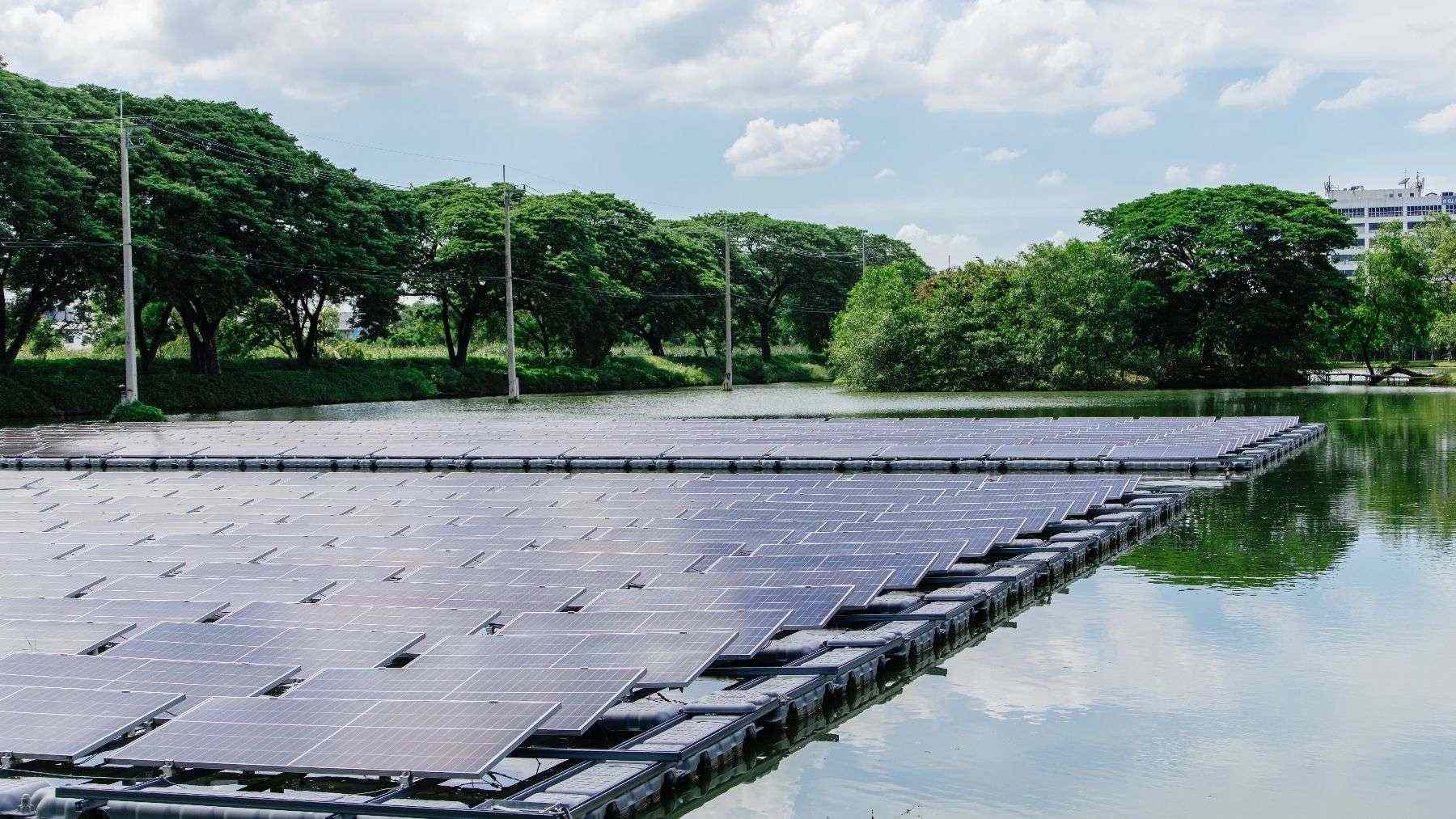
Floating solar panels were placed above a district reservoir instead of using the space for fertile land.
The panels cover just over 1.8 acres of open water.
There are a total of 1,776 panels that form the grid.
Placing solar infrastructure on top of bodies of water offers multiple advantages.
During dry summer months, direct sunlight hits the exposed reservoir and causes significant evaporation.
By shading the water’s surface, less moisture is lost into the atmosphere, allowing irrigation districts to save more water for local farmers.
The water benefits do not stop there
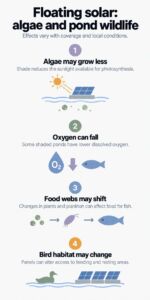
In addition to retaining more water, blocking sunlight limits algae growth.
Harmful algae blooms can damage water quality and clog irrigation systems used by farmers in the local area.
Maintenance personnel believe that reducing the amount of sunlight reaching the reservoir could help limit algae growth.
Cooling water flowing below the panel system may help maintain lower operating temperatures for the photovoltaic panels.
Panels get hot in the summertime, and when exposed to excessive amounts of sunlight, their ability to convert energy is greatly diminished.
Therefore, this cool water flow may provide an additional benefit for solar energy production.
The panels float, but the benefits reach nearby homes
Once operational, the energy produced by the floating solar array will flow into the local electric utility grid.
Local families residing in the Medford area can subscribe to a portion of the clean energy generated by the project.
Sixty residential subscriptions are available to local families.
Eligible customers within the utility service area, including renters, apartment dwellers, and homeowners, may subscribe to the project subject to program requirements.
Each subscriber receives credits on their monthly utility bill based on their share of the energy produced.
This method eliminates large upfront costs involved in purchasing and installing your own personal solar panel equipment.
Families can contribute to regional renewable energy development without having to physically modify their property in any way.
Operation of the floating solar array is currently expected to begin during the fourth quarter of 2026.
Interested persons may pre-register for their subscription slots via an online portal prior to beginning actual operation of the facility.
In addition, this subscription process gives local households access to the benefits of community solar without installing equipment on their own property through the Medford Irrigation District.
What this means for regional clean energy goals
Oregon has implemented a state-sponsored Community Solar Program which enables dispersed renewable energy production among multiple locations statewide.
The Community Solar Program enables participants to connect with numerous registered clean energy projects located across multiple county districts.
The Medford Irrigation District’s project represents a pilot for future floating solar arrays located on reservoirs and canals throughout the state of Oregon.
Using existing artificial water surfaces for producing clean energy creates no land use conflict with traditional agriculture practices.
While generating clean energy, the project may help reduce water loss from evaporation, a benefit that will be evaluated through long-term monitoring.
The real test begins after construction
Community members will be able to monitor how the installation performs during its first complete year of operation.
Results may help determine whether floating solar can be deployed more broadly across other irrigation districts in the region.
Projects such as this may encourage additional dual-purpose water and solar developments throughout the Pacific Northwest.
If successful, the project could provide useful information for future floating solar developments elsewhere in the region.
Read the whole thing?
Get the week's signal, not the noise
Our sharpest reporting on energy, climate and nature — free, once a week.