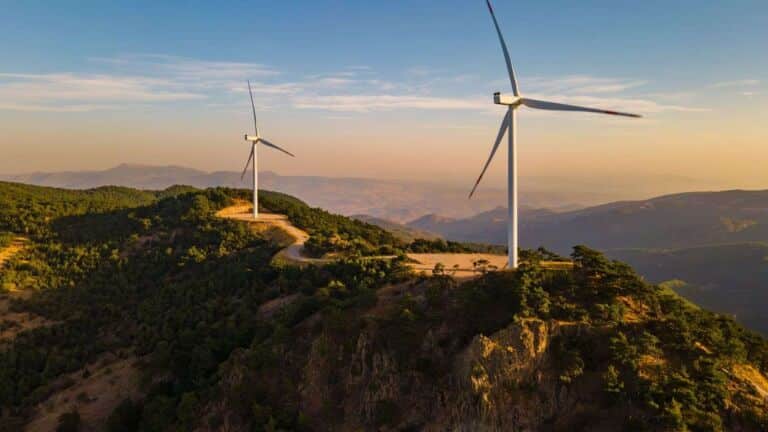
Very few people would expect a wind turbine to become part of an amphibian habitat. Wind turbines produce electricity high above the ground.
Amphibians require shallow bodies of water much closer to the ground. But at the Verdigueiro Wind Farm, these two worlds collide.
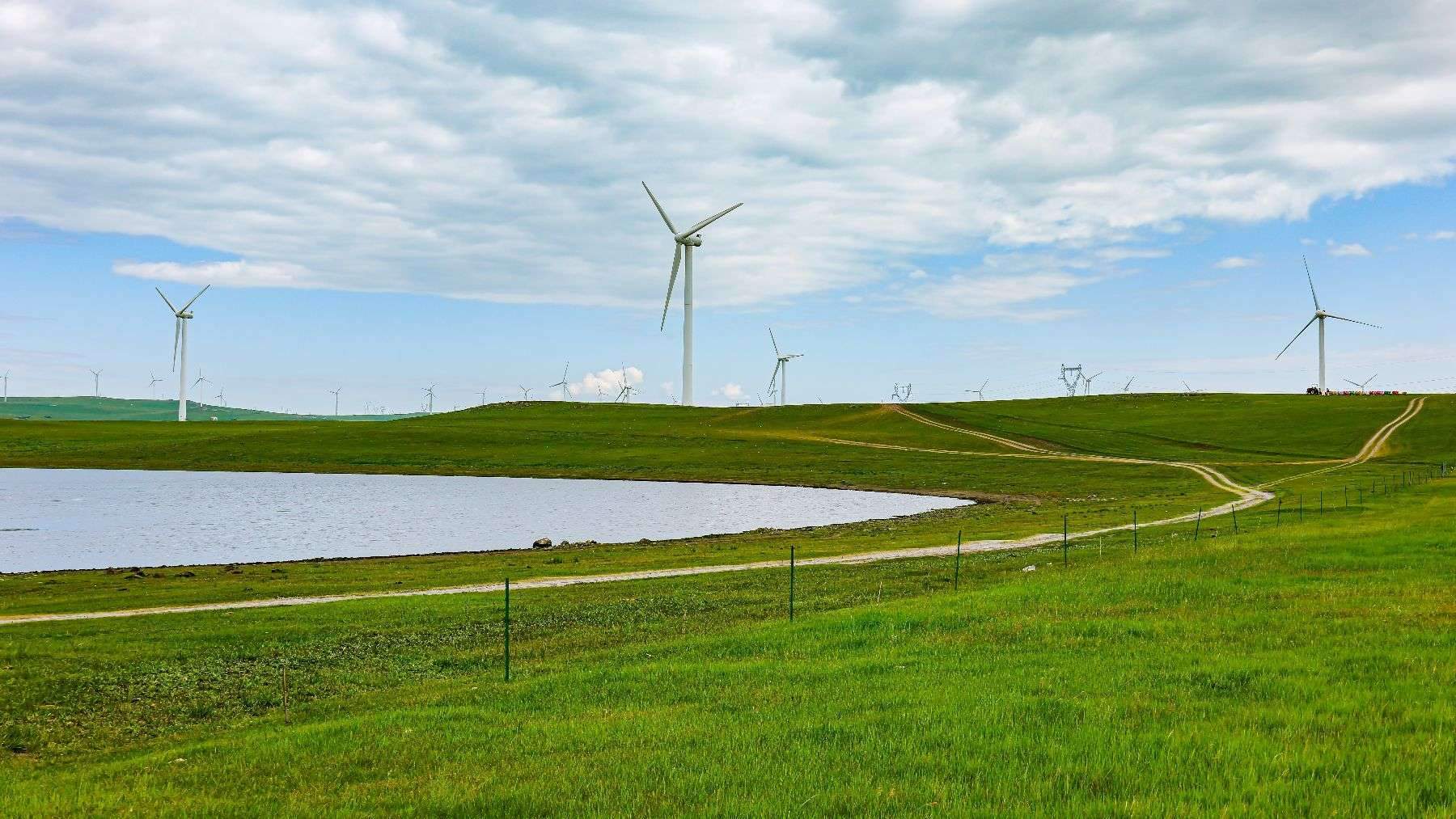
Two small ponds were created near two of the wind turbines for the benefit of the local amphibians.
The goal was clear. Give local amphibians places to hide, give them a place to spawn, and a way to get around their surroundings.
Though the ponds are relatively small, they are unusual additions to an energy-producing landscape.
Only two turbines became amphibian habitats
These small bodies of water represent the biodiversity portion of the project in relation to the Verdigueiro Wind Farm in Asturias.
According to official documentation, this is a 14-turbine wind farm located within the municipalities of Villayón and Tineo.
The Verdigueiro Wind Farm is located near the mountainous regions of Pico Verdigueiro, Pico Sarnoso and Pico Mancebón.
Most of what you hear about wind farms revolves around the turbines, roadways for access, substation locations, and transmission lines.
The creation of the ponds has shifted focus toward local amphibian species. Only two turbines had ponds created next to them.
The problem starts when habitats become isolated
For most amphibians, water plays a huge role in their lives.
Many species use ponds, wetlands, or temporary pools for reproduction and early development.
If breeding sites and habitats become fragmented, then travel becomes more difficult.
That is why many conservationists attempt to address habitat connectivity rather than trying to preserve isolated individual habitats.
A good pond does more than hold water. It can connect habitat sections that previously had no links to one another in mountainous systems. That gives animals more ways to move through the landscape.
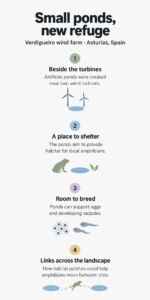
A pond can become part of a wider habitat network
The ponds were intended to provide refuge and passage for local amphibian species while also helping connect habitats in the surrounding landscape, according to Iberdrola.
Although they were installed at a wind farm, the ponds were intended to improve habitat connectivity for local amphibian species.
According to official documentation published in the Spain Official Gazette (BOE), the Verdigueiro project was developed for the production of renewable electricity from wind power.
While each pond may only provide some sort of haven for amphibians for part of the year, a number of small bodies of water can provide a series of stepping stones for the animals’ travels.
With a series of stepping stones such as these, animals have more options for traveling through their habitat.
At Verdigueiro, placement of the ponds may matter more than the ponds themselves.
The placement mattered more than size
What really distinguishes this project from others is not its size. Instead, it is how the ponds fit into the surrounding landscape.
The turbines continue generating electricity as normal. Unlike large-scale restoration projects, this approach works within an existing energy landscape.
There are times when location matters more than scale. A well-placed pond can create opportunities that would not have existed otherwise.
Over time, those opportunities can grow into a larger regional network of habitat.
Lessons extend beyond these two turbines
Each pond covers less than 1% of the total area covered by the wind farm. Because the ponds are so small, visitors to this site may not even realize they’re there.
Visual dominance will remain with the turbines, but they exemplify a bigger picture.
Renewable energy projects and wildlife conservation do not always have to be mutually exclusive. Both seem to coexist at the Verdigueiro Wind Farm.
The ponds were small, but the connectivity they were designed to create extended well beyond their footprint.
Read the whole thing?
Get the week's signal, not the noise
Our sharpest reporting on energy, climate and nature — free, once a week.