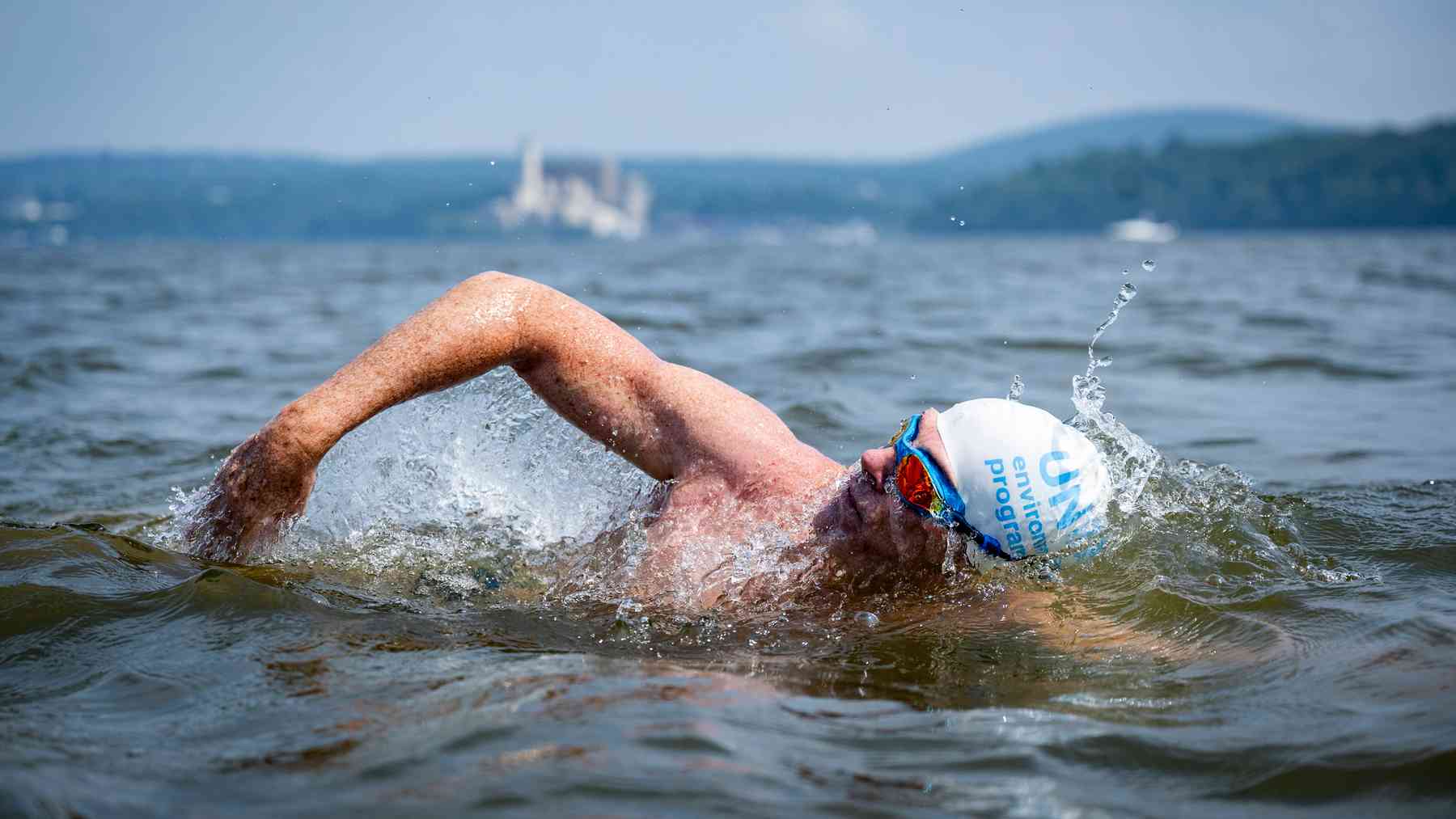
The water at the top of the world sat at about 29 degrees Fahrenheit, below the freezing point of fresh water.
A maritime lawyer stood at the edge of the ice anyway.
He wore nothing but a Speedo, a cap and goggles.
Scientists beside him were already reading his core temperature.
It was climbing, not falling, and he had not yet touched the sea.
The heat came from a trained reflex, not from the cold
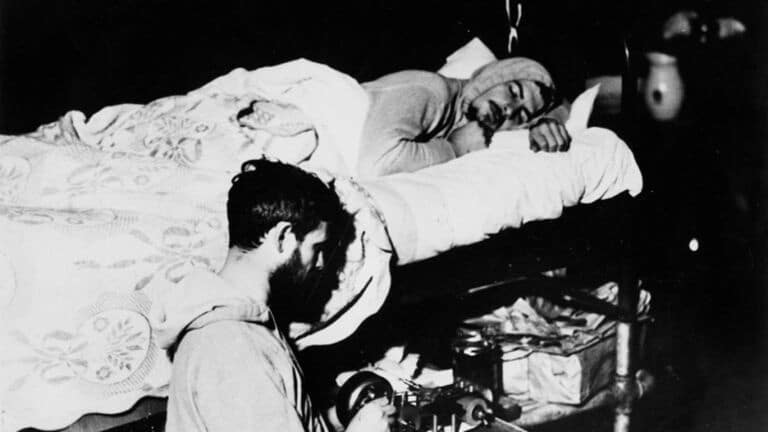
The swimmer is Lewis Pugh, and the swim happened at the Geographic North Pole. The physiologist monitoring him, Tim Noakes of the University of Cape Town, recorded core temperature climbing by nearly 4 degrees Fahrenheit before Pugh entered freezing water. He named the effect anticipatory thermogenesis, the creation of heat before an event even begins.
That is backwards from what cold exposure is supposed to do to a human body. The expected response to frigid air is a drop in core temperature, triggered by blood vessels narrowing at the skin to protect the organs.
The explanation on offer is conditioning: a Pavlovian response built by years of cold water swimming and by mental rehearsal, with brown fat activation proposed as the heat source. That mechanism is proposed rather than settled, and other researchers attribute part of the early rise to peripheral vasoconstriction combined with the metabolic heat of hard swimming.
What is not disputed is the reading itself. Peaks reported at around 101 degrees count as a fever by any clinical standard, produced while a man stood still on the ice.
Six tenths of a mile of polar water took under 19 minutes
The swim covered one kilometer, about six tenths of a mile, across open water that had cracked through the polar ice. He wore only the Speedo, cap and goggles permitted by open water rules, with no wetsuit and no gloves to slow the heat loss. The record for the first long distance swim at the North Pole logs it at 18 minutes 50 seconds in water between roughly 29 and 32 degrees.
Noakes has said that most people cannot cover even 22 yards in ice cold water. Uncontrolled gasping arrives first, wrecking coordination and breathing long before exhaustion becomes the problem.
His crew followed in a boat, watching for the skin color changes that signal the body shutting blood flow to the extremities. That narrowing is called vasoconstriction, and it reroutes resources toward survival over comfort the moment the body senses real danger.
Years of swims gave scientists the pattern
The North Pole swim took place in July 2007, but the physiology work started earlier, across swims in the Arctic and off the Antarctic Peninsula. Those sessions showed the same pre swim rise more than once, which is what separated it from a fluke reading on a single faulty probe. The team’s body temperature measurements from three long distance polar swims were later published in a thermal biology journal.
During an earlier polar swim the same team found his core temperature held closer to normal in the water than expected, then fell to about 95 degrees roughly half an hour after he got out, while he was in a hot shower. Researchers call that drop the afterfall effect, caused by chilled blood returning from the limbs once circulation reopens.
That means the most dangerous moment can arrive after the swimmer is already out of the water. None of it showed up in a laboratory on a treadmill; it appeared in the field, swim after swim, in some of the coldest water on the planet.
Training built toward glacial water
Getting a body capable of this took more than talent. Reports of his preparation describe a month of swimming in a specially chilled pool at around 36 degrees, four sessions a week of 15 to 20 minutes, alongside frequent cold showers.
That slow escalation matters because sudden cold shock, not exhaustion, is what usually ends a cold water swim early. A gradual build lets the body’s blood vessel and breathing responses adapt step by step rather than meeting near freezing water unprepared.
A similar pattern of the body adapting to extreme stress through repeated controlled sessions shows up in a centrifuge experiment run under sustained double gravity. Pain tolerance built through repeated exposure follows a similar arc, as seen in a sting tolerance scale built from direct physical testing on living skin.
Nearly two decades later the mechanism is still argued over
Nearly 20 years on, researchers have not fully settled how anticipation alone lifts a resting core temperature. What has changed is the sense that it belongs to one man: comparable early rises in core temperature have since been reported in other trained ice swimmers, and the response is now described as something conditioned athletes can show.
The honest caveat is that cold water swimming without preparation remains genuinely dangerous. Expert supervision, slow acclimatization and medical monitoring are what separate a measured expedition from a real emergency, and nobody should test cold tolerance without guidance.
Still, the finding reframes something simple. The body a person carries into danger is not fixed the moment before the danger begins, and it is still adjusting in ways no instrument expected to catch.
Read the whole thing?
Get the week's signal, not the noise
Our sharpest reporting on energy, climate and nature — free, once a week.