
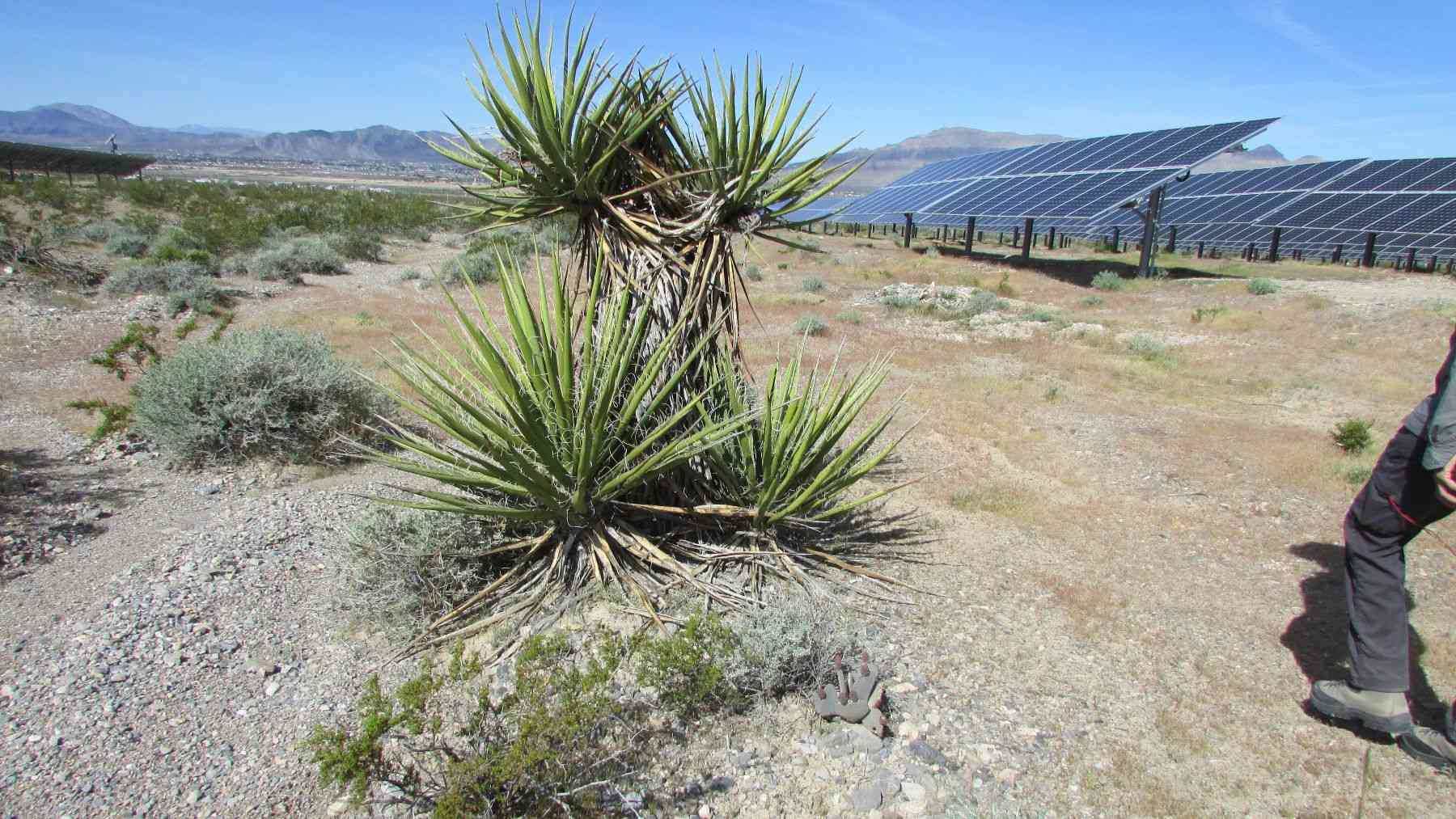
Solar power is often regarded as one of the most environmentally friendly ways to produce electricity. We’ve seen this image many times before.
A field of rows of solar panels sits quietly in an open area, gathering sunlight. But we rarely see anything else around these panels.
One example is a fence. To some wildlife, a fence can become a wall.
This realization led to an unusual experiment conducted at a solar facility located in the Mojave Desert near Pahrump, Nevada.
Engineers made thirty small holes in the perimeter fencing. These holes were intended to aid one specific type of animal.
However, the results included three more types of animals.
Something as ordinary as a fence changed everything
Large-scale solar facilities in the arid Southwest U.S. have typically been developed in areas that serve as essential wildlife habitats.
Wildlife habitats may become isolated by fencing. The desert tortoise is highly sensitive to habitat fragmentation.
Their sensitivity largely stems from the need for continuous habitat rather than separate patches of land.
Therefore, what was originally intended as an environmentally supportive form of renewable energy has created an additional source of environmental stress.
Yet thirty small openings changed the equation
The primary objective of this project’s fence was to protect the infrastructure and restrict access.
From the viewpoint of wildlife, however, it represented an additional obstacle.
One objective was to determine whether the size of this barrier could be diminished without interfering with the overall operation of the facility.
Rather than altering the entire site, engineers decided to focus on creating openings within the fence.
Fence openings were only part of the story
As part of this project, various wildlife-friendly characteristics were integrated into the design in partnership with the U.S. Fish and Wildlife Service.
Most vegetation was preserved instead of being removed entirely.
Solar panel placement allowed increased amounts of sunlight to pass through and hit the ground below.
Ultimately, the designers’ aim was to generate electricity while preserving as much functional habitat as possible.
Tortoises were not the only species to benefit
During warmer months, desert tortoises were observed traveling throughout the site.
Evidence from those observations indicated that the openings in the fence were functioning as desired.
Rattlesnakes, black-tailed jackrabbits, and kit foxes also used the openings.
Features designed for one species ultimately benefited numerous other species.
When a physical barrier ceases to exist, multiple species can experience benefits simultaneously.
The findings came with an important caveat
While significant conclusions emerged from this study, limitations existed.
The Nevada-based solar array was relatively small in comparison to other solar development projects.
Additionally, larger-scale solar developments can potentially affect far greater numbers of animals over significantly larger geographic regions.
Furthermore, the study did not indicate that those negative effects would diminish entirely.
Both researchers involved in the study noted limitations of mitigation measures.
Some landscapes may be considered “too valuable” for use as experimental sites for development.
Some decisions matter before a single panel is installed
Attention also turned to whether alternatives could reduce or eliminate impacts on threatened species.
Some recommendations based on this project include identifying areas of low conservation value before construction begins.
Possible alternatives to where new development can occur include disturbed land, abandoned agricultural lands, or lands near existing transportation corridors.
This research has shown that there is no inherent conflict between renewable energy production and protecting wildlife habitats.
Although the fence modifications did not solve every problem, they showed that animals will continue to seek ways through barriers.
When tortoises, rattlesnakes, jackrabbits, and foxes all used the same openings, the importance of those connections became difficult to ignore.
Read the whole thing?
Get the week's signal, not the noise
Our sharpest reporting on energy, climate and nature — free, once a week.


