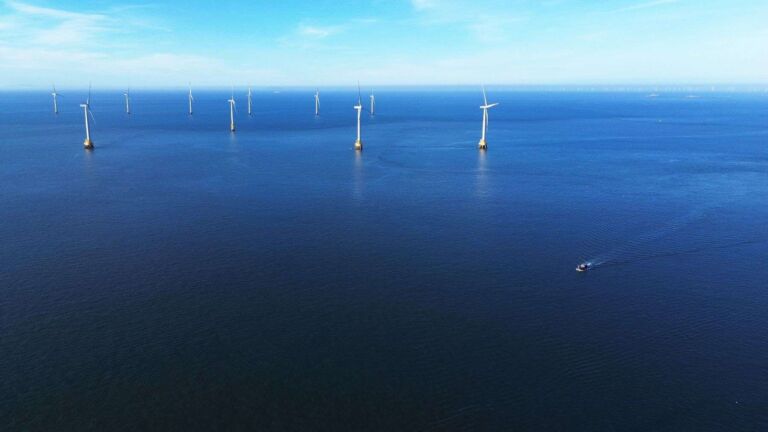
A steel foundation stands in open water with a bolted flange on top and nothing above it.
There are 53 more like it, spread across a lease area southeast of Long Island.
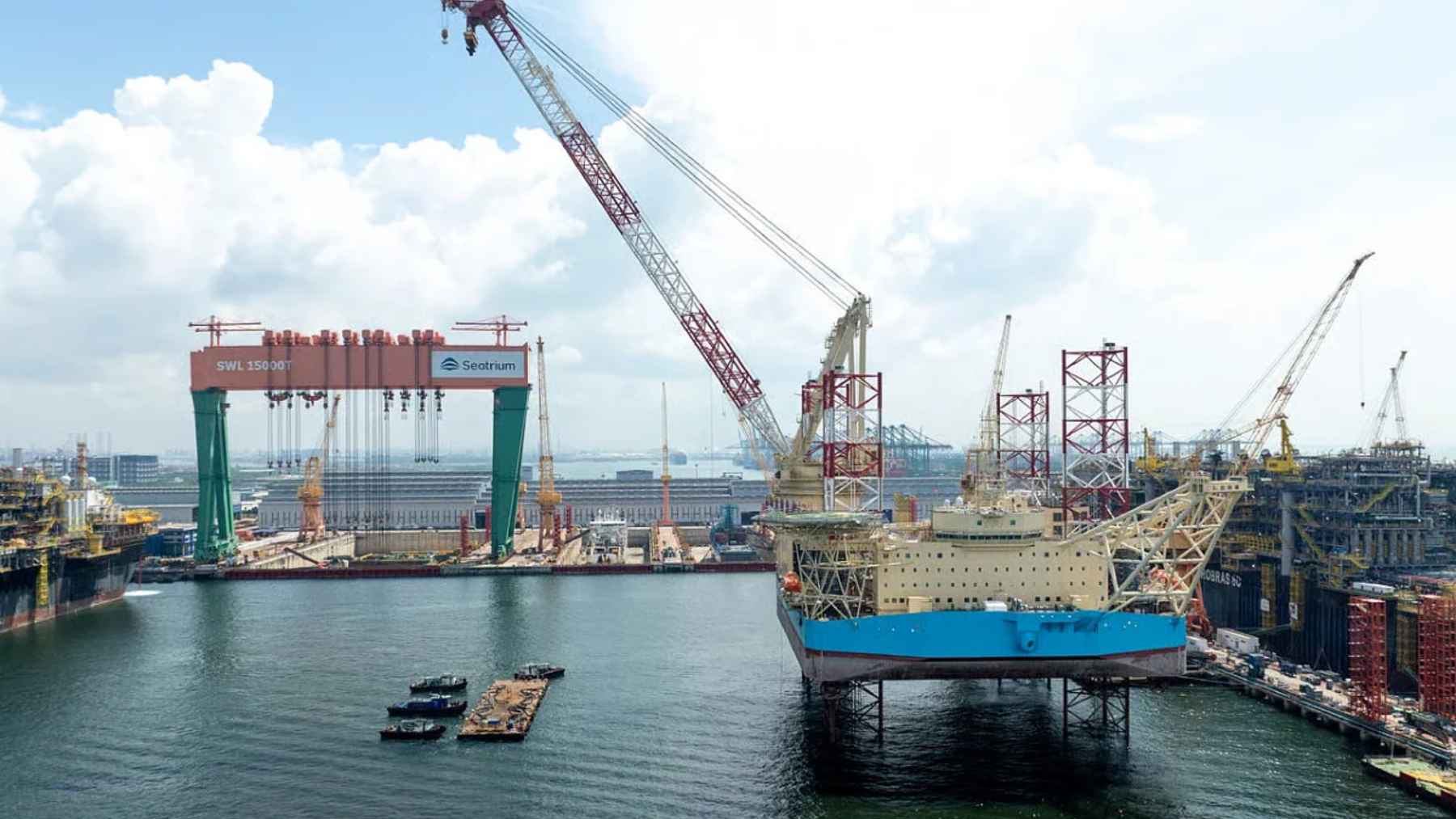
The ship built to set turbines on them was handed over in February and is in the Gulf, learning to catch barges.
On the fifth of November the schedule slipped again. First power moved to the first half of next year.
The ship is finished. The towers are waiting in Brooklyn.
Which leaves one odd question. Why does the ship never dock?
Why 1 law keeps the ship offshore
The answer is a shipping statute older than any wind farm.
A vessel carrying goods between two points in the United States has to be built in the country, owned there, crewed there and flagged there. Most heavy lift vessels are none of those things.
In January of 2021 the customs service ruled for the first time that carrying cargo from an American port out to a wind site on the outer continental shelf is exactly that kind of trip.
So a foundation bolted into the seabed counts as American ground, and the pier in Brooklyn is the other end of a domestic run.
The installation vessel here was built abroad and flies a European flag. It cannot make that run.
The rule has nothing to do with wind. It was written to protect a domestic merchant fleet, and offshore construction walked into it later.
It therefore stays on the site and lets American boats come to it.
476 feet of ship and a hook 590 feet up
The machine at the center of this is not small.
It runs 476 feet long and 273 feet across the beam, carries about 100 cabins, and holds position on thrusters rather than anchors.
Its crane lifts somewhere near 2,200 short tons, with accounts differing by about a hundred, and the hook reaches 590 feet above the deck.
Built into the hull is the part that matters for this job. A stabilizing system grips a feeder vessel alongside and holds it steady enough to hand over parts in rough water.
The turbines are 15 megawatt machines with a rotor 774 feet across and a blade tip reaching 886 feet.
Fifty four of them, 15 to 30 miles southeast of Long Island, for 810 megawatts.
80 percent built and 0 turbines standing
The rest of the project is further along than the turbine count suggests.
All 54 foundations are in. The offshore substation went in early this year and the cabling is reported complete.
The operator put the whole project at about 80 percent finished in its results on the twenty eighth of October.
The ship left its Singapore yard on the twenty sixth of March and crossed to the United States.
It is now off Pascagoula in Mississippi, running sea trials of the transfer system and training crew on it.
What is missing is not the ship. It is the boats that feed it.
What a late barge costs a finished ship
Here is the part that reframes the delay.
The bottleneck is a set of American built tugs and barges whose delivery ran late, in the way that a Brooklyn terminal or a broken blade turns into a simple delay.
Those boats are the only legal path from the pier to the site, so a finished billion dollar vessel waits on them, and the trade report sets out that week.
Much of the detail is still unpublished. Nobody has given the number of barges, the number of trips, or a start date for the first lift, and the vessel review is where the hardware figures sit.
The budget has not moved. The operator says total spending is unchanged and some of it simply shifts into next year.
A schedule is not a cost overrun.
Why every part gets handled twice
Strip the law away and look at what the method does to the work.
A conventional campaign loads a jack up at the quay, sails out, sets what it carries and comes back. One handling, one weather window.
The feeder version loads a barge at the quay, tows it 15 to 30 miles, then transfers 100 ton pieces between two floating hulls at sea before anything gets lifted.
That second handover is the expensive one, because it needs its own sea state and it can stop a campaign that the crane itself could have continued.
The stabilizing system exists to widen that window, and widening it is the whole engineering problem.
An offshore wind build in American water is a logistics puzzle before it is a wind puzzle.
The towers are already on the dock. Somebody has to float them out.
Read the whole thing?
Get the week's signal, not the noise
Our sharpest reporting on energy, climate and nature — free, once a week.