The first people to notice it thought it was a porch light reflection, or maybe a weird new streetlamp. Then someone walked closer to the water and saw it wasn’t coming from a bulb at all. A faint blue haze sat on the canal like paint in the dark. Dogs stared. Kids dared each other to toss leaves in and watch the ripples flare. Neighbors started texting photos like it was a secret only their block had. For a moment, the whole place felt like a movie set that forgot to pack up. And the strangest part was how calm it looked, like it had been there forever.
Neon water and quiet streets
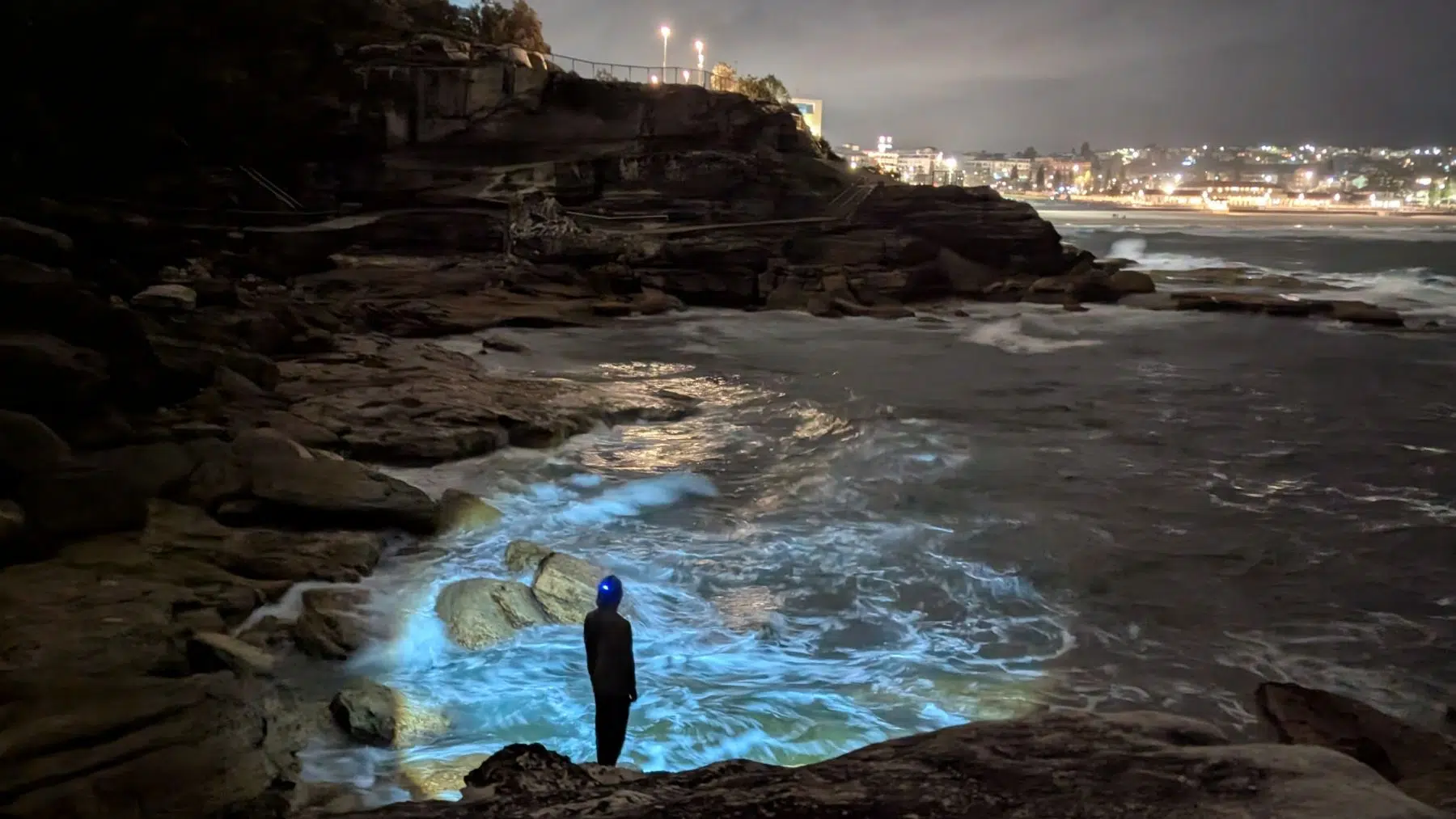
It didn’t roar. It didn’t flash like lightning. It just glowed, steady and smooth, right where the water met the bank. People described it as a soft blue, the color you see on a phone screen in a dark room.
Some areas looked brighter than others. A paddle moving through it made streaks, like someone drawing with a light pen. A few residents said they could see the glow from their windows, before they even stepped outside.
It was the kind of sight that makes you double-check your own eyes. A neighbor might say, “Look at this,” and you could hear the tiny pause in their voice, the part where they wonder if they sound ridiculous.
Rumors spread faster than the tide
Once the photos started moving around, the theories followed. People guessed it could be chemicals. Others blamed boats, or runoff, or some new algae problem that no one had warned them about. A few joked it was space junk or a prank with glow sticks.
It didn’t help that the glow seemed to come and go. One canal would light up, then a nearby spot would look normal. That uneven pattern made it feel less like a “weather thing” and more like something targeted.
Local talk turned into local action. People compared locations, times, and wind direction. Some grabbed jars, thinking they could scoop the glow like a souvenir. Others kept their distance, because pretty can still be suspicious.
A real natural phenomenon sparked the blue shine
The glow was caused by bioluminescent organisms in the water, a natural effect that can appear in Florida’s warm coastal areas when conditions line up. In simple terms, tiny living things can emit light when the water is disturbed.
Reports described the glow becoming more obvious when someone moved the water—paddles, footsteps near the edge, or waves from a passing boat. That’s why the surface could look calm from far away, then suddenly light up when something stirred it.
Scientists and local coverage have long noted that Florida sometimes gets these glowing-water moments, especially in lagoons and coastal waterways. They can be brief, weather-linked, and hard to predict down to the exact neighborhood.
For residents, the big twist was that nothing “fell” into the canal and no one flipped a switch. The light show was alive, and it was already there—waiting for the right night and the right movement.
Why this matters beyond the photos
Glowing water is not just a pretty clip for social media. It can be a sign of changing conditions in the water—temperature, nutrients, and how calm or stirred up the surface has been. It’s not automatically dangerous, but it can be a prompt to pay attention.
For people living near canals and lagoons, it’s also a reminder that their backyard waterway is more than a view. It’s an active system that can surprise you, even on an ordinary weeknight. The glow can draw crowds to shorelines, and that can create safety issues if people wander out in the dark.
There’s also a human side that’s hard to ignore. Neighbors who barely talk can end up standing together at the edge of the water, trading stories, pointing at ripples, and laughing at their own disbelief. In a world full of alerts and alarms, it’s rare to get a moment where the news is simply: the canal is glittering blue, and nobody planned it.
Read the whole thing?
Get the week's signal, not the noise
Our sharpest reporting on energy, climate and nature — free, once a week.