
Scientists thought they knew what to expect when studying the human brain. Human brains were reacting in real time.
No light. Not sound. No touch. Yet brain activity was there.
Yet the brains they were studying reacted as if something had taken place.
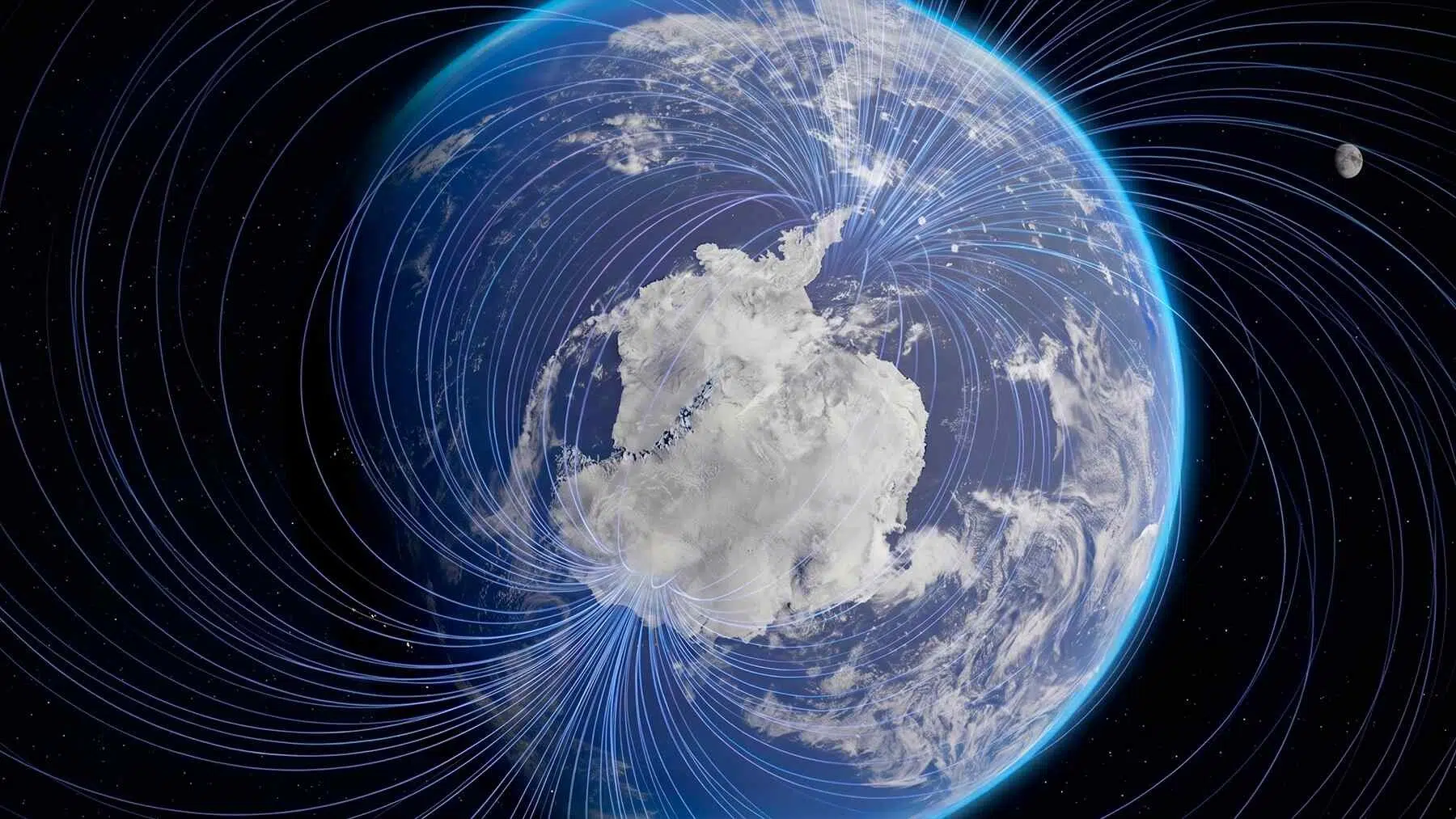
That something was not inside the researchers’ lab. It was outside, surrounding the entire planet.
Once they understood this strange signal, the implications became rather unsettling.
Is the human brain actually listening to the Earth?
How scientists detected something that they never should have
Participants in the study sat silently in a sealed chamber.
No auditory or visual cues are present to them at all.
However, hidden coils were changing the direction of the magnetic field around them.
The changes were remarkably subtle, almost imperceptible.
No one in the chamber felt anything different.
Yet their brains told a far different story. Recordings began to shift.
As if their brains were reacting to a rotating magnetic field. And it did so over and over again.
What exactly were the participants’ brains reacting to in the chamber?
A hidden magnetic force: what researchers noticed inside the brain
The signals were not just random noises.
They were actually a consistent pattern tied to magnetic changes around them.
The human brain is complex. Some of our most important features have evolved.
Science has tried to replicate this process. But to detect a hidden force changing the way our brains react?
The researchers noticed that when the magnetic field rotated, brain activity plummeted.
That drop was not meaningless by any stretch of the imagination.
It resembled how our brains react to sensory input.
Our brains process certain information differently. Like hearing a new sound or seeing a beautiful painting.
Even stranger, the response depended on the field’s orientation.
One direction triggered the signal; others did nothing at all.
That easily ruled out the signal as a simple electrical interference.
Researchers identified the pattern as a form of alpha-band disruption. But what was causing it?
Could it be some kind of biological mechanism at work? Perhaps something buried deep inside our DNA?
What was this hidden signal confounding the researchers?
Answers emerged from the study, “Transduction of the Geomagnetic Field as Evidenced from alpha-Band Activity in the Human Brain,” published in eNeuro.
A hidden connection explained: Humans and Earth are hearing each other
The signal left researchers confused. But answers were coming.
The pattern had a name: alpha-band desynchronization (alpha-ERD). It appears when the brain processes real sensory input.
It occurs in the human brain between 8 and 13 Hz. Under normal conditions, these alpha waves remain as steady as a rock.
But when a shift takes place in the magnetic field, their amplitude plummets.
That singular drop is the key to this story.
It means that our brains are processing the magnetic shift as a real stimulus. Just as it normally would for light or sound.
The signal connecting the brain to Earth is alpha-band desynchronization.
A silent yet strong connection exists between the Earth and us
The researchers believe that this might be a form of human magnetoreception.
A sensory ability already discovered in some species of birds and turtles.
The leading theory points to microscopic magnetic particles inside the human body. These could enable a sort of biological compass for humans.
This compass silently detects the Earth’s magnetic field. The signal itself is the brain reacting to this detection.
It certainly does not mean humans can navigate like migratory birds.
But it does point to a hidden sense that never fully left our brains and bodies.
Seeing the world as animals do is a stretch. But at least we now know we have a hidden magnetic compass.
Even if we can’t access it.
Read the whole thing?
Get the week's signal, not the noise
Our sharpest reporting on energy, climate and nature — free, once a week.


