Thanks to Senator Scott Wiener, California will be introducing the “Balcony Solar” bill to curb financial problems related to escalating energy prices. As per this bill, intended to cut the power bills of millions, the SB868, the Plug and Play Solar Act, and the SB222, the Heat Pump Access Act, will be combined in an attempt to reduce the power bills of millions of Californians. In this way, clean power will be accessible to more citizens, and citizens will stress less about their state ranking second to Hawaii in terms of high power prices.
Looking at SB222, the Heat Pump Access Act
As per SB222, heat pumps are advocated and seen as a better alternative to gas furnaces and water heaters. Cutting down electricity usage by more or less 75 percent, heat pumps are an ideal solution. With heat pumps, the idea is to have a fossil fuel HVAC or water pump system replaced by a heat pump.
Despite the adoption of heat pumps being slow, SB222 would enable automated permitting for standard installations along with cap fees. Such measures may very well be necessary if the state meets its goal of installing six million heat pumps by 2030.
What does the SB868 Act mean on its own?
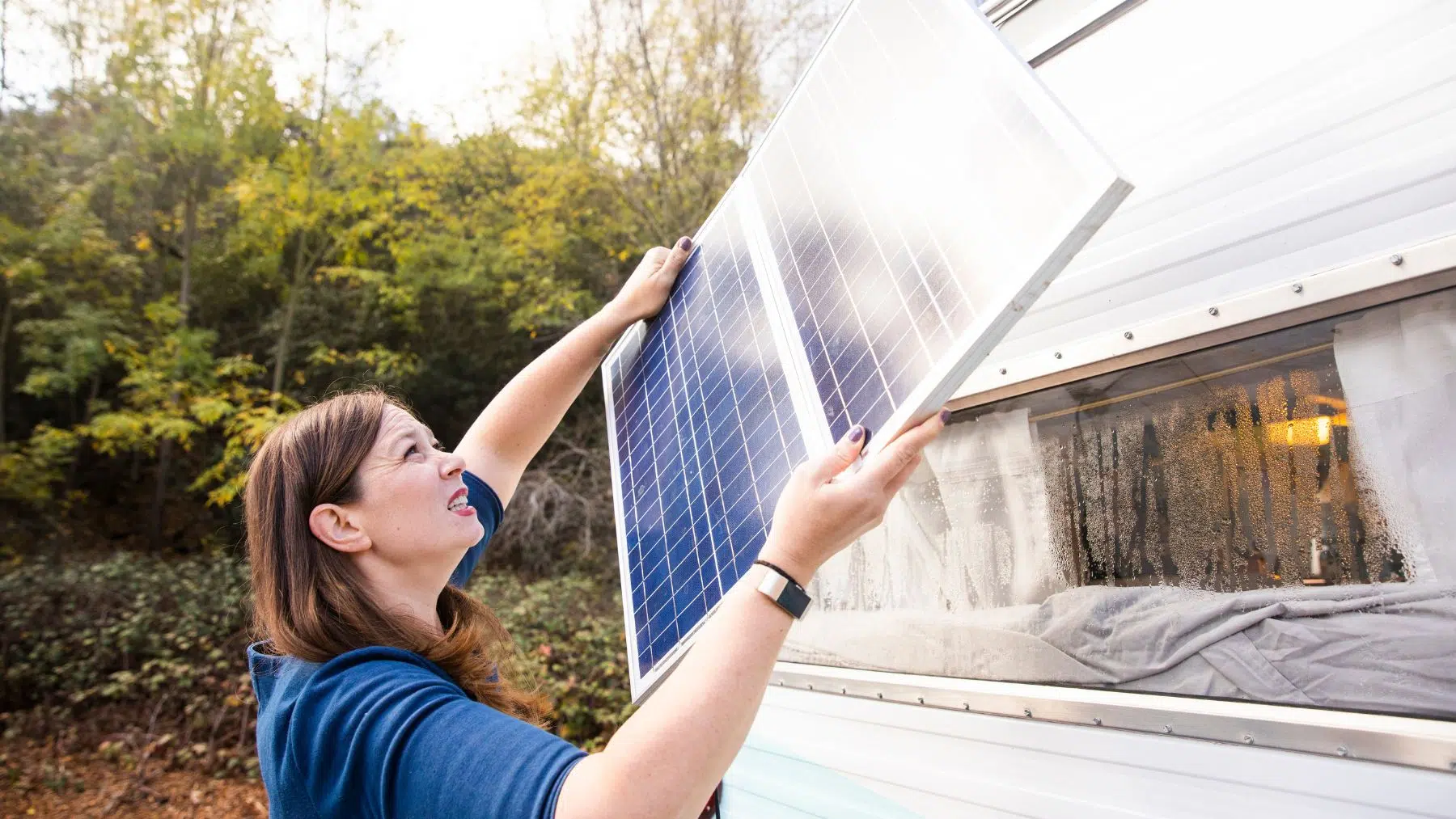
A central part of SB868 would be to ensure that California becomes the second state to make plug-in photovoltaic systems legal. These systems are described as “balcony solar” and rely on using the abundant sunshine available in the state. The output ranges from 200 to 1800 watts, and the units are made up of a few panels, an inverter, and a small battery that plugs in directly to a 120-volt outlet. Electrons do not leave the house and flow to the grid, but these electrons would rather flow to the house next door.
Understanding what plug-in solar could mean for Californians
Balcony solar can be mounted on railings, patios, and yards, and can be fitted on older roofs or easily on roofs without requiring major construction or adjustment. Electricity generated gets consumed effortlessly within the home, providing power to appliances, like refrigerators, with very little power being exported to the grid.
According to supporters, this bill could unlock tremendous savings for renters and homeowners in the state. A concept like this has been established abroad, with Germany having installed balcony solar systems already. Ten million consumers have enjoyed massive savings. While the house and the model chosen matter, a plug-in solar system could very well mean savings of up to $450 per year, with average households saving about $400 yearly just by making the switch to a heat pump. California is not the only state that has braced itself for increasing electricity prices. Another state’s energy bill has gone up by 20% in one month.
Increasing energy costs are curbed by the Balcony Solar Bill
The Clean Homes and Energy Affordability Package (CHEAP) has come into effect, and it considers both bills together, making clean energy technology that is easier and cheaper for many Californians. Since electricity rates in this state have been increasing between 2022 and 2025, this package seems essential for many Californians who have been finding escalating energy costs hard to deal with. According to Senator Scott Wiener, citizens have been given the tools to reduce energy costs.
While cost savings are one of the main reasons why heat pump adoption is under consideration, it offers multiple benefits, including improved indoor air quality and the ability to cool the air during times of extreme heat. When seen together, SB686 and SB222, will both work towards reducing energy bills whilst cutting pollution, and reducing energy bills at the same time. The state is taking the necessary measures to lower electricity bills; however, citizens in other states are facing bad news since electricity bills have been skyrocketing since March.
Read the whole thing?
Get the week's signal, not the noise
Our sharpest reporting on energy, climate and nature — free, once a week.