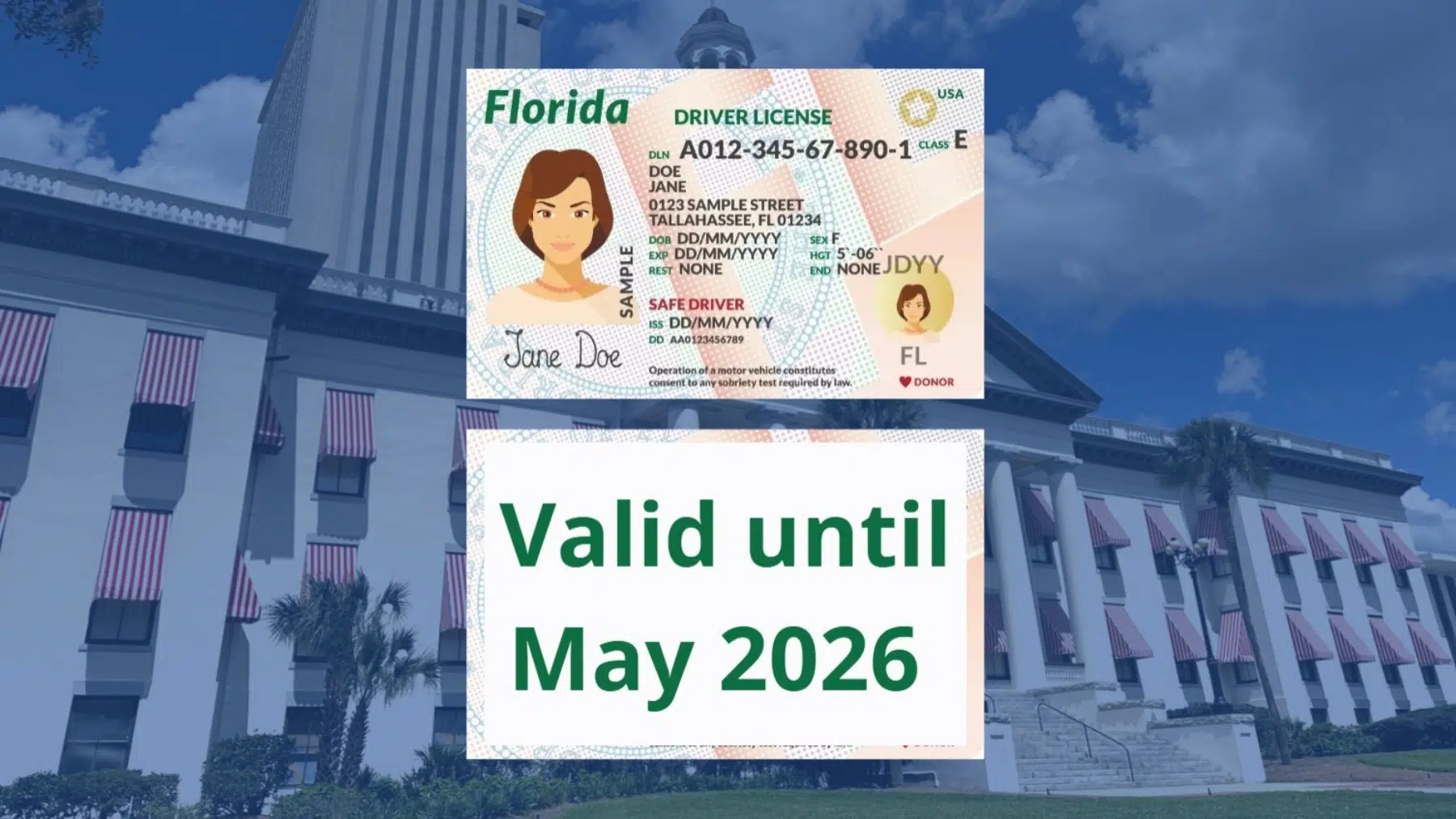
If you are a non-immigrant residing in Florida, things are about to change regarding driver’s licenses. The state of Florida and its legal policy team have expressed that non-immigrants should start renewing their driver’s licenses annually, meaning driving licenses will be valid for just one year. Therefore, non-US citizens living in the country on temporary status, that is, those with work visas, student visas, and other temporary legal statuses, are impacted by this change, which takes effect immediately. Before this, driver’s licenses would expire when the legal document (VISA) was expiring.
Comprehending the new license policy: Non-U.S. citizens’ annual renewals
Local 10.com reported with more emphasis that the Florida Department of Highway Safety and Motor Vehicles states that all driver’s licenses and identification cards issued to non-immigrants will only be valid for the period specified on the applicant’s U.S. Citizenship and Immigration Services (USCIS) documentation, which cannot be more than a year. The credential will only be valid for a year after it is issued.
One of the key motivators for this change is that, from the 7th of May 2025, the Transportation Security Administration announced that travellers will need to provide REAL IDs when boarding domestic flights. A Florida driver’s license or state ID card with a gold star in the top right corner, a valid U.S. passport, or a U.S. passport card are examples of REAL ID-compliant identification.
Effects on lawful non-immigrants: Added stress and possible disincentives
Although policymakers have reasons to initiate this new rule, it does, to a certain extent, have an effect on non-immigrants. These effects are not positive, as non-immigrants now face extra logistical and financial burdens. Making yearly visits to the legal departments does take a lot financially and emotionally. Think about the paperwork, certifications, and all that needs to be put in. People with low-income circumstances will be highly impacted.
Furthermore, permanent residents and citizens are exempt from the change. Immigration attorneys have expressed their concern regarding this issue. Local immigration attorney Frank Symphorien-Saavedra said the change only applies to those who are considered nonimmigrants, including people who have a work or student visa. He said:
“You may have a work visa, that it’s a three-year visa, right? And your employment is presumed to be, and your status here is presumed to be valid, at least for that three-year period. So, you know, it obviously is an additional obstacle for nonimmigrants to be here and want to work in the United States and contribute.”
Resolving the issues: Steps to lessen the effect
Some local authorities and administrations are trying to take the initiative and change the rules. They have observed the possible strains that come with such a decision. For instance, in order to meet the expected rise in demand, officials in Miami-Dade County have converted three tax collectors’ offices to provide driving license services.
Miami-Dade Tax Collector Dariel Fernandez is the one who implemented this rule after getting the state notice. He explained:
“If your papers say four years, I can only give you one year.”
Getting around in the new driver’s license renewal environment
If no one can fight for non-immigrants, then this change just started for this group of non-immigrants, and who knows what else legal authorities will implement? Is it an unfair move? Yes, because the logistics and financial burdens are a lot. However, if immigrants do not win, there is no hope for foreigners in the U.S..
Due to Florida’s revised guidelines, non-immigrants who were previously able to renew their ID cards and licenses for several years at a time will be making more visits next year. For more information, please refer to the Florida Highway Safety and Motor Vehicles’ information for immigrants.
Read the whole thing?
Get the week's signal, not the noise
Our sharpest reporting on energy, climate and nature — free, once a week.