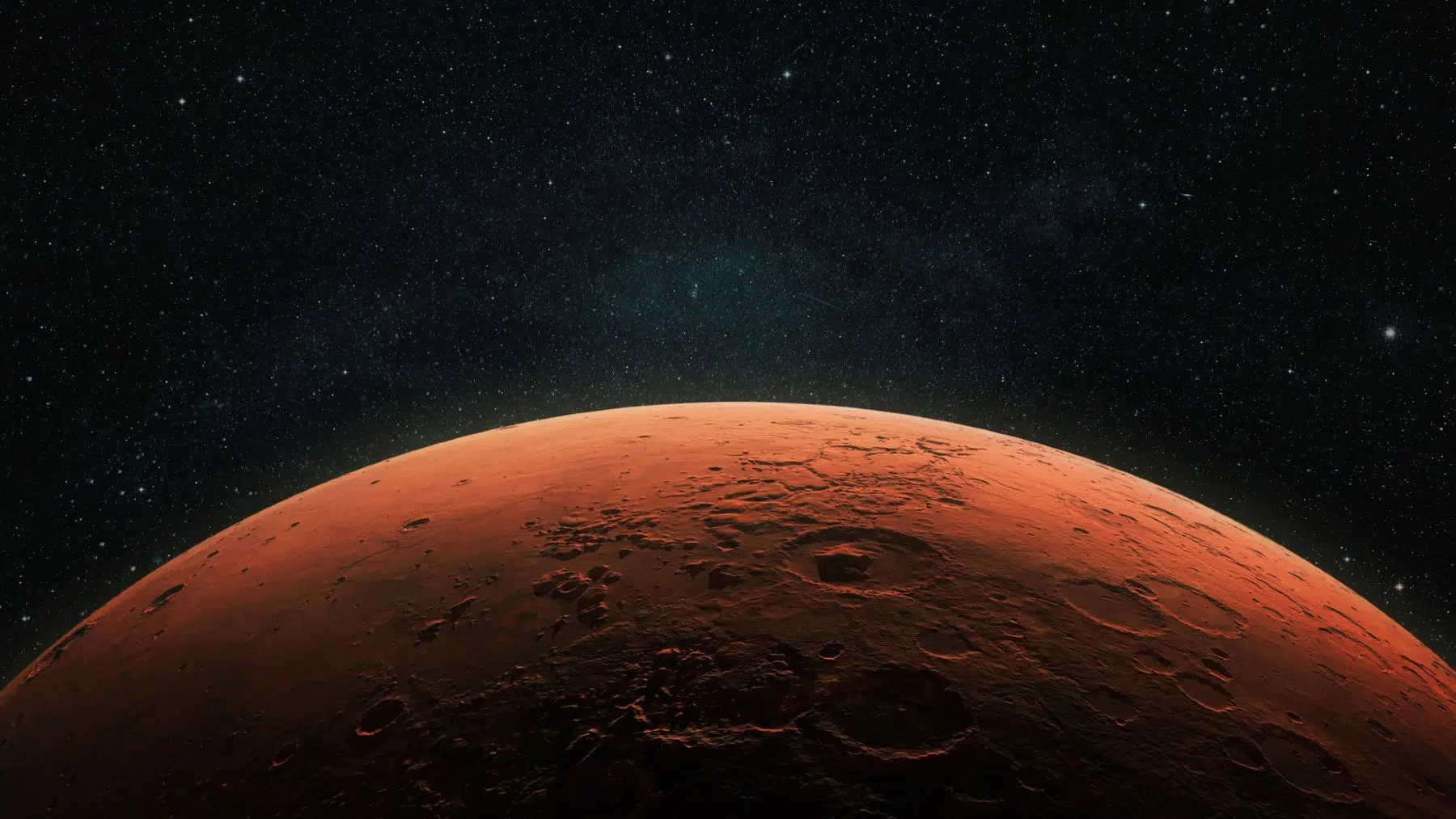
It’s not always dusty and dry on Mars. As fall is about to start on Mars, scientists will take a closer look at how the season unfolds on the red planet. Both Earth and Mars have the same four seasons, but in Martian time, since the years are longer, it takes twice as long to go from one season to the next. While it’s not like on Earth, where the leaves fall from the trees and everything looks like it came out of a movie, it’s interesting to see how the planet behaves during this time, and even though humans can’t live there, during the summer, the temperature can hit 20ºC.
Earth and Mars: Separated by tens of millions of kilometers
There are no continents on Mars, which means the fall affects certain limited areas. On Earth, we would see the difference from one place to another, but on the red planet, these types of changes are much more subtle. The rovers on the surface allow scientists to see firsthand what is going on as the fall is about to start on Mars.
The way the seasons play out on Mars has everything to do with the planet’s position relative to the sun and its elliptical movement during the year, twice as long as ours. Sometimes, the planet is farther from our star, and other times it’s closer.
Fall is about to start on Mars: Here’s when it’s happening
Fall is about to start on Mars in over a month from now. On November 29, 2025, the planet will be in autumn until the northern equinox in late 2026. That’s because a Martian year takes almost twice as long as ours. The southern summer gets hotter than the northern one because, at that time, the southern half of the planet tilts towards the sun, while the northern half tilts away.
In spring, the polar ice cap starts to shrink, sometimes disappearing almost completely by summer. As the ice melts, it releases carbon dioxide, making the atmosphere thicker. Come autumn, the ice grows again as temperatures drop, sometimes creeping down to the middle latitudes in winter. During the northern summer, clouds can form over volcanoes, and sometimes heat from the tropics creates bands of clouds, not unlike what happens on Earth. Even in summer, temperatures are harsh, dropping as low as -140°C., and as the fall is about to start on Mars, it won’t get warm.
Red is not the original Martian color: The sun is changing the planet
As the fall is about to start on Mars, NASA notes the path around the sun isn’t a perfect circle. Sometimes it’s closer, sometimes farther. The hemisphere tilted towards the sun when the planet is at its closest gets a hotter, shorter summer, while the other side has a milder, longer one. And if you look at Mars through a telescope, you’ll see that its deserts aren’t really red—they lean more towards a red-orange. That color comes from iron oxide in the soil—Martian rust.
NASA and the ongoing search for signs of life on Mars
Beyond noticing the fall is about to start on Mars, NASA has been on the hunt for signs of life on Mars for decades. And now, they might have just picked up something that could change the game. The Red Planet is unique—it’s rocky, has weather, and behaves in ways we can almost predict. Over the years, multiple rovers have been sent to explore and study its soil ahead of future astronaut missions.
Read the whole thing?
Get the week's signal, not the noise
Our sharpest reporting on energy, climate and nature — free, once a week.