

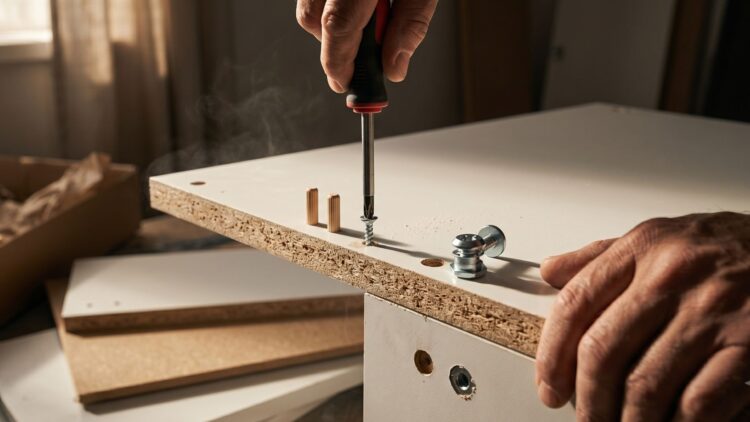
You know the moment well. You slice open the cardboard box, slide out the fresh panels, and breathe in that distinctive new furniture smell.
It feels clean, almost exciting, the scent of something brand new in your home. The bookshelf or the dresser goes up in an afternoon, it cost almost nothing, and it looks great in the corner.
But that smell is not nothing. And once you understand what you are actually breathing in, the cheap and cheerful bargain starts to look a little different.
The furniture that conquered the modern home
Walk into almost any home today and you will find it.
Flat pack furniture, light and affordable and stylish, has quietly taken over because it is cheap and easy in a way solid wood never was. You carry it home in a flat box and build it yourself with a little key.
The catch is what it is made of. Most of these pieces are not solid timber at all but engineered wood, tiny wood particles and fibers pressed and glued together into smooth boards. Solid timber was heavy, costly and slow to make, so the industry turned to glue instead. And the glue is the part worth paying attention to.
What that new furniture smell really is
The boards in most flat pack furniture are held together with a resin, and that resin very often contains formaldehyde.
As the board sits in your warm room, that resin slowly breaks down and releases the formaldehyde back out into the air as an invisible gas. The process is called off gassing, and pressed wood furniture is one of the biggest household sources of it.
So that fresh, exciting smell drifting up from the new dresser is, in part, a chemical leaving the wood and entering the air you breathe. Warmth and humidity only speed the process up, which is why a new piece smells strongest in a stuffy summer room.
A chemical you would rather not breathe
This matters because of what formaldehyde actually is.
Health agencies classify it as both an irritant and a known carcinogen, and at the levels that can build up indoors it is linked to headaches, dizziness, and irritated eyes, nose and throat, especially in children, older people and anyone with asthma. A study across seventeen European countries found furniture and building materials to be a leading source of indoor formaldehyde.
It rarely arrives alone, either. New furniture and finishes can also release other invisible compounds we end up living alongside, from benzene to toluene, quietly thickening the air in a closed room. None of it is dramatic poisoning, but it is a steady, low level exposure you never quite agreed to, and it is worst exactly when the furniture is newest.
Why it lingers long after the smell fades
Here is the part that catches most people out.
The smell is the least reliable warning of all. Off gassing is strongest in the first days and weeks, but it can continue at lower levels for months, long after your nose has stopped noticing it. Raw, unsealed edges, like the backs of shelves and the undersides of drawers, release more than smooth painted surfaces.
And our homes make it worse. Modern houses are sealed up tight for energy efficiency, which is wonderful for heating bills but means the gas has nowhere to escape and simply builds up around us. What you smell on day one may be gone within a week, while the emissions quietly carry on for months.
What actually helps, without throwing it all out
Before you start eyeing your bookcase with suspicion, the honest part matters.
This is not about one villain brand. Nearly all inexpensive pressed wood furniture does this, and some of the biggest flat pack names actually hold their formaldehyde well below legal limits and banned it from their paints decades ago, so the famous box you assembled is often far from the worst offender.
The fixes are simple. Let new furniture air out in a ventilated room or open garage for a few days before it joins your bedroom, keep windows open and a fan running when it is new, and run a carbon filter air purifier in the early weeks. Seal raw edges, keep humidity moderate, and when you can, choose solid wood or pieces certified to low emission standards. The smell fades, the gas fades with it, and a little airflow does most of the work for you. Used with a bit of care, that affordable bookcase need not cost you anything more than a few open windows.