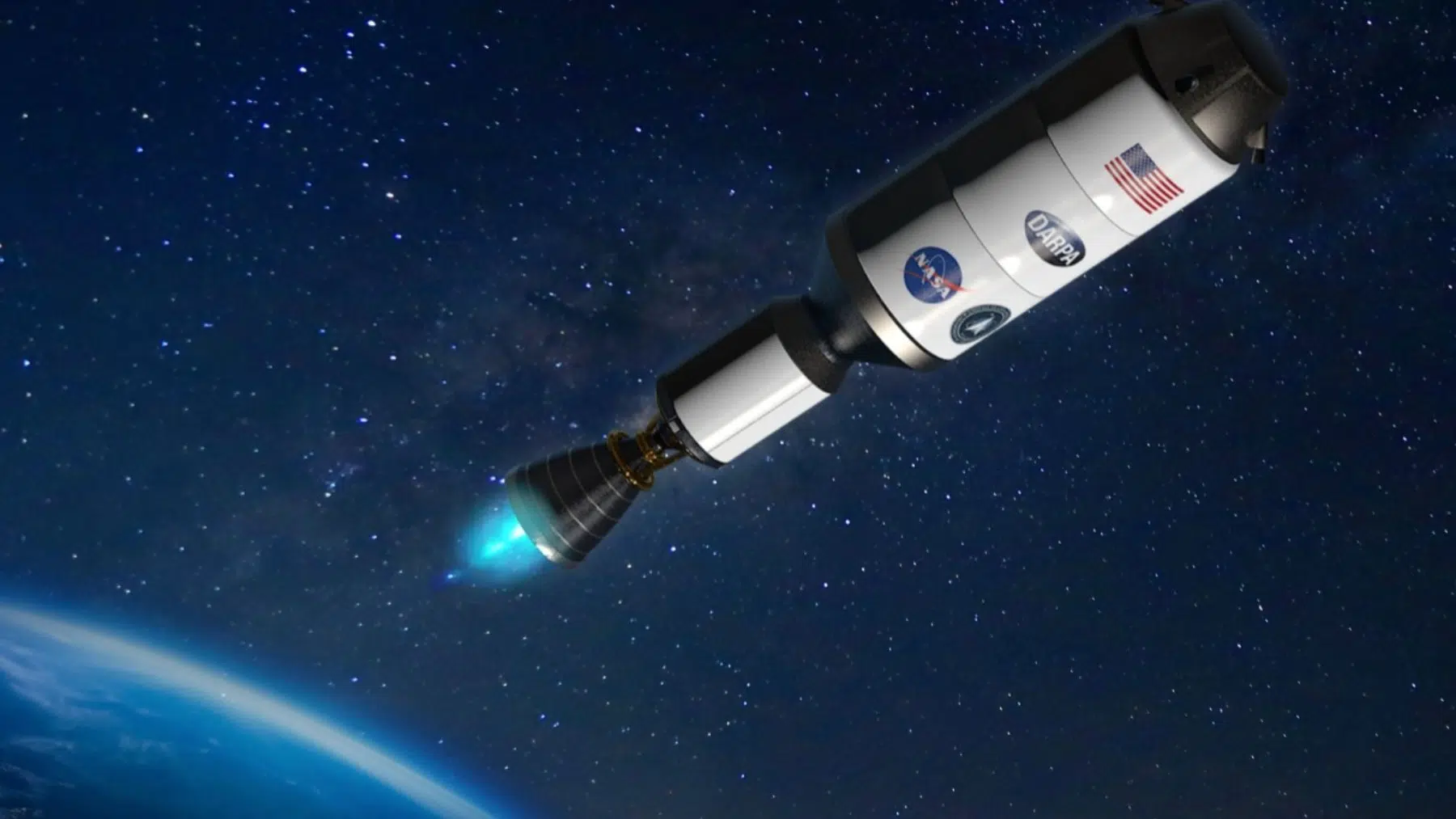
In an effort to transform space travel and make it easier for humans to visit Mars, NASA and the Defense Advanced Research Projects Agency (DARPA) are leading the way in the development of nuclear thermal propulsion (NTP) systems. Deep space exploration will become more feasible and safe thanks to this cutting-edge propulsion technology, which promises to drastically cut down on the time needed to reach the Red Planet.
One day, the first humans may travel to Mars on a rocket powered by a nuclear reactor. However, there is still a long way to go before we can send humans into space on a nuclear rocket, thanks to nuclear thermal propulsion (NTP) technologies. NASA and the Defense Advanced Research Projects Agency (DARPA) are developing this initiative or invention to make it easier and safer for astronauts to have access to the red planet.
In partnership with NASA, General Atomics Electromagnetic Systems (GA-EMS) accomplished a significant milestone earlier this month that will pave the way for the use of NTP rockets. General Atomics tested a novel NTP reactor fuel at NASA’s Marshall Space Flight Centre in Alabama to determine whether the fuel could survive the harsh conditions of space.
Using nuclear thermal propulsion to advance space travel
NTP systems work by heating a liquid propellant like hydrogen in a nuclear reactor. Thrust is produced when the heated propellant expands into gas and is released through a nozzle. Spacecraft may travel more quickly and carry heavier payloads thanks to this technique, which provides around twice the propellant efficiency of conventional chemical rockets.
Shorter transit times to Mars are a result of NTP systems’ increased efficiency. A one-way journey to Mars using current chemical propulsion methods takes roughly six to nine months. On the other hand, NTP might shorten this time to roughly four to six months, which would lessen the radiation exposure of space and the negative consequences of extended microgravity for humans.
Collaboration between DARPA and NASA: The DRACO program
NASA and DARPA announced in January 2023 that they would collaborate to create and test an NTP system as part of the Demonstration Rocket for Agile Cislunar Operations (DRACO) program. As early as 2027, an in-space demonstration of the NTP engine is planned. By confirming the effectiveness and safety of NTP technology in the space environment, their partnership seeks to lay a strong basis for upcoming crewed trips to Mars.
NASA Administrator Bill Nelson said,
“NASA will work with our long-term partner, DARPA, to develop and demonstrate advanced nuclear thermal propulsion technology as soon as 2027. With the help of this new technology, astronauts could journey to and from deep space faster than ever—a major capability to prepare for crewed missions to Mars. Congratulations to both NASA and DARPA on this exciting investment as we ignite the future together.”
Nuclear thermal propulsion’s benefits for Mars missions
Shorter transit times reduce the health concerns associated with long-duration spaceflight by limiting astronauts’ exposure to cosmic radiation and microgravity. NTP’s increased efficiency improves mission capability by enabling spacecraft to carry more supplies, equipment, and scientific instruments. NTP systems’ high thrust-to-weight ratio allows for more freedom and manoeuvrability when planning and carrying out missions.
Space.com expressed that since longer travels necessitate more supplies and more reliable technologies to support the astronauts while they travel to their destination, a quicker transit time could lower hazards for the astronauts. Another problem is radiation; astronauts are exposed to more cosmic radiation the longer they spend in space. These risks might be lessened by shorter journey durations, bringing the prospect of deep space human spaceflight closer to reality.
Read the whole thing?
Get the week's signal, not the noise
Our sharpest reporting on energy, climate and nature — free, once a week.