Updating a driver’s license address has long meant the same thing for millions of Americans: clearing your schedule, finding parking, and waiting in line at a government office just to hand over a form you could have filled out in minutes.
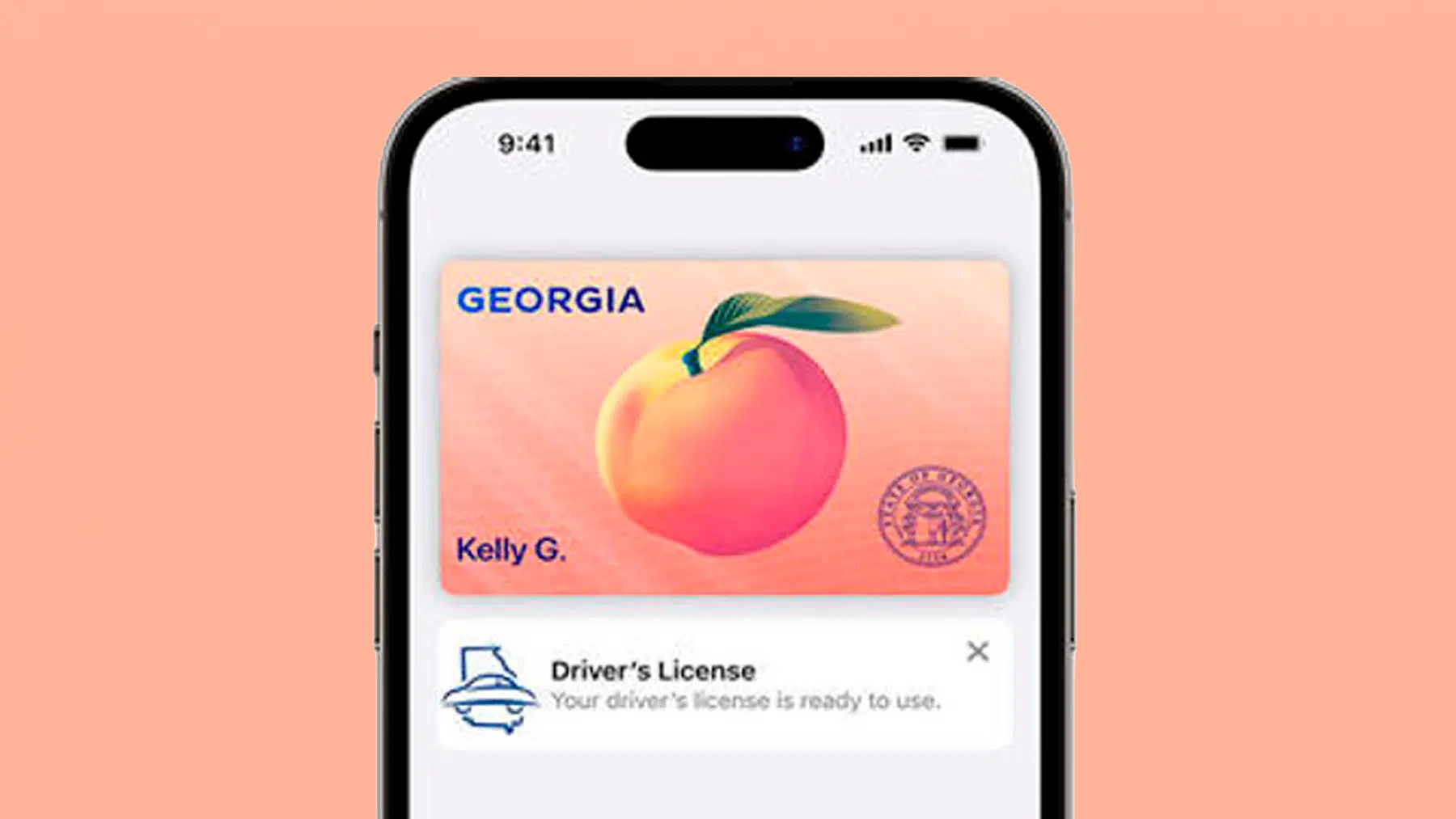
Georgia is now changing that equation. The state’s Department of Driver Services has begun letting residents use a mobile driver’s license — stored in Apple Wallet on their smartphone — to verify their identity and complete address changes entirely online. No office visit required.
It’s a small but telling move, and Georgia isn’t the only state looking in this direction.
What Georgia just changed — and how it works
The Georgia Department of Driver Services has integrated mobile driver’s license technology directly into its online portal, starting with one of the most routine tasks residents face: updating an address. Customers with a digital driver’s license stored in Apple Wallet can now authenticate their identity when submitting an address change through the DDS website — no office visit, no waiting room.
The practical benefit goes beyond convenience. When a resident authenticates with their mobile driver’s license, the system automatically pre-populates required fields using information already stored in the credential — eliminating manual data entry and reducing the chance of errors that might otherwise trigger a follow-up visit.
For now, the feature is limited to Apple Wallet users. The DDS has indicated that support for additional smartphone platforms is planned, though no specific timeline has been announced.
Why digital identity is gaining traction in state government
Georgia’s move doesn’t happen in isolation. States across the country have been exploring mobile driver’s license adoption for several years, driven by growing smartphone penetration and the development of federal standards for digital identity credentials. The idea — that a phone can serve as a secure, verifiable form of ID — has moved steadily from pilot programs toward practical implementation.
The appeal for government agencies is real. Digital verification can reduce in-person wait times, lower administrative overhead, and deliver a more consistent experience for residents who increasingly expect to handle routine tasks online. Georgia’s DDS framed the launch in exactly those terms.
Commissioner Angelique B. McClendon put it directly: “DDS continues to prioritize modern, customer-focused solutions that improve both convenience and security.” That framing signals an agency thinking beyond a single feature update. The stated plan to expand mDL acceptance to additional online services suggests this integration is a foundation, not a one-off.
Security promises and open questions
One of the core arguments for mobile driver’s licenses is that they can be designed to share only the minimum information required for a given transaction. Unlike handing over a physical ID — which displays your full address, date of birth, and other details regardless of what’s actually needed — a digital credential can, in principle, be scoped to the specific verification at hand. That’s a meaningful privacy advantage.
Still, questions remain. The most immediate is the Apple-only limitation. Android users, and anyone without a compatible newer device, are excluded from the feature for now. In a state as large and economically diverse as Georgia, that gap matters.
Broader concerns will grow alongside adoption. As more services begin accepting mDLs, issues around data storage practices, cross-state credential verification, and what happens when a phone is lost or compromised will all demand clearer answers. Digital equity — ensuring residents without access to current smartphones aren’t left behind as services shift online — is a question that tends to arrive late in these rollouts. It shouldn’t.
What comes next for Georgia — and beyond
The DDS has confirmed that additional online services will be expanded to accept mobile driver’s licenses as a trusted form of identification, though it hasn’t specified which services or when. Address changes are a logical starting point — low-stakes, high-volume, familiar enough that most residents already expect to handle them without much friction. What comes next could include more consequential transactions.
Georgia residents who want to use the feature now can visit the DDS website and follow the prompts to authenticate with their mobile driver’s license for address changes.
The larger story is what happens beyond Georgia. The pace at which other states integrate mDLs into government services — and whether they converge on shared standards for how those credentials are issued, verified, and accepted — could determine whether digital identity becomes a genuinely interoperable national system or a patchwork of incompatible state solutions. Georgia’s step is modest. The direction it points is worth watching.
Read the whole thing?
Get the week's signal, not the noise
Our sharpest reporting on energy, climate and nature — free, once a week.