
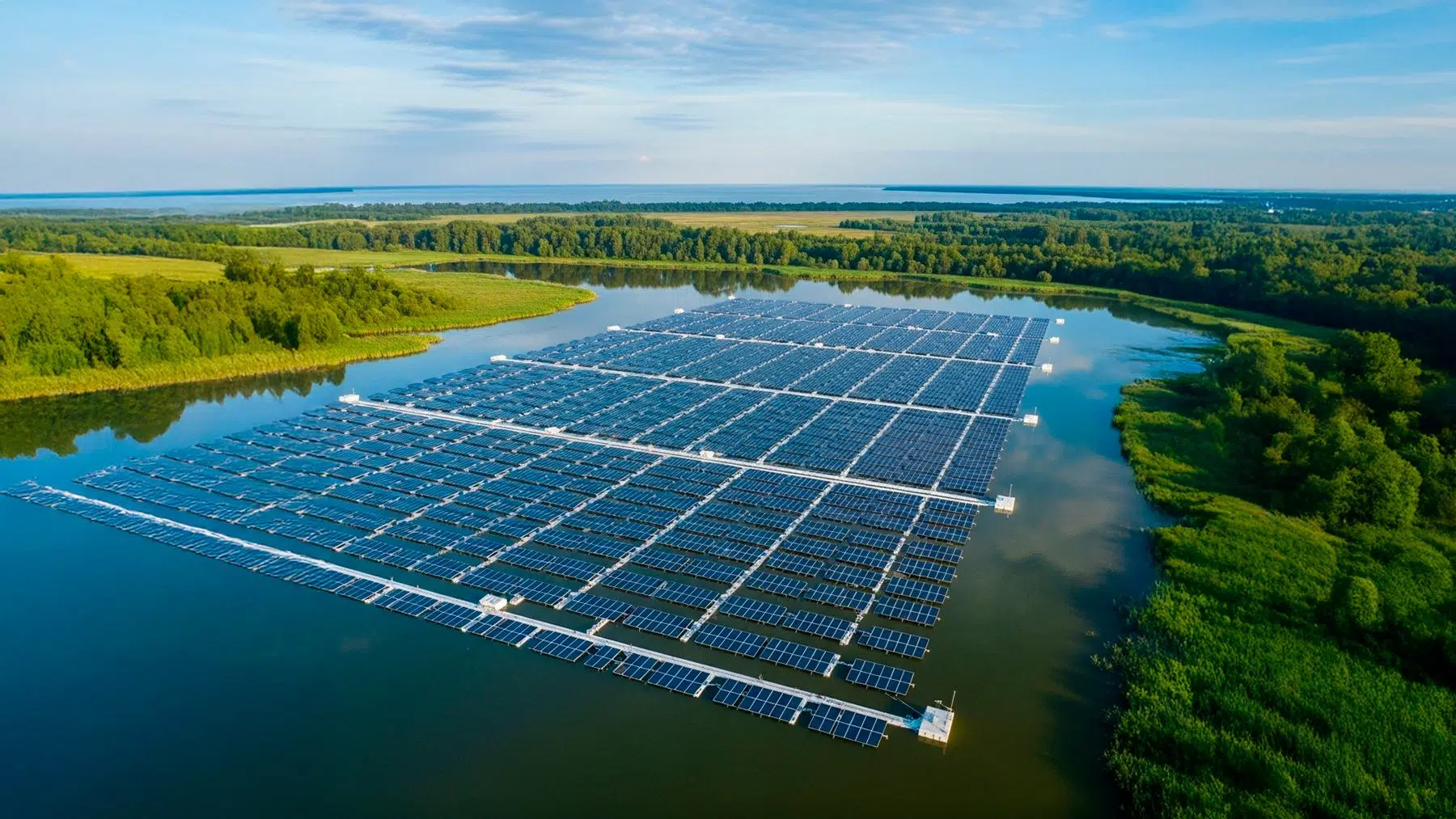
Germany is well-known and highly respected for its inventions. It has registered more patents than any other European country and has become labeled as a global hub for innovation in technology and engineering, among other things. From hamburgers to cars, and now, Germany produces energy above water, making an approximately 18-year-old concept come true. This latest German creation has significant effects and will definitely be added to the country’s legacy of groundbreaking inventions.
Germany’s commitment to lowering its carbon footprint
The world has been gradually transitioning to renewable sources in a global attempt to mitigate the effects of climate change. Joining this global transition is Germany, which has shown its commitment to decarbonize sectors with high emissions, which include the following, as per the OECD:
- Transport and residential
- Dependent on fossil fuels for heating and transportation
- Industry
- Carbon-intensive sectors like steel, cement, and chemicals
- Energy industries
- Major source, although reductions have been made
According to Bundesregierung.de, there are numerous projects underway to help the country meet its climate target by decreasing greenhouse gas emissions by 55% by 2030. These projects include phasing out coal and pushing for the expansion of renewable energies to achieve climate neutrality. One of Germany’s latest projects will help it achieve these targets and has made this long-held concept come true.
Making a floating solar concept come true with this renewable energy design
While solar power is not a new concept, in the early 2000s, floating photovoltaic (FPV) systems, or simply floating solar, were. The Japanese floated the idea in 2007 by creating and installing a 20 kW prototype, which was funded by the National Institute of Advanced Industrial Science and Technology, according to epcm holdings. Fast forward to 2025, and Germany made this concept come true.
A German company called LEAG and a project developer called EP New Energies have teamed up with Pfalzsolar to create the country’s “largest floating solar plant.” This plant is located on the eastern shore of the Cottbus Baltic Sea, a post-mining lake. According to Offshore Energy, the 29 MWp plant has an annual output of approximately 29,000 MWh. The CEO of LEAG, Thorsten Kramer, had this to say about the project:
“This project will give LEAG and the region a further boost towards a sustainable future in which energy supply security and climate protection are equally guaranteed.”
Germany has shown its commitment to sustainability before, as can be seen with the largest wind project built in Germany. This floating solar plant will help the country to achieve its targets, and perhaps inspire others to follow suit. The U.S. has already turned to floating solar plants as well.
The U.S. has also turned to floating solar plants
The U.S. may have beaten Germany in proving the concept, as the City of Healdsburg completed a 4.78 MW FPV for its Wastewater Treatment Facility. According to the City of Healdsburg Fact Sheet, the FPV will contribute 8% of the city’s power demands while decreasing harmful algae blooms and improving the water quality for the city’s recycled water.
Additional benefits of the FPV design
- Floatation devices are movable, making inspection and reparation to pond liners easier
- Has a design life of 25 years, but can operate much longer
- Can integrate a utility-scale battery storage system in the future
No matter who realized the potential of the FPV design first, these projects prove that floating solar power is a great solution for regions that have limited space for traditional solar panel installations. They also help contribute to lowering carbon footprints and thus to achieving climate targets. First, China carpeted the mountains with solar panels, and soon, the rest of the world could cover its outdated lakes or wastewater facilities with solar panels, giving them a new, sustainable purpose.
Disclaimer: Our coverage of events affecting companies is purely informative and descriptive. Under no circumstances does it seek to promote an opinion or create a trend, nor can it be taken as investment advice or a recommendation of any kind.
Read the whole thing?
Get the week's signal, not the noise
Our sharpest reporting on energy, climate and nature — free, once a week.


