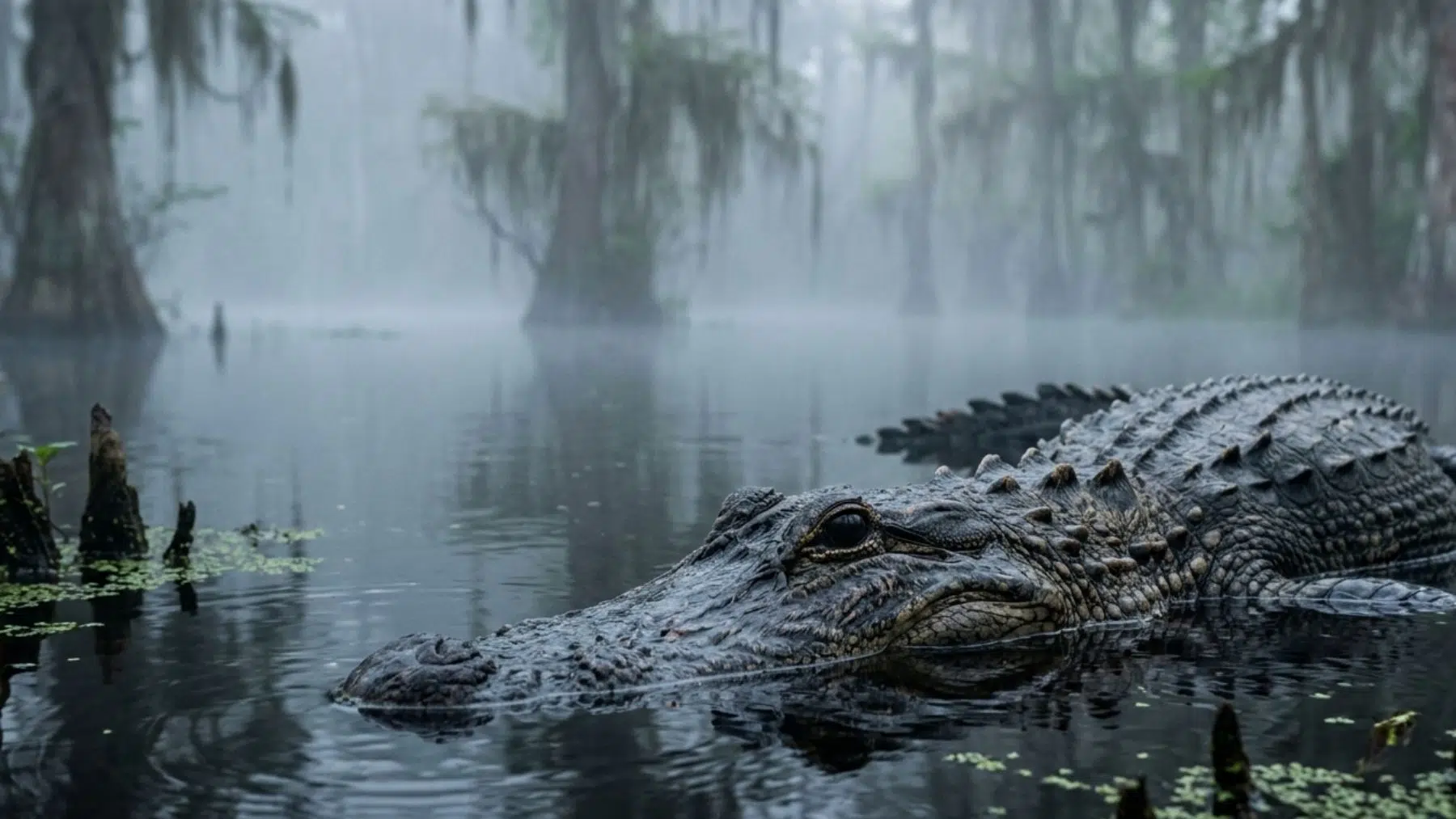
Picture a swamp in southern Louisiana on a hot August afternoon.
The water is thick with bacteria, fungi and rotting matter.
Anything with an open wound that slips into it is asking for serious trouble.
The American alligator belongs to a line that has prowled waters like these for tens of millions of years, and the modern animal has barely changed in at least 8 million.
It rarely gets sick.
And the reason why has become one of the most unexpected leads in modern medicine.
A reptile that should be riddled with infection
Alligators do not lead tidy lives.
They live in bacteria filled water and routinely feed on carrion.
They fight each other often, leaving deep gashes that sit in foul swamp water for days.
By any reasonable logic, those wounds should turn catastrophically infected.
Instead they heal cleanly, usually within days, with none of the festering that would cripple most animals.
Scientists noticed this decades ago and put it down to plain reptile toughness, the hardiness of an ancient survivor.
It turned out to be something far stranger.
The closer they looked, the less the alligator resembled a tough survivor and the more it resembled a living pharmacy.
The blood that does something human blood cannot
When researchers first drew blood from American alligators and tested it in the lab, the results stopped them cold.
When they exposed 23 strains of bacteria to alligator serum, every one was destroyed, including MRSA, the drug resistant staph that hospitals fear most.
Human serum, by comparison, killed only eight of those same strains.
That gap is extraordinary.
The alligator can fight off fungi, viruses and bacteria it has never met before.
Most immune systems learn by encounter, building a memory of each enemy they have already fought.
The alligator’s defence comes preloaded and ready, with no lesson required.
Think of the difference between a library you must fill over a lifetime and a weapon that arrives fully loaded from the factory.
The reason behind a survival streak millions of years long
The secret lies in how the alligator spends its energy.
Some of the most active genes in its liver are tilted toward the immune system.
A warm blooded animal must pour much of its gene activity into the constant work of holding a steady body temperature.
The cold blooded alligator redirects all of that freed energy into an immune system kept primed at all times.
Not burning calories to stay warm leaves a remarkable surplus for biological defence.
There is a structural trick too.
An alligator warms about twice as fast as it cools, driven by a surge of blood through the skin as it basks in the sun.
That fast warming speeds up immune activity in ways researchers are still mapping.
The whole body is tuned not just for power but for resilience at every level.
The breakthrough scientists did not see coming
What caught the medical world was what those immune proteins could do outside the alligator’s body entirely.
Researchers found that proteins in alligator blood could seed powerful new antibiotics against infections tied to diabetic ulcers, severe burns and drug resistant superbugs.
The same proteins killed six of eight strains of Candida albicans, a fungal infection that endangers people with weakened immune systems.
When alligator serum met HIV, a good share of the virus was destroyed.
Researchers have already isolated and synthesised several of these peptides, with names like Apo5 and Apo6, and begun testing them one strain at a time.
Just as other overlooked creatures keep turning out to hide useful chemistry, the alligator may have been carrying a microscopic arsenal in its veins the whole time.
Scientists are finding the same pattern in other ancient survivors, a hint that the harshest places on Earth may be the best hunting grounds for tomorrow’s medicine.
Work with coral reef fish has turned up similar surprises in creatures that look unremarkable on the surface.
What a swamp creature might teach modern medicine
The timing of this research matters enormously.
Antibiotic resistance is now one of the gravest threats in medicine, with ordinary infections growing harder to treat every year.
With the chemical shape of these proteins now known, scientists can start turning them into antibacterial and antifungal drugs, both pills and creams.
A cream drawn from alligator chemistry could one day guard the foot ulcers of people with diabetes against the runaway infections that lead to amputations.
The work sits in test tubes for now, and the road from a promising compound to an approved drug is long and far from certain.
But the alligator has handed researchers a real lead to follow, and the swamp was never just a swamp.
It was a laboratory millions of years in the making, and we are only starting to read its results.
Read the whole thing?
Get the week's signal, not the noise
Our sharpest reporting on energy, climate and nature — free, once a week.