
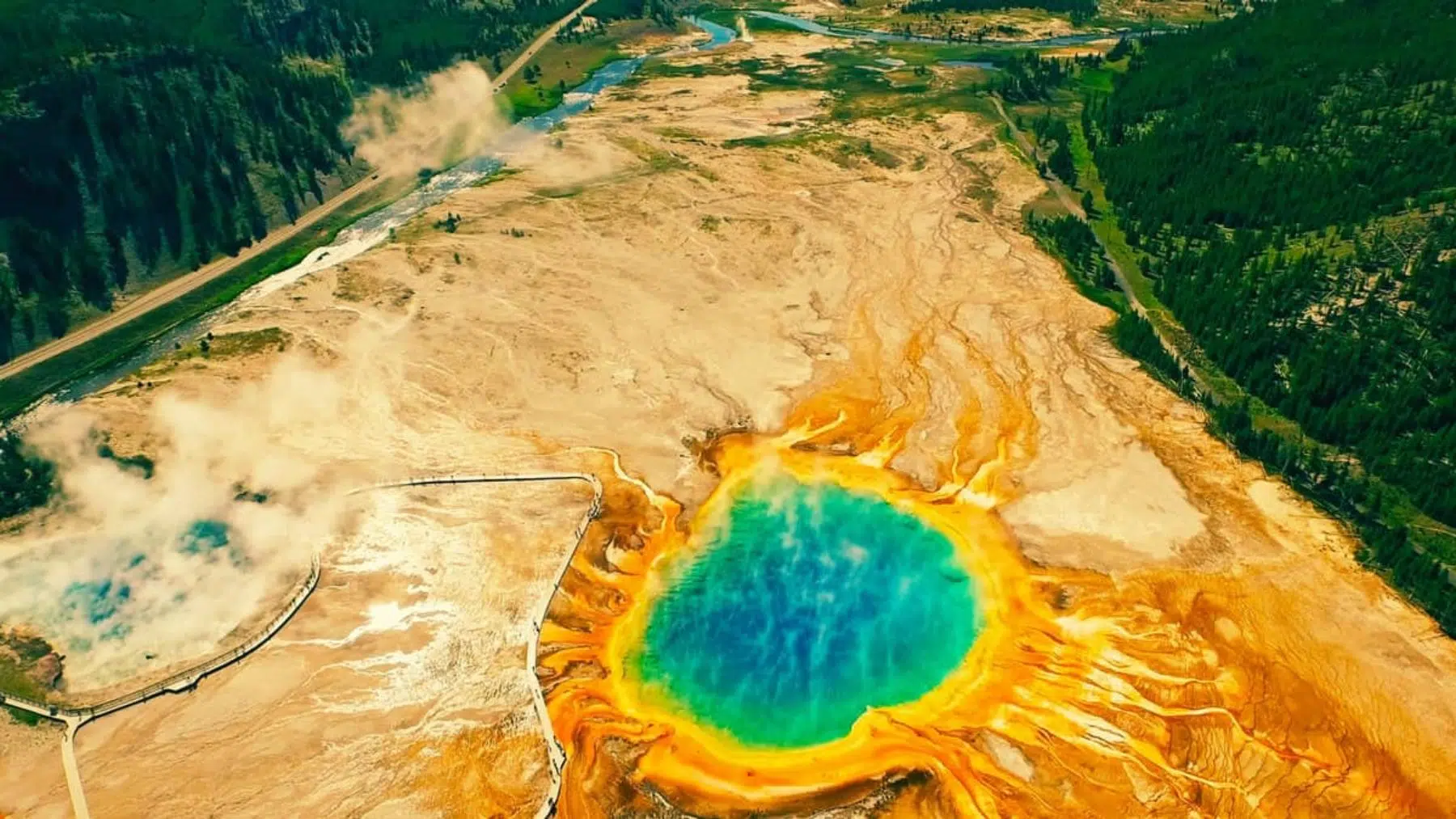
In the heart of the United States resides a place called Yellowstone, recognised for its significant breathtaking landscapes and geothermal wonders. This supervolcano is known to have had eruptions through the past years; however, it has been 640,000 years since its major eruption and people are wondering if the supervolcano is gearing up for another blast.
If you live in a region or country where volcanoes are not common, then maybe you cannot relate; however, those who have experienced them and especially those who live closer to Yellowstone are holding their hearts in their hands because they do not know what could happen next. Reports do state, however, that there is no sign of danger or eruption that is about to transpire now.
An overview of Yellowstone’s volcanic history: An eruption timeline
There have been three eruptions from Yellowstone in the past 2.1 million years. The most recent eruption transpired about 640,000 years ago and this is when the current caldera—about 30 by 45 miles—was formed. An estimated 1,000 cubic kilometres of debris were ejected during this eruption, covering large areas in ash and changing the temperature of the entire planet.
Between those timelines and now, Yellowstone has experienced eruptions, but they are not too major and nothing extremely dangerous. All they did was shape the landscape dynamics and scientists were able to discover that there is a lot of geothermal energy that could be used, but that has been a no-go area. The Yellowstone eruptions do not necessarily have a specific order of dates; they are unpredictable, and that is why some believe they could erupt heavily soon.
Current geological events: Is Yellowstone waking up?
Just in case your heart is starting to beat fast, there is no need to panic because, according to the United States Geological Survey (USGS), it has not yet detected any eruptive activity from Yellowstone. Instead, a hydrothermal explosion or lava flow, which occurs every few years, is the most likely explosive event to occur at Yellowstone, reported by LAD Bible.
It goes without saying scientists and geologists notified some changes during the past years; for instance, the caldera floor rose at an unparalleled rate of around 75 millimetres per year between 2004 and 2008, or almost 8 inches. Then around 2010 it slowed down and the United States Geological Survey (USGS) claimed that there was no sign of an eruption.
However, recently, in 2025, there have been conversations about Yellowstone and its potential to wake up again. Apparently, there is a shift that is happening to the supervolcano, but scientists have confirmed that there is no sign of an eruption and there is nothing to worry about for now. Although the volcano is very active, the next eruption is most likely going to transpire in the next thousands of years to come.
Evaluating the dangers: What would happen during a Yellowstone eruption?
If Yellowstone is to erupt, the United States will be most affected, while the rest of the world will just see ashes. Also, some parts of it will flow into parts of the European continent. However, as the BBC previously explained, “inhaled ash forms a cement-like mixture in human lungs.” More of the US and those near Yellowstone will see a heavier falling of it, says LAD Bible.
The world will be affected; that is a fact. The amount of ash and gas that would be released into the atmosphere will affect things like climate change, disruption of the ecology, vegetation, infrastructure and many more. However, according to recent geological analyses, there is not enough melt in the magma reservoirs beneath Yellowstone to cause a supereruption.
Climate cooling is thought to result from the injection of sulphur gas into the upper atmosphere. In the days that followed, sunlight would be sporadic across Europe’s scarlet skies. Additionally, researchers believe that the average yearly temperature worldwide would decrease by 10 degrees, with colder temperatures possibly persisting for six to ten years.
While the thought of Yellowstone erupting is disturbing, we might have to trust the scientists who carefully study volcanoes and take their word that this eruption will not transpire anytime soon. When we consider Yellowstone’s past and present, it reminds us of how dynamic Earth is and how crucial scientific attention to detail is to protecting ecosystems and populations from natural threats.
Read the whole thing?
Get the week's signal, not the noise
Our sharpest reporting on energy, climate and nature — free, once a week.


