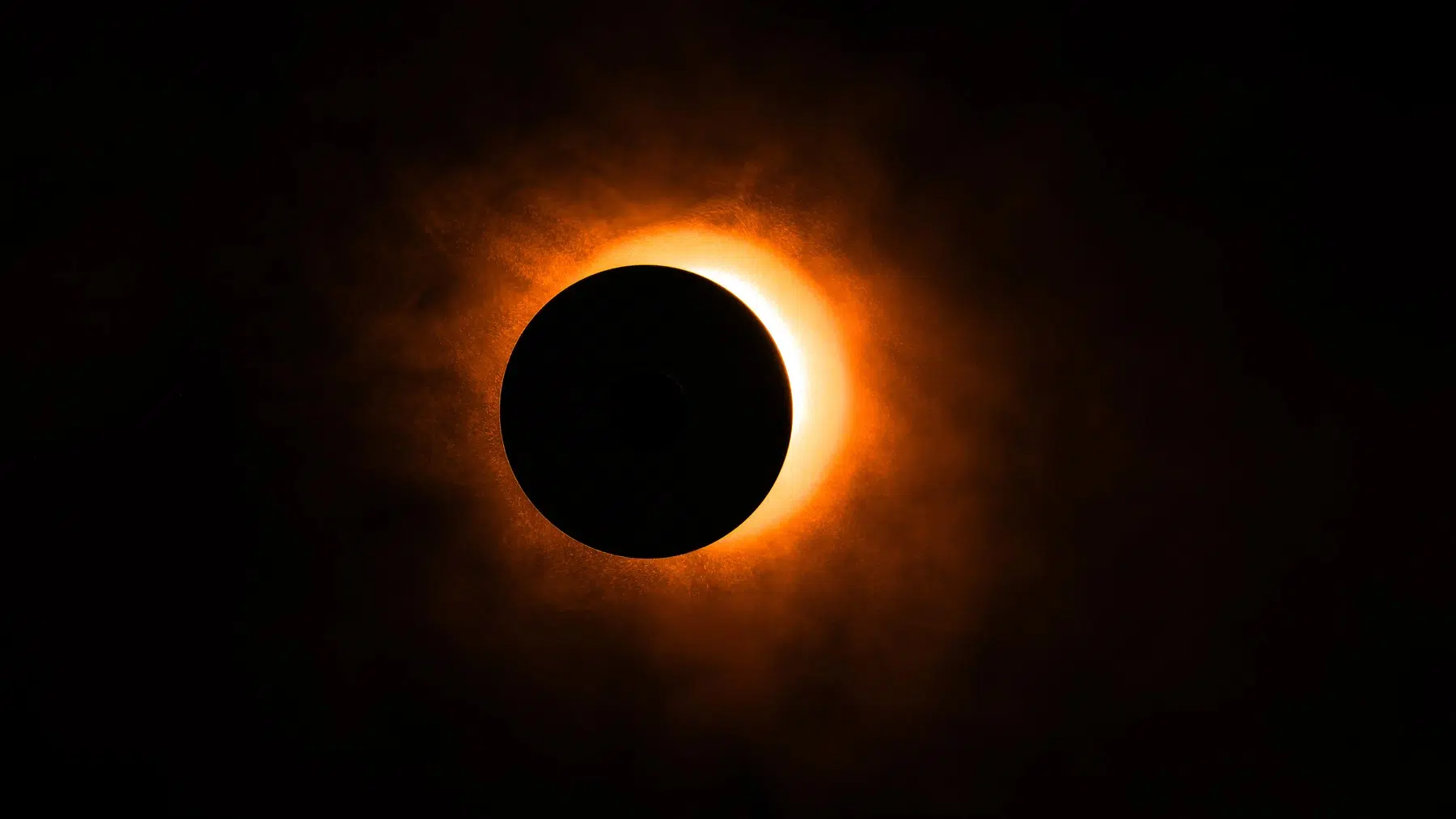
If you are residing in America, on 29 March 2025, you will need to look up at the sky because this is something you do not want to miss out on, especially if you are a skywatcher enthusiast and obsessed with science. In parts of North America, skywatchers will have the opportunity to witness a unique spectacle of a partial solar eclipse. An eclipse is an event that transpires when the moon passes between the Earth and the sun.
The last partial solar eclipse occurred in October 2023, but in April 2024, there was a total solar eclipse and this time around in March, we are anticipating another partial eclipse. It will be most visible in the northern part of America, Europe and parts of Africa. Space.com states that there will be a relatively significant solar eclipse even if the moon’s centre shadow will not reach Earth and there won’t be any totality.
When and where to see the partial solar eclipse of the sun
I mentioned North America, right? Also, some other parts of the States, Canada, Europe and parts of Africa, but the best view will be in northeastern North America. A report by Space.com emphasises that according to this interactive Google Map, on March 29, 2025, the moon will obscure up to 94% of the sun during an event that lasts from 08:50 to 12:43 UTC (4:50 to 8:43 a.m. EDT). These times refer to the global start and end of the eclipse; your local viewing window will vary depending on your location. If you reside in these countries and regions, buckle up, get yourself a pair of solar eclipse glasses, and enjoy the moment.
If you are in Africa, these regions will be able to see the partial solar eclipse: Morocco, Western Sahara, Tunisia, Algeria, Mauritania, Mali, Senegal, The Gambia and Guinea-Bissau. Research does emphasise that those residing in Morocco will have a better view than the rest of Africa. In order to make sure of the dates and times, you can consult the correct sites with proper information, such as timeanddate.com.
Safety measures to consider when watching from America and other locations: Observing the eclipse cautionary
Now that we know what is happening on the 29th of March and where, and because we are getting all excited, we should not forget to be responsible and take note of eye safety. It is not advisable to watch the partial eclipse or any other eclipse for that matter, with the naked eye. The sun is very harmful to the eye and can cause permanent damage to one’s eye sight.
Researchers and scientists advise that one gets solar eclipse glasses. Regular glasses will not work because their lenses are not designed to protect the eye from such exposures. It is better to get a certified eclipse pair of glasses that meets the safety standards to be used when watching the eclipse. Safe solar viewers ought to comply with the ISO 12312-2 international standard. You do not want to go back home with your eyes damaged because of a brief moment. Binoculars, telescopes and pinhole projectors can also be used, but note that you must NOT look at the Sun through a camera lens, telescope or binoculars while wearing eclipse glasses — a special-purpose solar filter must be attached to the front of any such optics.
How to wear solar eclipse glasses
Having solar eclipse glasses does not guarantee eye safety if utilised incorrectly. Here’s how to use solar eclipse glasses, based on information provided by the American Astronomical Society (AAS):
Firstly, inspect your glasses to ensure they are as good as new ones. If you see scratches on them, they have probably been used or expired; therefore, you should get rid of them. For children, it is important they are monitored always in case they remove them and look into the sky with the naked eye. If you wear glasses, place the eclipse glasses on top of them.
Lastly, according to Space.com, before gazing at the sun, shield your eyes with your eclipse glasses, and then turn your head away before taking them off. Every eclipse that has transpired over the last centuries and decades marks the beauty of the cosmos and how it keeps us amazed at the wonderful things it does by allowing us to feature in those moments too.
Read the whole thing?
Get the week's signal, not the noise
Our sharpest reporting on energy, climate and nature — free, once a week.