
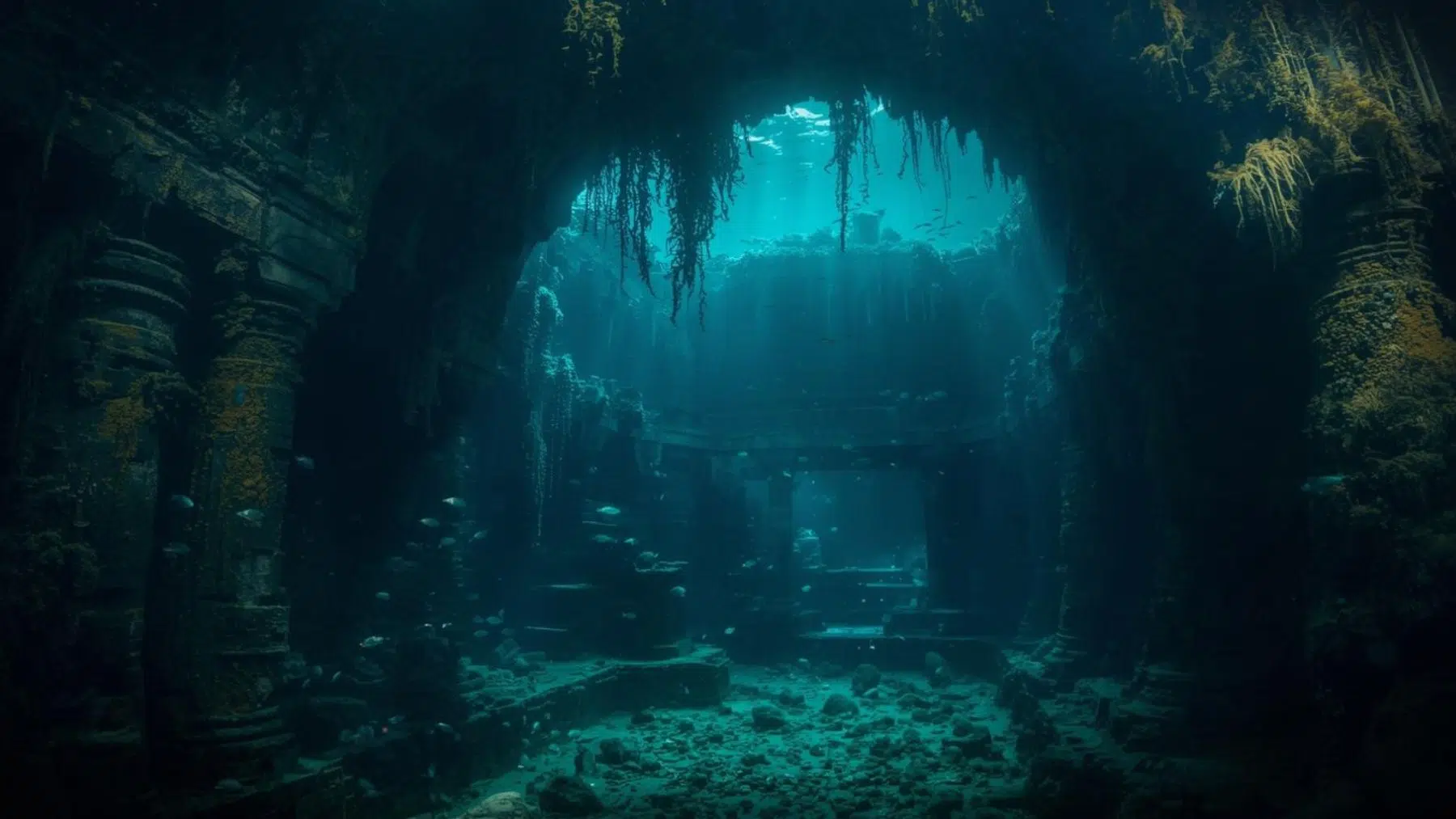
From space, the oceans look calm and simple — just endless blue. But when scientists zoom in with modern tools, that calm illusion breaks. Beneath the surface lies a hidden world full of paths, valleys, and shapes that look strangely familiar. And no one expected to find it there.
The ocean floor isn’t as flat as it looks
For a long time, scientists had only a blurry idea of what the deep seafloor looked like. Satellites can guess the biggest bumps and dips, but they can’t see detail through kilometers of water.
So researchers turned to ships equipped with sonar. These ships send sound waves down to the seafloor and read the echoes that bounce back. Slowly, piece by piece, they turn sound into maps. It’s a slow and expensive process — but it changes everything. Suddenly, the deep ocean floor comes into focus.
Strange shapes start to appear
With sharper maps, scientists began to notice something unexpected. The seafloor wasn’t smooth or random. It showed long channels, branching paths, and deep valleys. Some areas looked uncannily like landscapes on land — almost like river systems carved by flowing water. At first glance, it’s tempting to think those shapes formed the same way rivers do on continents.
But that idea doesn’t hold up for long.
The deep ocean plays by different rules
Down in the deep ocean, nothing works the way it does on land. There’s no rain. No wind. No sunlight. The pressure is crushing, and sediment behaves in strange ways.
So whatever carved these shapes had to be fast, powerful, and able to move huge amounts of sand and mud in total darkness. That narrowed the possibilities quickly.
What’s really carving this hidden landscape
Here’s the key discovery.
Scientists now know that many of these land-like shapes are carved by turbidity currents — sudden underwater avalanches made of water, sand, and mud. These flows race downhill along the seafloor, sometimes traveling hundreds or even thousands of kilometers.
A major scientific synthesis published in the journal Viruses (MDPI) explains how these powerful currents repeatedly cut channels, deepen valleys, and reshape the seafloor over time. They’re not slow. They’re not gentle. But they leave behind patterns that look surprisingly familiar.
Why this matters beyond cool maps
This hidden landscape isn’t just fascinating — it has real consequences.
Turbidity currents are strong enough to break undersea cables that carry global internet traffic. Knowing where these channels run can help reduce risks when new cables are planned.
These sediment layers also act like a natural record. Each flow leaves behind clues about past floods, earthquakes, sea-level changes, and shifting coastlines.
In the end, the deep seafloor isn’t just empty space beneath the waves.
It’s an active, changing world — one that scientists are only now beginning to understand.
Read the whole thing?
Get the week's signal, not the noise
Our sharpest reporting on energy, climate and nature — free, once a week.


