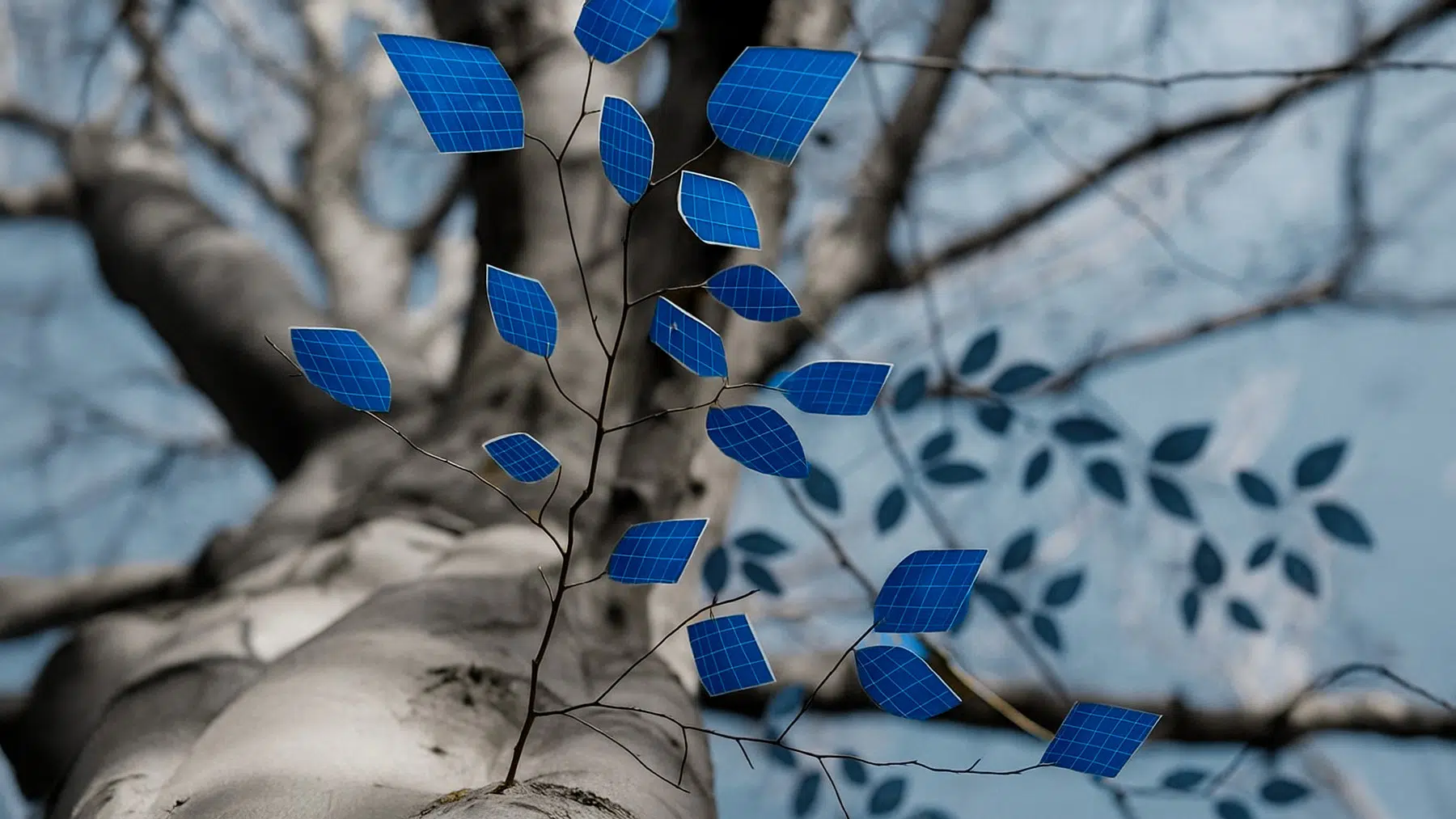
We can learn a lot from nature. Not only does it help mankind relax and unwind and evaluate their life’s purpose, but nature is also a wise and inspirational teacher. Some have turned to nature to create the most spectacular art and designs, while others have turned to nature to engineer a solar leaf. This nature-inspired solar technology is innovative and efficient, as it results in 40 billion cubic meters of fresh water and significantly enhanced solar panel efficiency.
The nature-inspired solar technology
Climate change is a growing concern, with its impact felt around the world as many countries experience hotter temperatures, decreased rainfall, and a shortage of fresh water. The population is growing, the global energy demand is rising, and the only way to satisfy rising demands while mitigating climate change is to turn to renewable energy sources.
However, many traditional renewables fall short due to the impact of weather or low efficiencies, and do not solve the freshwater issue. Thankfully, chemical engineers from Imperial College London have invented a solar technology that will solve all these shortcomings. And the inspiration behind their design is none other than nature’s leaves.
“Implementing this innovative leaf-like design could help expedite the global energy transition, while addressing two pressing global challenges: the need for increased energy and freshwater.” – Christos Markides, paper co-author and chemical engineering professor
The specs of the nature-inspired solar technology
Dr Gan Huang, honorary research fellow in the Department of Chemical Engineering at Imperial College London, and his team created a solar leaf that cools itself with water without additional energy, increasing its performance. This approach is similar to a process observed in plants, called transpiration. Water moves from the soil to a plant’s leaves via numerous tubular structures. Water flow is driven by capillary forces and osmotic pressure to the leaves’ veins. The veins divide water throughout the structure, and then water evaporates from the surface.
The solar leaf has a similar transpiration system. Bamboo fibers were pasted onto a steel wire mesh and coated with a water-absorbing hydrogel. The engineers fixed the 1mm-thick layer onto a 10 cm x 10 cm solar cell and placed the bamboo fiber ends into a water tank. The bamboo fibers acted as veins, sucking water up to the hydrogel. The hydrogel became soaked and spread over the solar cells. Water evaporates, cooling down the solar cells. A collection chamber under the transpiration layer captures the water vapor.
So much more than power from this solar leaf
The engineers published their paper in the journal Nature Communications, and according to their findings, this solar leaf is about so much more than power. When exposed to direct sunlight on a clear and sunny day, this nature-inspired solar technology stays cool by about 26 °C. This increases the solar leaf’s efficiency by 13.6% when converting solar energy to power. In full sun, it has a 14.5% efficiency, much higher in comparison to a traditional solar cell efficiency of 13.2%.
Solving the freshwater shortage
According to the engineers, the solar leaf generates more than one liter of water hourly. They determined that 8.5 TW of installed solar panels with a solar leaf structure will generate more than 40 billion cubic meters of freshwater annually.
Additional benefits
- The materials are widely available, cost-effective, and eco-friendly
- It can easily be produced on a large scale and compete with established technology
- Reduces overall carbon footprint
It’s a good thing the world has so many innovative minds that can create pioneering technology such as the solar leaf. As the engineers continue to develop and enhance their nature-inspired solar technology, other researchers have also turned to similar technologies to help relieve the extreme burdens caused by long-lasting droughts in regions with low annual rainfall.
Read the whole thing?
Get the week's signal, not the noise
Our sharpest reporting on energy, climate and nature — free, once a week.