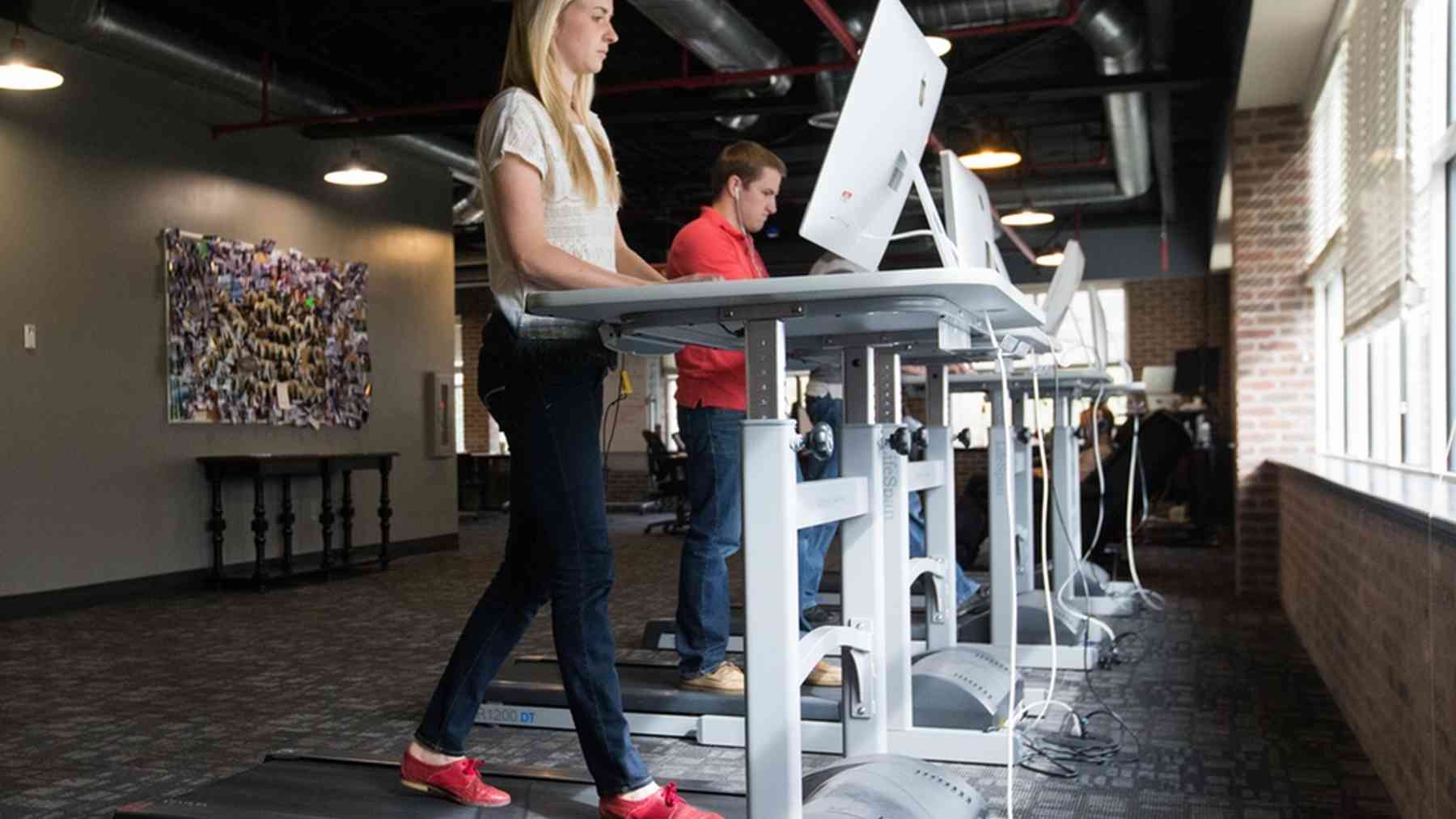
A keyboard clatters at walking pace in a quiet exercise lab.
Wires run up one forearm to a heart monitor.
Nobody is sprinting.
They are walking at a pace barely faster than a stroll through a grocery store.
Yet every finger still has to find the right key.
The question the room was built to answer is simple: can a moving body still think straight.
A moving belt still demands a steady brain
Walking recruits the same motor circuits that balance, breathing and posture all draw on, and those circuits sit close enough to attention and memory that a treadmill can, in theory, steal processing power from a math problem or a sentence. Researchers running the trial expected some cognitive slowdown once feet started moving instead of staying planted under a desk.
What showed up was smaller than feared. Attention and working memory dipped by about 9 percent among the walkers compared with people who stayed seated, and typing spilled out 13 words slower per minute on average.
The body paid a price, but it paid a modest one. It did not collapse the way some had predicted.
So the brain kept doing its job while the legs did theirs. That split matters because it means a treadmill desk does not have to choose between a healthy body and a working mind, it just asks a small performance toll from each task performed while walking.
Seventy five people split between two kinds of desks
Healthy adults were sorted into two groups inside the same lab space, one working at ordinary sitting desks and the other at desks built around a slow treadmill belt. Each person worked through an identical set of typing and puzzle tasks meant to mimic a normal shift at a computer.
The walkers moved at just 1.5 miles an hour, a speed closer to browsing a store aisle than exercising. That pace was chosen on purpose, since nobody would be out of breath, yet the body still had to work to stay upright and in rhythm while the hands typed.
Even so, the setup asked something unusual of the walking group. They had to coordinate a steady gait with fine motor control, something almost nobody practices in daily life.
Forty five minutes produced the hardest numbers
The session ran for 45 minutes per person, long enough to separate a brief novelty effect from a real pattern in performance. A research team tracked the same cognitive battery across both groups the whole time, rather than testing once and guessing at the rest.
By the end, the walking group’s numbers held at roughly 91 percent of sitting speed on the cognitive measures, with the typing gap holding steady rather than widening as the session went on.
That steadiness is itself a finding, since a widening gap would have suggested fatigue was compounding the distraction of walking. One of the lead researchers, exercise science professor James LeCheminant, worked with neuroscientist Michael Larson to design the comparison.
“We wanted to know if people could still function at a high cognitive level while walking,” LeCheminant said, pairing a movement scientist’s view of the body with a brain scientist’s view of attention.
Decades of desk bound hours made the stakes real
Hours spent sitting at a screen have been tied to weight gain, back pain and sluggish circulation, which is why treadmill desks and standing desks have crept into offices and now classrooms. That includes setups a Minnesota stadium lab has tested on resting heart rates, watching pulses and heart size shift as volunteers logged miles underground. The worry was always that the fix for the body might break the job the desk was bought for in the first place.
That is why the published results land as useful rather than just interesting. A modest dip in typing speed is a tradeoff many workers would happily accept in exchange for thousands of extra steps logged across a workday, the same kind of tradeoff researchers have chased in other applied physiology experiments hunting for a small fix with an outsized payoff.
None of this means every job suits a moving desk. Surgeons, musicians and anyone doing precision work by hand would likely feel a bigger cost than a typist does.
What a longer day at the keyboard might still show
A short session cannot say whether the 9 percent gap would shrink as walkers got used to the motion, or whether it would grow once fatigue set in deep into an afternoon. The study only covered a single 45 minute stretch rather than a full eight hour shift, which leaves plenty of ground still untested.
Longer trials, across real workweeks rather than single lab visits, would settle that question properly.
Even with that gap in the evidence, the finding offers a small, concrete reassurance. A body that moves does not have to abandon a mind that is trying to work, and the modest tradeoff looks like one most people could live with.
The treadmill desk, once pitched as either a fitness gadget or a productivity risk, looks instead like a reasonable compromise, one slow step at a time.
Read the whole thing?
Get the week's signal, not the noise
Our sharpest reporting on energy, climate and nature — free, once a week.