

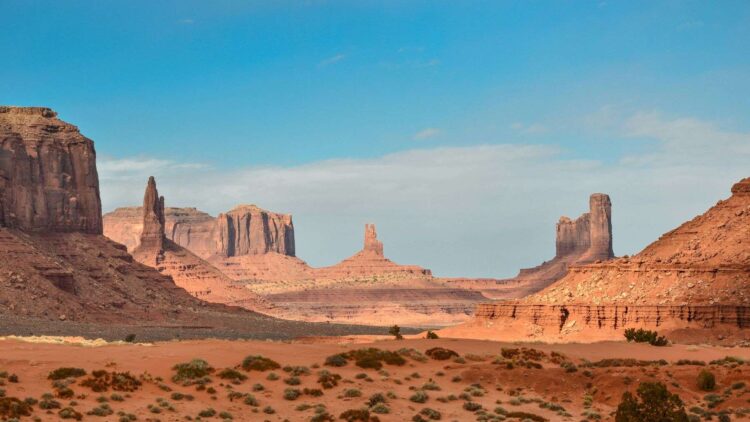
At 8 am sharp, thousands of Americans open Recreation.gov and start clicking — frantically, repeatedly — for a shot at a campsite or river permit on public land. Most are locked out within seconds. The dates vanish. The calendars go blank.
Two months later, a ranger floats past those same campsites. They’re empty.
That gap — between a federal booking platform processing 11 million reservations a year and a physical landscape that often sits unused — is the central paradox of how America now manages access to its public lands.
A system built for fairness — and what it became
Recreation.gov was not designed to be a competitive sport. When federal agencies consolidated their reservation systems under one platform in the early 2000s, the goal was straightforward: make it easier for ordinary Americans to access the public lands they collectively own. The site eventually came to serve 14 federal agencies, handling everything from backcountry hiking permits to campground bookings on remote Bureau of Land Management terrain.
What no one fully anticipated was the scale. Reservations climbed from 3.5 million in 2019 to 11 million in 2024. For the most coveted experiences — a float trip down Idaho’s Middle Fork of the Salmon River, a night in Washington’s Enchantments — the odds of winning a permit hover around 2 percent. One campground with 57 sites reportedly drew 19,000 users competing for the same dates, a success rate of 0.3 percent.
Running all of this is not a land management agency. It is Booz Allen Hamilton, a defense and intelligence contractor better known for cybersecurity work than campfire permits. BAH built the platform for free in exchange for a surcharge on every transaction — an arrangement the government found attractive because it required no upfront spending.
Bots at 8 am: how the permit race is being automated
A web developer known as Jack wanted to test a suspicion that had spread widely among outdoor enthusiasts: that automated scripts were outrunning human users at the moment permits dropped. So he built his own bots and ran an experiment.
When cancellation permits were released at 8 am, Jack’s scripts swept through multiple Recreation.gov pages simultaneously. Within seconds, they had secured permits for the Main Salmon, the San Juan River, and — twice — the Middle Fork of the Salmon. His human control, a friend clicking manually with full knowledge of the release schedule, was shut out entirely.
Using a standard browser inspection tool, Jack found that upcoming permit release dates were visible in the site’s data before they went live. “If you were a web developer of any kind,” he said, “you would be able to find it.” Scraperbot code is shared openly on outdoor forums. Podcast host Sam Carter built a bot to demonstrate how easy it was to game the system and found people messaging him to brag about their own tools — some costing thousands of dollars to build.
Reserved but empty: the gap between digital demand and real use
The cruelest irony of the current system is not the competition. It is what happens after it ends. Sites secured through Recreation.gov routinely go unused, and rangers across multiple public lands report seeing the pattern repeat season after season.
On the Gates of Lodore stretch of the Green River — a permitted section of Dinosaur National Monument where odds of securing a launch are around 2 percent — one group arrived to find the boat ramp completely deserted. Three private groups are allowed to launch daily. That day, they were the only ones there.
Rangers are largely powerless to respond. They cannot reassign a no-show site until after the first night has passed. One ranger described the effect plainly: “We’re basically just blocking an email address.” The wilderness is not overrun. It is sitting quiet while the website is in chaos.
Who profits — and who pays
The financial arrangements behind Recreation.gov are unusually difficult to examine. Booz Allen Hamilton’s share of each transaction is classified as a trade secret, and Freedom of Information Act requests have returned documents with the relevant amounts redacted.
What is known points to significant earnings. BAH originally estimated it would make $87 million in its first five years and roughly $182 million over the full contract period. According to invoices, the company billed more than $140 million in just the first four years — and one analyst projected total earnings could reach $620 million by the contract’s 2028 expiration.
Things that were once free now pass through Recreation.gov’s fee structure. Christmas tree-cutting permits for schoolchildren carry a $2.50 charge. BAH receives a percentage of permit application fees even when applicants do not win a permit. A former ranger put it plainly: “You’re not supporting the parks. You’re supporting a private company.”
The equity problem hiding in plain sight
The competition for permits is not a level race. Research by University of Montana professor Will Rice found that advance reservations through Recreation.gov disproportionately go to users from higher-income zip codes, while walk-in campers tend to come from lower-income areas.
The barriers stack up in ways that are not always obvious: reliable high-speed internet, familiarity with the system, flexible scheduling. If you work shifts, guaranteeing you are online at 8 am on a specific date months out may simply not be possible. University of Colorado economist Jonathan Hughes confirmed that the current system benefits higher-income users and makes it structurally harder for rangers to address no-shows.
Senator Alex Padilla’s RESERVE Act would direct the National Academy of Sciences to study the system’s equity, fee structure, and user demographics. It passed the Senate in December 2024 but failed in the House. Padilla reintroduced it in May 2025.
Fixes on the table — and the clock ticking
The technical problems Jack identified have straightforward solutions in principle. Auditing accounts that send thousands of requests per second and closing off data that previews permit release dates would raise the bar for bot operators considerably. He reported the vulnerabilities to both BAH and the Forest Service. Neither responded.
Policy alternatives exist. The Grand Canyon has run its own weighted lottery since 2006, separate from Recreation.gov, where odds improve over time for repeat applicants — and it has operated for nearly two decades without significant controversy.
The institutional capacity to act is diminished. DOGE-related staffing cuts have left Recreation.gov without a program manager on the government side. Sheri Hughes, who helped build the original system and retired in 2021, was direct: “I handed them a perfectly running system. And it’s just a shit show now.”
Recreation.gov is the mechanism through which millions of Americans interact with land that belongs to all of them. When that mechanism tilts toward those with the most resources and fastest connections, the promise that public land is genuinely public starts to look more like a slogan than a guarantee.