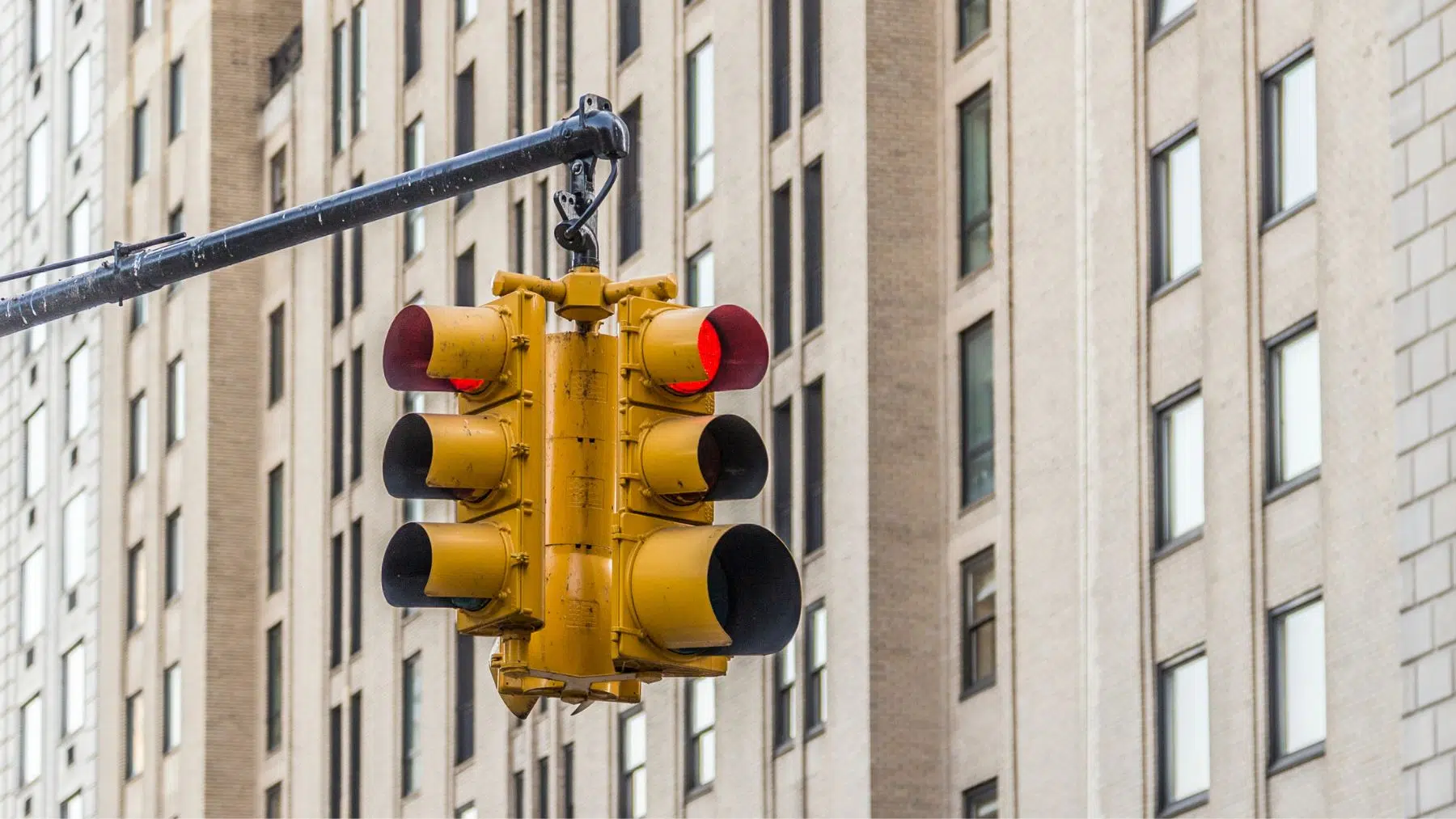
You’ve stopped at red lights your entire driving life: red, yellow, green — simple. The next time you approach a pedestrian crossing, you might notice a shade of red that doesn’t look the same. It’s a federally required variation — and most drivers have no idea why it exists. Once you understand, you may never look at a crosswalk the same way again. What if the traffic light network isn’t as red as we’ve been told?
Protecting pedestrians and other vulnerable road users
If you’ve ever crossed a busy intersection, you know the feeling of high alertness while you wait, look both ways, and double-check, because intersections are where things get risky.
Traffic safety statistics show that more incidents involving vehicle contact with pedestrians happen at the crossing point than in other sections of roadway. It’s the reason why cities spend so much time redesigning corners, signals, and crosswalks.
As the National Highway Traffic Safety Administration puts it, everyone shares responsibility on the road — drivers, pedestrians, and cyclists. In theory, we’re all watching out for each other. Most American cities were designed to accommodate cars, with wide lanes, long stretches between crossings, and turn signals that seem to favor vehicles over more vulnerable pedestrians.
Debunking the myth of the red traffic light
You probably think you know every traffic light color by heart and that it’s simple. But here’s where things get oddly specific: pedestrian signals don’t actually use the same red you see in standard traffic lights. In some places, the differences in lights go further than just the color. During the “Don’t Walk” phase, many intersections use something called “Portland orange.” This is a distinct orange-red shade designed specifically for pedestrian signals. It’s not quite red and not quite amber, but somewhere in between.
Most drivers never notice the difference. But in certain lighting conditions, like rain, glare, or low visibility, that subtle variation can blur, especially when you’re glancing quickly through your windshield and trying to process multiple signals at once. Here’s the twist.
It’s more than just a simple curiosity: Portland orange has a specific function
The color isn’t random, it’s specified by national traffic engineering standards, which also govern other color regulations from the NHTSA like headlights. The idea was to prevent confusion between pedestrian warnings and standard vehicle traffic lights. Ironically, for some drivers, it does the opposite because it looks close enough to red to trigger an automatic reaction — but it isn’t actually the same signal.
So now you have a color that’s meant to reduce confusion, but occasionally creates a moment of hesitation instead. When you’re approaching a busy intersection, hesitation matters. Which makes you wonder: How many drivers are reacting to pedestrian signals without realizing it?
What happens when that split-second of misunderstanding plays out in real traffic? That’s where this gets more important than it first seems. So the next time you’re waiting at an intersection, it’s worth looking a little closer at the traffic information and how it’s presented.
Once you see it, you won’t unsee it
That slightly different shade isn’t decorative. It’s a deliberate design choice meant to separate pedestrian instructions from vehicle signals. Small variations — like Portland orange — remind you that traffic control is more nuanced than it looks.
This isn’t about memorizing a new color chart, it’s about awareness and safety. Intersections are where attention matters most, and where assumptions can create hesitation. Now that you know the difference, you’ll probably notice this in future. And once you see it, you won’t unsee it.
Disclaimer: Our coverage of events affecting companies is purely informative and descriptive. Under no circumstances does it seek to promote an opinion or create a trend, nor can it be taken as investment advice or a recommendation of any kind.
Read the whole thing?
Get the week's signal, not the noise
Our sharpest reporting on energy, climate and nature — free, once a week.