
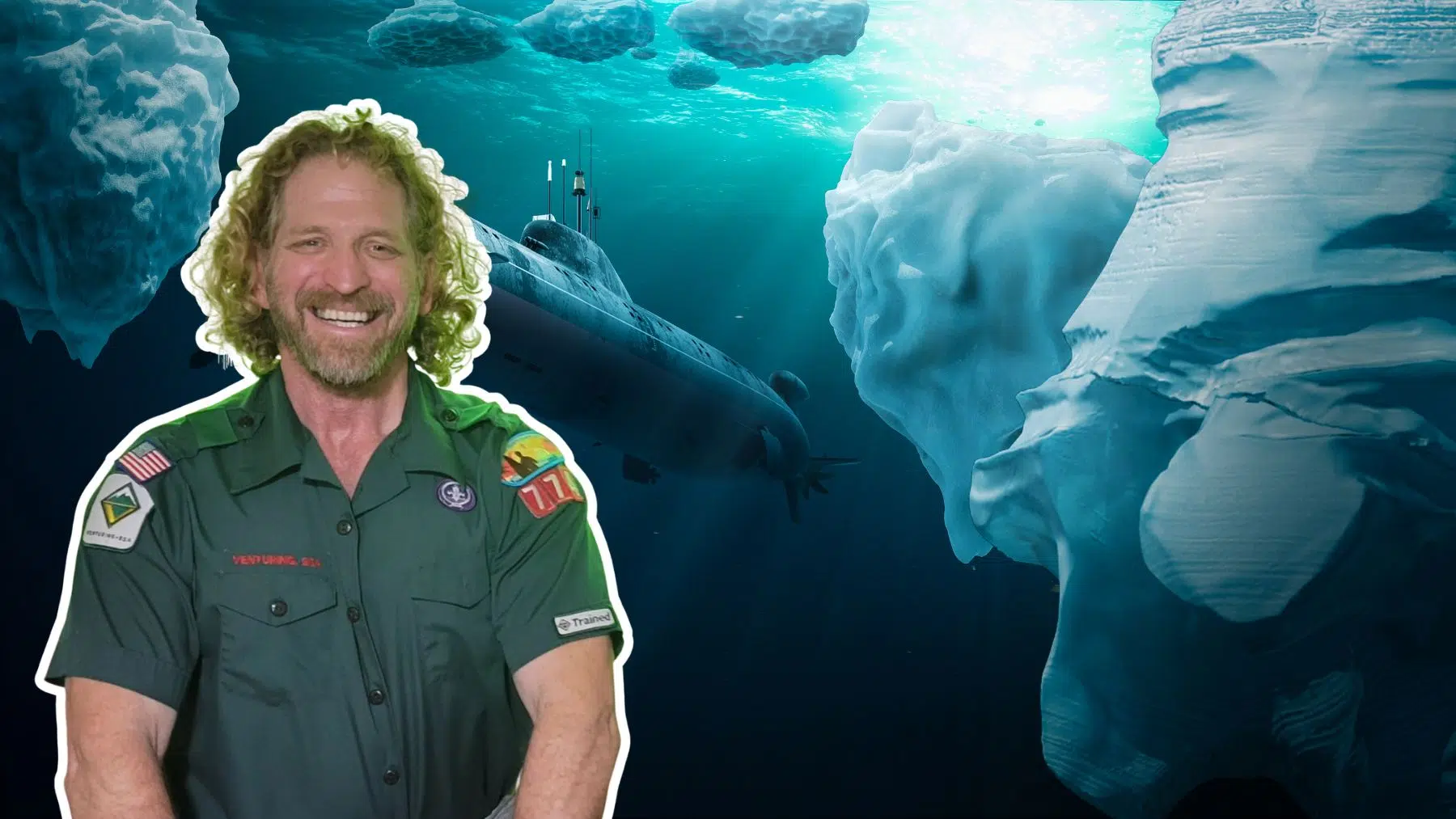
For more than three months, the ocean quietly hid a strange human experiment. Far below the waves, inside a small metal pod not much bigger than a bedroom, someone was living completely surrounded by water. No sunlight. No normal routine. Just the constant pressure of the sea pressing against the walls. From the outside, it sounded almost impossible. Yet inside that underwater habitat, a man was following a strict daily routine, while scientists waited to see what would happen to his body. The deeper question was simple: how would a human change after living underwater for so long?
A small room far from the surface
The underwater structure was surprisingly small. It measured only about 100 square feet, roughly the size of a tiny studio apartment. Yet it was designed to support life beneath the ocean for weeks at a time.
Inside the pod, there was just enough room for the basics: a place to sleep, a small work area, and equipment to monitor health and environmental conditions. Outside the pod was the deep Atlantic Ocean.
Life down there followed a very controlled routine. The person inside exercised regularly, worked on research projects, and communicated with scientists on the surface. But everything happened inside the same confined space.
For days and weeks, the outside world stayed far away. There were no walks outside, no fresh air, and no normal daily distractions. The experiment depended on isolation and pressure, two things the ocean provides in abundance.
Scientists wanted to understand the human body
The underwater mission was not simply about endurance. It was designed as a scientific experiment.
Researchers wanted to see what happens when a person lives for a long time in a pressurized environment similar to those used in hyperbaric medicine. In hospitals, hyperbaric chambers are sometimes used to help healing and improve brain health.
But those treatments usually last only a few hours at a time. No one had studied what might happen if a human stayed in similar conditions for months.
Throughout the mission, scientists tracked sleep patterns, metabolism, and important biological markers. The goal was to understand how the body might react to long periods of pressure, isolation, and controlled living conditions.
At the end of the experiment, doctors planned to compare the participant’s health before and after the mission.
And when the results finally came in, they raised some surprising questions.
A scientist spent 93 days living under the ocean
The person inside the underwater pod was Joseph Dituri, a retired naval officer and scientist.
Dituri lived inside the underwater habitat for 93 days, breaking the previous world record for living underwater, which had been 73 days.
When he finally returned to dry land, doctors ran a series of medical tests to see how his body had changed.
One of the most surprising findings involved telomeres, small DNA structures that protect the ends of chromosomes. Telomeres are often associated with aging because they usually become shorter over time.
But in Dituri’s case, his telomeres were about 20 percent longer after the experiment than before.
Doctors also discovered that his body had produced around ten times more stem cells during the mission. Stem cells help repair and regenerate tissues inside the body.
Other health markers improved as well. His cholesterol dropped by 72 points, inflammation markers decreased, and his sleep patterns showed 60 to 66 percent deep REM sleep, which is considered extremely restorative.
Why living underwater may change the body
Scientists believe these changes may be connected to the constant pressure environment underwater, which affects how oxygen moves through the body.
Similar pressure conditions are already used in hyperbaric therapy to improve healing and cognitive function. The underwater habitat allowed researchers to study those effects over a much longer period.
During the three months underwater, Dituri also maintained a disciplined lifestyle. He exercised for one hour a day, five days a week using resistance bands, helping him maintain muscle mass despite living in a confined space.
After returning to land, he said his metabolism appeared to have sped up and his body felt leaner and stronger.
Researchers say experiments like this may help scientists understand how humans could live in other extreme environments in the future — including long missions to Mars, where astronauts may spend months in confined and isolated habitats.
The experiment does not mean living underwater can reverse aging. But it does show that the human body can respond in surprising ways when placed in unusual environments.
For 93 days, the ocean became a laboratory. And inside a small pod beneath the waves, scientists learned something new about how the human body adapts to the unknown.
Read the whole thing?
Get the week's signal, not the noise
Our sharpest reporting on energy, climate and nature — free, once a week.


