

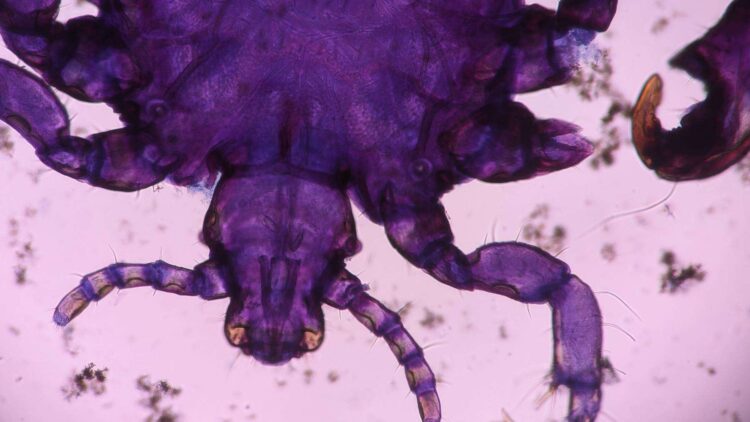
A flesh-eating parasite that US agriculture spent decades and enormous resources wiping out has resurfaced — this time in a Texas calf, roughly 50 miles from the Mexican border. It is the first confirmed case in the state since 1966.
For livestock owners and officials already watching beef prices hit record highs, the news landed hard. Agriculture Secretary Brooke Rollins moved quickly to reassure the public, but Texas’s own agriculture commissioner was not having it — and his frustration points to a deeper dispute over whether the response has been adequate.
A parasite that vanished for 60 years
The New World screwworm was once a catastrophic presence across the American South. By the 1970s, a sustained eradication campaign — built on releasing sterile flies across vast stretches of land — had eliminated it entirely. The victory was so complete that the US eventually shut down most of its domestic sterile-fly breeding infrastructure, leaving only one operational facility, in Panama.
That confidence now looks premature. The confirmed Texas case is the first in the state since 1966, a gap of nearly six decades. Two earlier incidents had offered brief warnings: a 2016 outbreak in Florida’s Key deer population was contained quickly, and in 2025, a Maryland resident diagnosed after traveling to El Salvador recovered without spreading the parasite further. Neither triggered a broader alarm. This one is different.
How the screwworm kills — and spreads
The biology is straightforward and grim. Female screwworm flies seek out open wounds on warm-blooded animals — cattle, deer, dogs, and in rare cases humans — and deposit their eggs inside. When the larvae hatch, they feed on blood and living flesh. Without treatment, the host animal dies.
The parasite spreads rapidly where livestock are kept in close quarters, making cattle ranches especially vulnerable. Officials note that the flies pose no direct food-safety risk in the conventional sense — infested animals do not send contaminated meat into the supply chain. The concern runs differently: if screwworm populations establish themselves in US herds, the resulting livestock losses could trigger shortages and push prices even higher.
The risk to humans is low but real. The 2025 Maryland case is a reminder that the parasite does not restrict itself to animals. It can infect people, though transmission appears to require direct exposure rather than person-to-person contact.
A 1,100-mile march through Mexico
For more than a year before the Texas detection, USDA and state officials had been tracking the screwworm’s northward advance through Mexico. They warned livestock owners and released billions of sterile flies along the route. None of it stopped the parasite from traveling over 1,100 miles — from southern Mexico to the Texas border.
Conditions in Mexico offered a grim preview of what an uncontrolled infestation looks like. Proper treatment proved too costly for many ranchers. Some resorted to applying gasoline or lime directly to infected wounds — improvised measures that illustrate how quickly the situation deteriorated on the ground.
Texas Agriculture Commissioner Sid Miller did not mince words. “For months, the screwworm has advanced rapidly through Mexico in spite of the USDA’s existing gameplan,” he said in a statement. He argued the agency had missed a critical component of its own strategy, and that the Texas detection was the direct consequence of that gap.
The sterile fly strategy — and its limits
The cornerstone of screwworm control is the sterile insect technique. Female screwworm flies mate only once in their lives. When they mate with sterile males, their eggs do not hatch. Release enough sterile flies consistently, and the population collapses over time. It worked before. Whether it is working now — and fast enough — is the open question.
In March 2026, USDA announced a partnership with the Army Corps of Engineers and Mortenson Construction to build a sterile fly production facility at Moore Air Base in Edinburg, Texas. The move signals that federal officials recognize the existing infrastructure is insufficient.
Miller is pushing harder. He wants the Trump administration to deploy the Screwworm Adult Suppression System — known as SWASS — an approach combining attractants, bait, and targeted insecticides to reduce adult fly populations first, then using sterile fly releases to finish the job. USDA developed and tested SWASS itself, and used it successfully in previous eradication campaigns. “USDA already owns the playbook,” Miller said. “The only question is whether USDA will use it before this situation gets worse.”
Secretary Rollins, for her part, insists the Texas case remains isolated and that “there is no threat of mass infestation.”
What is at stake for American beef
Beef prices in the US are already at record highs, and that context makes any disruption to the cattle supply especially consequential. A widespread screwworm infestation would not just harm ranchers — it would move through the food system and reach consumers at the checkout counter.
The tension between federal reassurances and state-level alarm reflects something larger than a single parasite. It is a debate about preparedness, about whether past success bred complacency, and about who bears the cost when a threat declared defeated comes back.
The next few weeks will be telling. A Texas case that stays isolated will likely reinforce the federal position. New cases — in other animals, other counties, or across state lines — will make the pressure on USDA to escalate very hard to ignore. Ranchers, consumers, and officials across the South will be watching.
Disclaimer: Our coverage of events affecting institutions is purely informative and descriptive. Under no circumstances does it seek to promote an opinion or create a trend, nor can it be taken as investment advice or a recommendation of any kind.