She had nested in the same terracotta pot outside a neighborhood restaurant for at least three or four years. Regular visitors knew her by sight. Locals brought her bread and water, and the Mueller Lake Park community in Austin, Texas had come to think of her as, in the words of one worker nearby, a local legend. Then one Tuesday in late March 2026, she was gone.
A morning in the park nobody expected
An autonomous vehicle company is now investigating after a witness reported that one of its self-driving cars struck and killed the duck near Mueller Lake Park, raising immediate concerns about the safety of nearby residents and animals alike.
Resident Lewis Pierce, who first posted about the incident in a Mueller neighborhood Facebook group, said the car did not slow down or stop after hitting the duck. “It didn’t slow down or hesitate at all, just steamrolled right through,” the post read, and Pierce told Axios the incident “really made me doubt the safety of those vehicles.”
The story spread fast. Within hours, people across Austin and beyond were talking about a duck, a pot of eggs, and a driverless car rolling through a park where children feed geese on weekend mornings.
By that same afternoon, the neighborhood Facebook group had grown loud with photos of the empty terracotta pot and questions about which company’s car had been in the area that morning.
What the neighbors saw and what the data said
The incident happened when the autonomous car, operated with a human safety driver aboard, ran over the duck resting beside its nest. A witness reported the vehicle did not slow at a nearby stop sign before hitting the duck and continuing on without pausing.
Avride disputed that account. “The vehicle came to complete and appropriate stops at all relevant stop signs,” the company said, adding that it would “continue to carefully analyze all related data.”
The gap between what neighbors saw and what the car’s logs recorded is exactly where the bigger argument lives. Two versions of the same moment, and no clean way to reconcile them from the outside.
It is a dispute that has become familiar in autonomous vehicle testing zones across the country, where sensor logs and human memory often tell strikingly different stories about the same few seconds.
The eggs, the incubator, and a neighborhood that mobilized
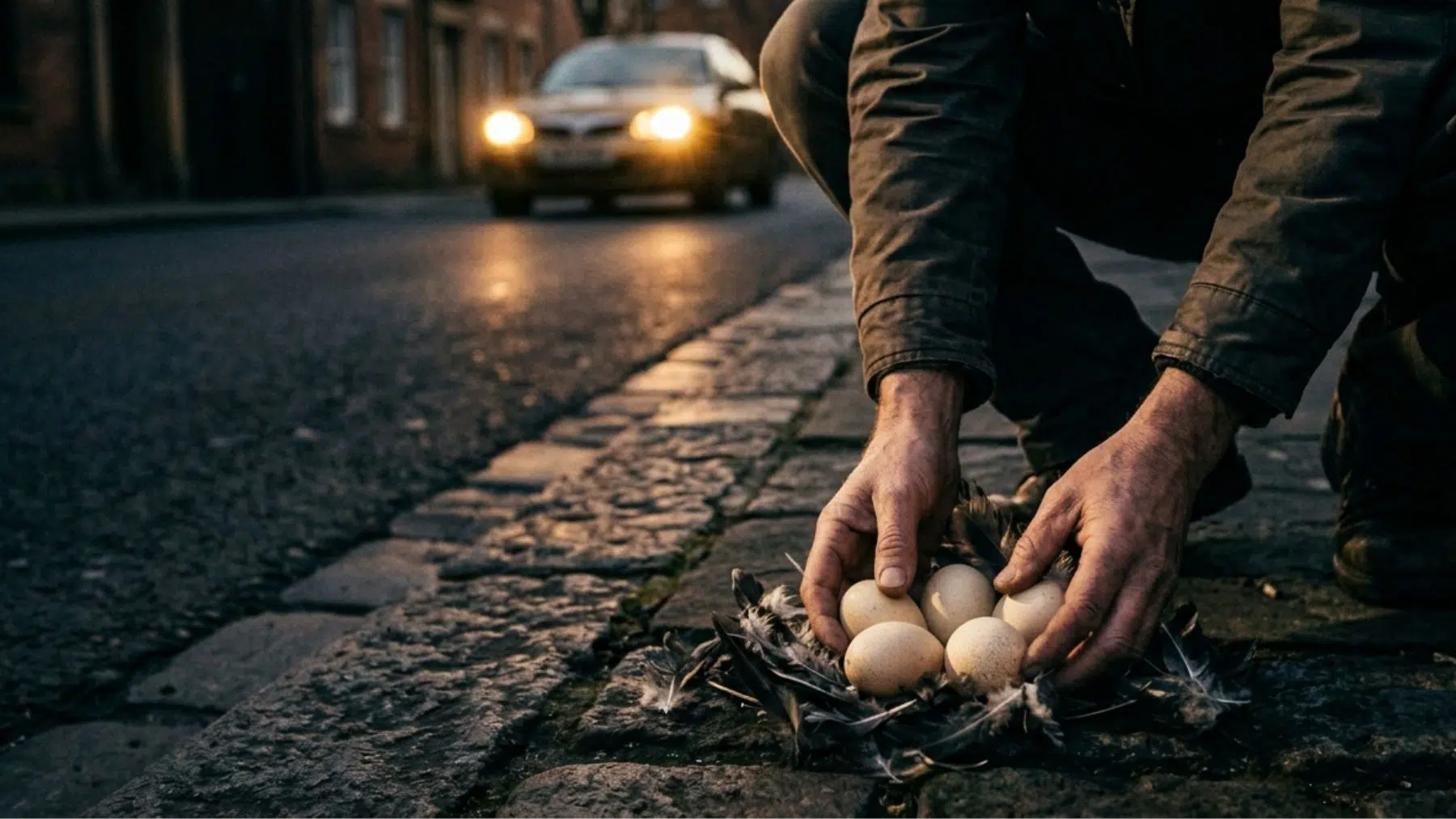
Neighbors gathered up the duck’s eggs, which had been sitting in a pot outside the restaurant L’Oca d’Oro, and moved them into an incubator in hopes of keeping them alive.
Austin has become a favorite proving ground for self-driving cars and delivery robots, so even a single duck death lands with extra weight in this community. The rapid, coordinated response showed how personally people take a familiar creature living beside them.
Residents began calling for stronger city oversight and wanted autonomous testing paused along the lakeshore until the review wrapped up. City transportation officials had not publicly responded at the time of reporting.
A local wildlife rehabilitator who volunteered to monitor the incubator told neighbors the eggs were still viable, giving the community something fragile and hopeful to rally around while the company finished its review.
The real question the duck left behind
The Mueller Lake incident is a small, vivid window into a challenge the self-driving industry has been circling for years: can these vehicles reliably detect small, unpredictable living things in ordinary daylight?
Every year in the United States, an estimated one to two million crashes occur between vehicles and large animals, causing roughly 200 deaths and more than 26,000 injuries. The promise built into autonomous vehicles was that smarter sensors would do better than tired or distracted human eyes.
Avride‘s own website states its vehicles carry a 360-degree view and never tire or break rules. A duck at noon in a park should be well within that system’s capability. The gap between that claim and a real, low-profile animal on a park street is what the wildlife challenge for autonomous systems actually looks like up close.
Where the road leads from here
As a precaution, Avride temporarily excluded roads around Mueller Lake from testing and began reviewing operating protocols, providing additional guidance to safety personnel on the ground.
Researchers in Australia have already built an AI-powered roadside system that detects wildlife near roads and warns drivers in real time. Tested in cassowary hotspots in Far North Queensland, it detected birds with 97 percent accuracy and triggered flashing signs that slowed traffic measurably.
That kind of purpose-built animal detection layer does not yet exist in most autonomous vehicle systems deployed on American streets, and advocates say Mueller Lake is a case study in why it should.
The eggs now sitting in that incubator are a different kind of proof of concept. A neighborhood that stepped in to finish what a nesting mother could not is a reminder that the living world does not pause for a software update, and every vehicle now sharing its streets will need to meet it where it actually lives.
Read the whole thing?
Get the week's signal, not the noise
Our sharpest reporting on energy, climate and nature — free, once a week.