Wolf numbers outside Yellowstone started falling and officials had to scramble.
Some packs almost entirely vanished within months.
Gaps started appearing in territories that had been active for years. Breeding pairs dwindled.
Young wolves stopped showing up during surveys.
At first, researchers figured hunting pressure alone explained the disturbing decline.
But later, another problem was revealed lurking in the population. It was hitting the youngest hardest.
How far did the wolf risk spread before we realized anything was wrong?
The vanishing packs: How a wolf crisis took over the backcountry
Wildlife crews first noticed something unusual during routine winter tracking operations.
Several familiar packs suddenly looked diminished.
Specifically, biologists counted far fewer pups than expected.
But that wasn’t the only abnormality. Elsewhere, adult wolves disappeared from territories they had occupied for years.
Researchers considered multiple reasons, like harsh winters weakening prey availability. Or territorial conflicts.
Even hunting pressure was adding further strain in some management zones.
Still, the pattern seemed different this time.
And field teams soon began finding signs of illness. Some wolves appeared disoriented before dying. Others perished unseen in remote backcountry areas.
Soon, the patterns raised alarm over an infectious disease outbreak.
The cost of connection: Why wolf social bonds fuel the spread
A disease was eventually confirmed after complex sampling and testing endeavors.
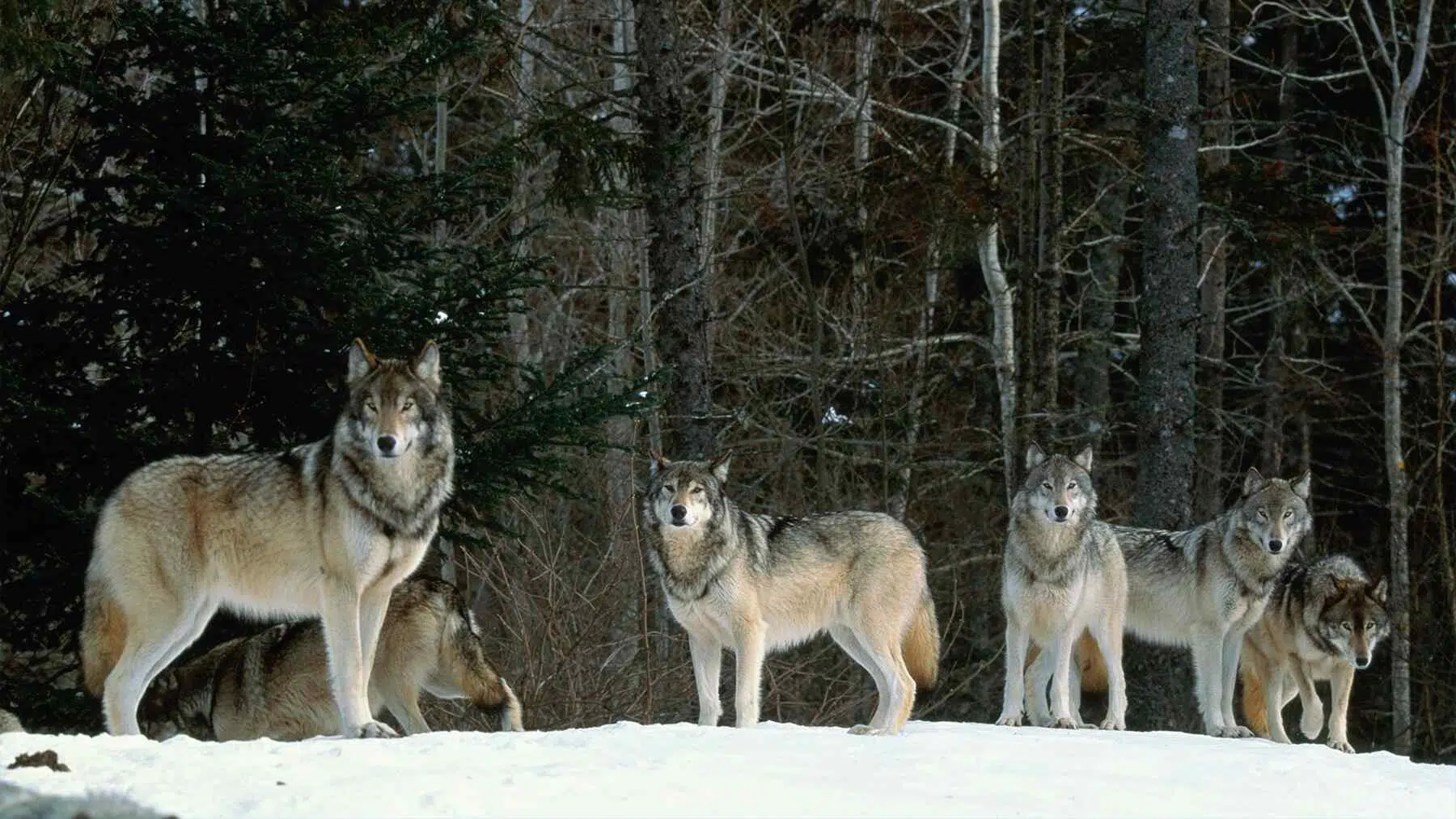
The illness spreads easily among social animals. Wolves live in tightly connected family groups, much like dogs do in packs.
They travel, feed, and care for pups together.
That close contact allows viruses to move rapidly once infection enters a pack.
This particular illness can trigger respiratory problems, fever, weakness, and neurological symptoms. Younger pups face the highest risks.
Many never survive infection long enough to reach maturity.
Researchers believe entire litters may have been lost during some outbreaks.
Dangerously, the disease can spread before symptoms appear clearly. That made the decline harder to recognize early on.
By the time wildlife officials fully understood the scale of the outbreak, several monitored packs had already shrunk dramatically.
State officials had to later adjust wolf harvest quotas in some areas after confirming the updated, lower population numbers.
What the “silent disease” actually was
The disease moving through Wyoming’s wolf packs was canine distemper virus, a contagious infection that affects many wild carnivores.
It spreads through close social contact.
Unlike injuries from fights or hunting, distemper often moves quietly between animals before obvious symptoms emerge.
Wolves may carry the virus while still traveling normally with the pack.
That becomes dangerous because wolf families function through constant interaction. Adults regurgitate food for pups. Pack members sleep near one another.
Young wolves remain in close contact during their first vulnerable months.
Once the virus enters that system, transmission becomes difficult to stop.
A wolf pack’s greatest strength became its downfall
Biologists studying the northern Rockies say distemper outbreaks can reshape entire wolf populations surprisingly quickly.
A pack may lose most of its young in a single season. Breeding adults sometimes disappear as well.
Without enough surviving young ones, long-term recovery slows dramatically.
Still, scientists say wolves face unusual risks because their survival depends heavily on stable social groups.
If enough adults die, hunting success drops. Pup survival weakens further. Territories may collapse entirely.
Recovery can take years after severe outbreaks.
Wyoming recently reported its lowest wolf totals outside Yellowstone in about 20 years.
That decline pushed wildlife officials to cut wolf hunting quotas in several regions.
Researchers stress the population has not disappeared.
But the outbreak revealed how quickly disease can destabilize even closely monitored predator populations.
Especially once transmission begins deep inside remote wilderness packs.
How do we protect a species when its ultimate tool for survival is the very thing putting it at risk?
Read the whole thing?
Get the week's signal, not the noise
Our sharpest reporting on energy, climate and nature — free, once a week.