
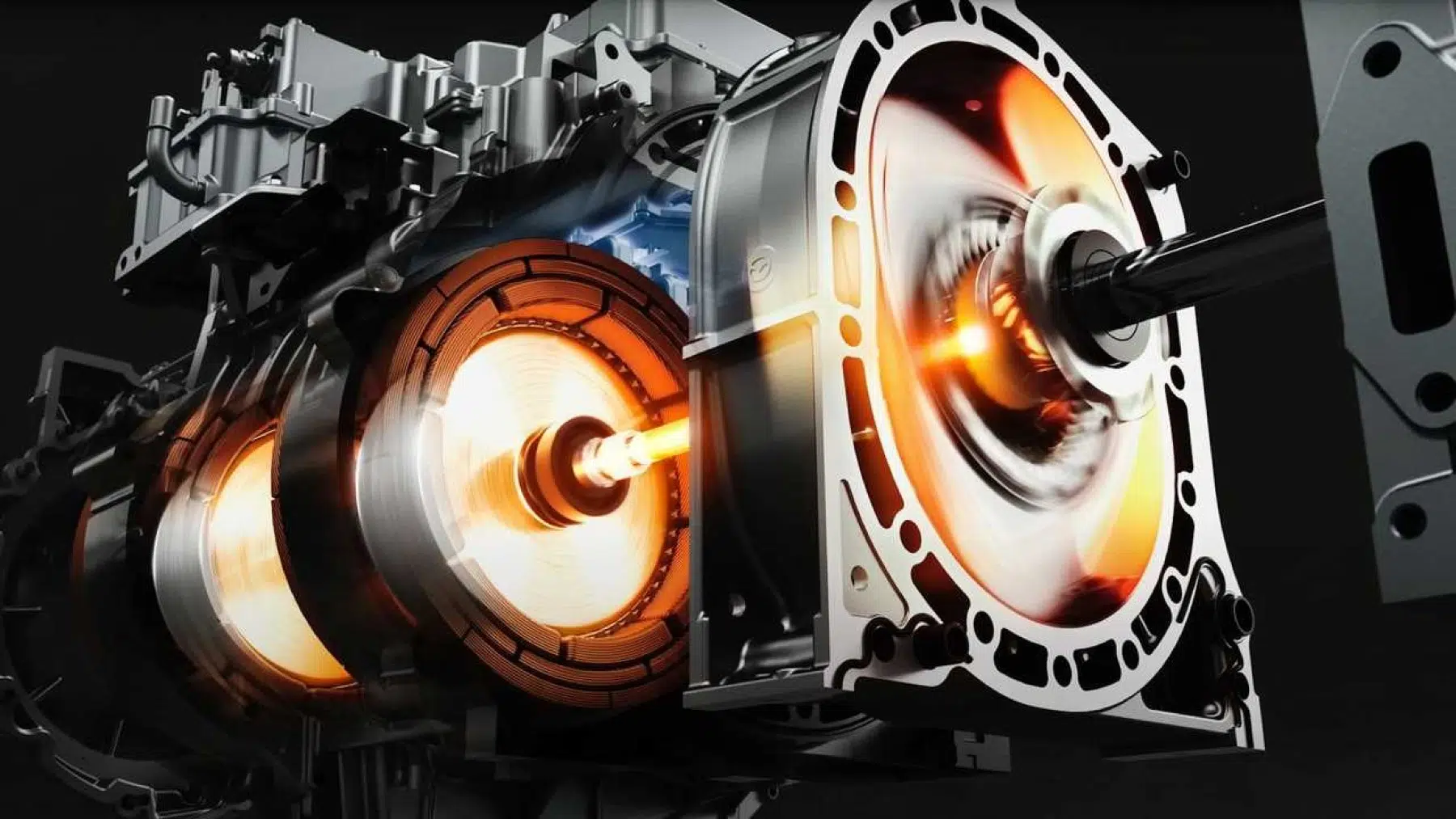
Back in the 1990s and early 2000s, Japanese cars were the dream of every car enthusiast. Thanks to the Fast and Furious saga and the rise of Japanese tuning culture, models like the Nissan Skyline, Mazda RX-7, and Mitsubishi Eclipse became icons. Mazda, in particular, didn’t just create sleek, powerful machines — it introduced the rotary engine, a compact powerhouse that flipped expectations. That little triangle engine under the hood caught many gearheads off guard, not just for its size, but for the horsepower it could unleash. It was a turning point for the brand. But now, the road ahead leads somewhere new.
Mazda changed the automaker world
Mazda has always been respected, yet it never quite broke into the global mainstream. Many of its best models had to be imported, and some — like the legendary RX-7 — were so rare that fans had to settle for admiring them from afar. Still, a dedicated group of gearheads got their hands dirty, building their own custom projects around the Wankel engine.
But times change. As technology continues to push the industry forward, Mazda knows it can’t rely on nostalgia alone. The company is now shifting gears, stepping into the future — and, at least for now, leaving behind the rotary engine that helped define a generation of Japanese performance cars.
Japanese engine runs on multiple fuels
At last year’s Japan Mobility Show, Mazda introduced a new concept: an electric car that uses a rotary engine as a range extender — one that could run on multiple sustainable fuels. While that might’ve sounded too experimental at first, the system is already in use. It powers the MX-30 R-EV, an SUV where the rotary doesn’t drive the wheels but works solely to charge the battery.
But the upcoming Iconic SP seems to take things further. Mazda claims this model would use a twin-rotor setup — two 830cc units instead of the MX-30’s single rotor — pushing output north of 350 horsepower. More importantly, the power would go to the rear wheels. It’s a clear step toward a true sports car.
Initially, fans were excited by the design and the rotary comeback. But excitement quickly turned into disappointment once it became clear the rotary wouldn’t power the wheels directly — it would just act as a generator. Now, nearly a year later, that narrative might be changing. Japan’s Best Car magazine reported that Mazda filed a new patent suggesting a different setup. Instead of just charging the battery, the rotary could actually drive the rear wheels in a mild hybrid layout.
The iconic concept
There had been hints about this before. The original Iconic SP concept had a thick center tunnel between the front seats — the kind that usually houses a prop shaft. When asked last year whether the rotary would only act as a generator, one Mazda rep replied, “Not necessarily.” That comment makes more sense now. The new patent backs up that early suspicion — and shows Mazda may be more serious about bringing the rotary back than we thought.
Tesla’s fans disappointed
Despite ongoing speculation over the years, Tesla has never announced any official plans involving hydrogen-powered vehicles. The company has consistently focused on battery-electric technology, with no confirmed projects or development efforts related to hydrogen fuel cells.
Statements from CEO Elon Musk have even dismissed hydrogen as a viable solution, calling it inefficient for automotive use. Meanwhile, Mazda — one of the few manufacturers that had explored hydrogen through its rotary engine in the past — now appears to be shifting away from that path. The company is instead adapting the rotary for use in hybrid systems, signaling a clear move beyond hydrogen as a core part of its future strategy.
Read the whole thing?
Get the week's signal, not the noise
Our sharpest reporting on energy, climate and nature — free, once a week.


