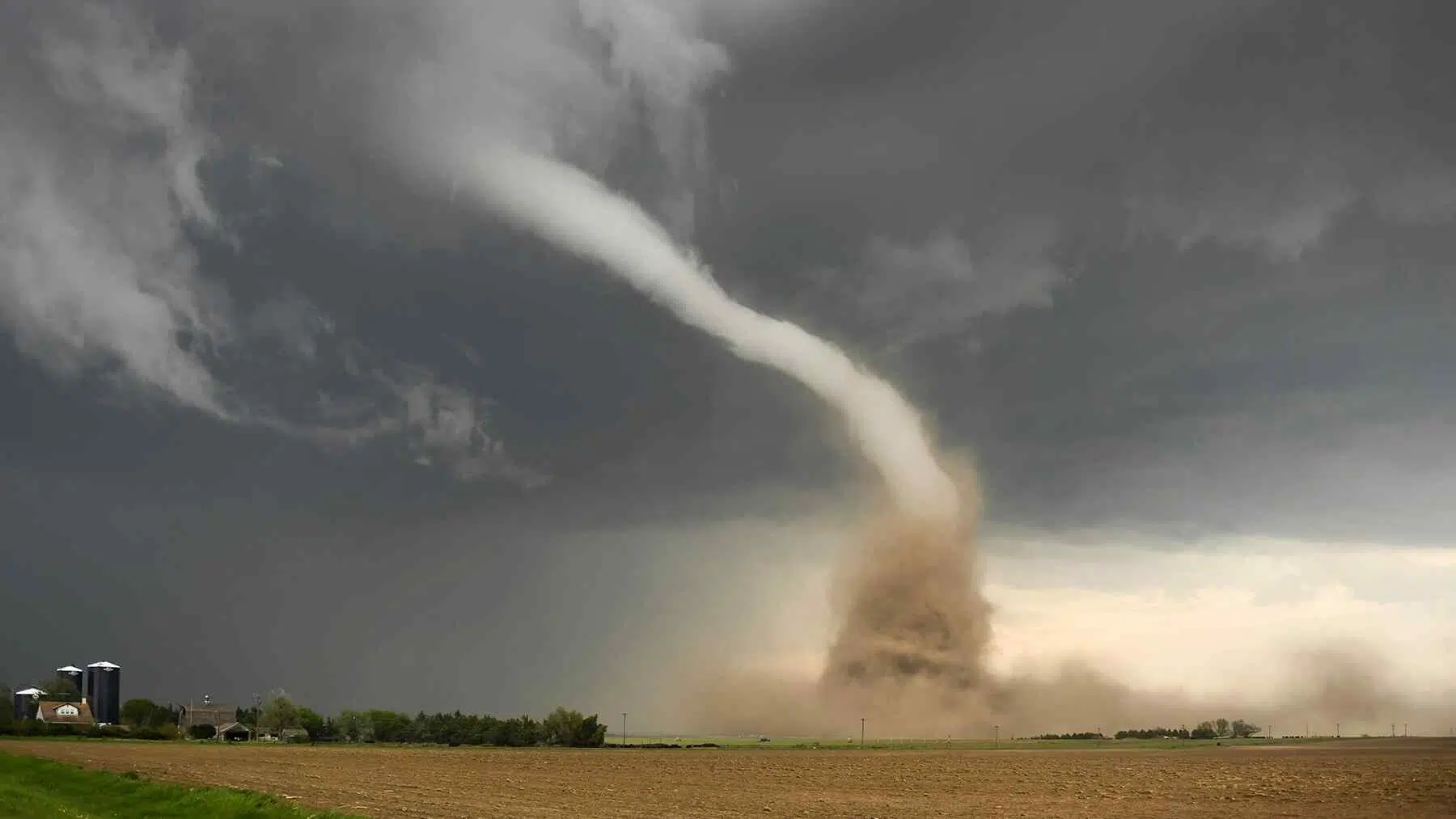
Tornado season is getting closer by the day.
The annual warnings from the government over the upcoming tornado season are becoming as common as an apple pie sitting on millions of windows around this great nation. However, this season will see significantly more tornadoes than last year, according to experts.
How prepared are you for this year’s tornado season?
How tornadoes have become an annual danger for millions
This nation has become a tornado-swept region of the world that regularly sees a wave of devastation hitting certain areas.
What we have come to know as “Tornado Alley” has been shifting eastwards into more densely populated regions of the nation. Science now tells us that no matter where you might live, the chance of a tornado developing is always a real possibility.
Last year, the US saw more than 1,000 tornadoes, and the government agencies that monitor the weather conditions have stated that this year will be a lot worse.
Wind speeds inside tornadoes can exceed 300 mph, and as new data is analyzed, we now know that nearly nowhere in this great nation is safe from the twisters. Millions of us spend an inordinate amount of time and resources preparing for the annual tornado season.
Our climate crisis is getting more serious with every passing year
There can be no denying that our planet’s climate is reaching a tipping point.
2024 has been confirmed as the warmest year on record in history. This aligns with data collected over the past decade that stated that the past ten years have been the warmest ever recorded in our long history.
We all remember the warnings from the NOAA over the historic bomb cyclone that enveloped the Eastern parts of the nation in a blanket of snow.
With spring fast approaching, the NOAA has warned that this year’s tornado season will be a serious threat to millions. Last year was bad enough, but experts have noted that this year will see more than 1,000 tornadoes across the nation.
Global warming has led to some emblematic lakes around the nation vanishing right before our eyes.
From May onwards, tornado season will officially be underway, and the federal government has warned that millions are at serious risk as this year will be significantly worse than any other year in recent memory.
According to data from the NOAA, last year saw 1,559 tornadoes, so we can easily expect more than 1,000 tornadoes this year.
More tornadoes are set to blow through huge parts of the nation this year
The US National Weather Service and the NOAA have issued a stern warning that will affect millions of us around the nation.
The Southern Plains region, that is, Oklahoma and Kansas, is most at risk from May to the beginning of June. For the Gulf Coast region, the risk of tornadoes may come slightly earlier this year, from now in March to May, to be exact.
The NOAA recently warned citizens that exceptionally high temperatures can be expected earlier than normal this year, exemplifying how the weather changes.
More states around the nation are at serious risk of tornadoes this year

The Dakotas, Nebraska, Iowa, and Minnesota will see tornadoes sweeping through from around June or July this year.
The Southeast states are in constant danger of tornadoes, regardless of which month we are in at the moment. Tennessee, Wisconsin, and West Virginia can expect the deadly weather events anywhere from March to July as well.
For those of you staying near the Canadian border in Vermont, you can expect tornadoes from June to August.
Our world is changing faster than anyone could have predicted or forecasted, and tornado season is becoming a serious concern for more and more of us with every passing year.
Disclaimer: Our coverage of weather patterns, climate outlooks, and severe weather forecasts is based on information from official sources such as the National Oceanic and Atmospheric Administration (NOAA) and the National Weather Service. This content is provided for informational purposes only and should not replace official alerts, warnings, or guidance issued by NOAA or local authorities. Always consult the NOAA resources linked in our article and follow official safety recommendations and advisories.
Read the whole thing?
Get the week's signal, not the noise
Our sharpest reporting on energy, climate and nature — free, once a week.