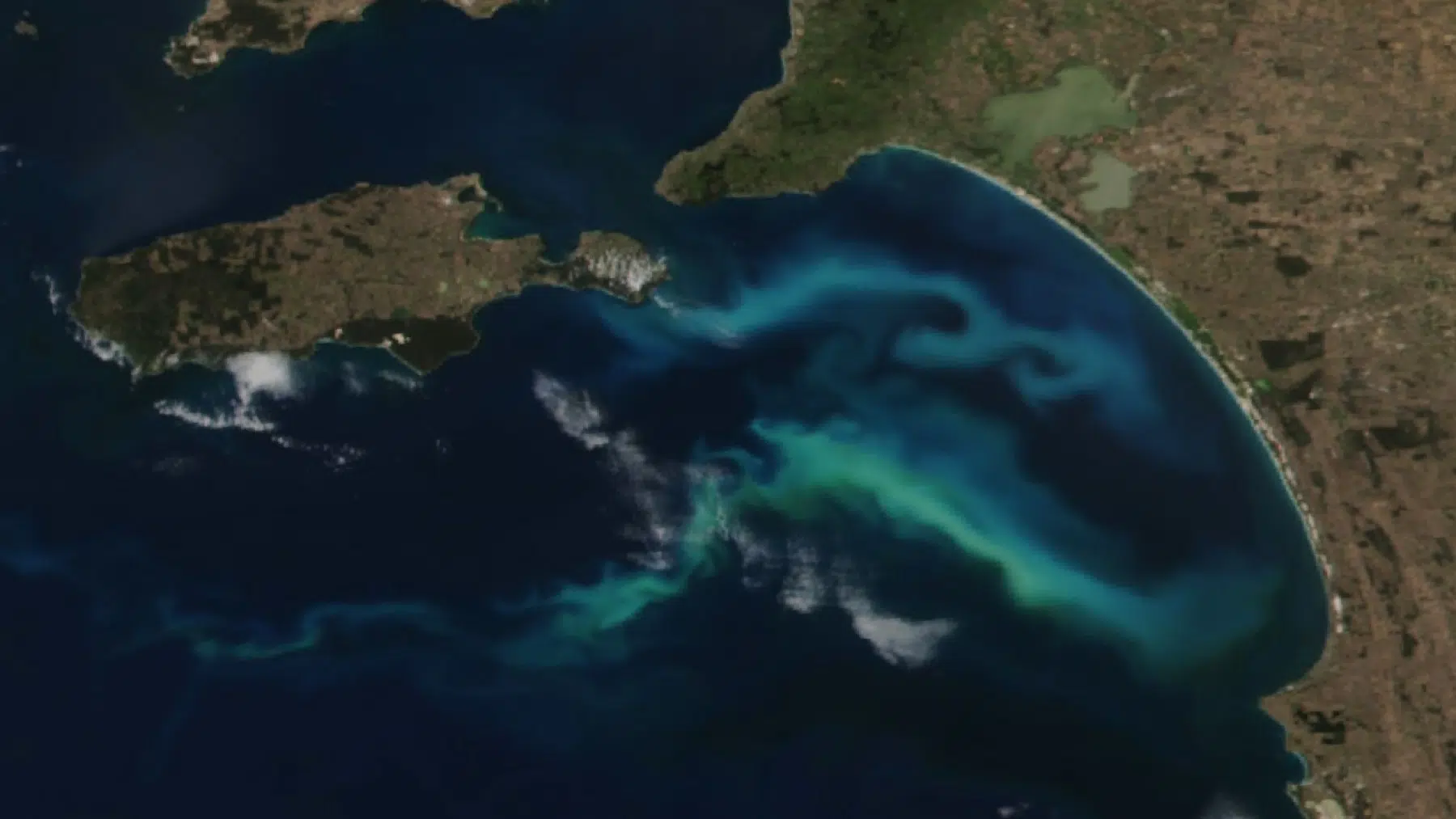
NASA has the perfect way to observe how entire ecosystems behave from space, and this is something that it’s helping researchers gain a better understanding of what’s going on – particularly when it comes to the oceans. Since it covers over 70% of our entire planet, sometimes we rely on flying cameras to keep track of whales, sharks, fish, and entire species, where sometimes the only thing that indicates there’s really something there is the change in the water color in the region.
Creatures in the ocean can change the ocean’s water color
Not many animals have the power to change their environment once they’re present, but those who do are often the most important components in marine biology. Take plankton, for example – we can’t actually see them, but they’re there, serving as food for whales, forming the base of the food web, and helping in the control of carbon dioxide in the atmosphere.
While we can’t actually see them, there’s a close species that can change the surrounding environment and stay visible – and that’s what NASA observed from space. An entire species making itself visible for the simple fact that the concentration was blooming along a shelf about 150 meters deep, turning the dark blue waters of Australia into a blue-green region. Now, scientists know what it was, and animals like these can be found all over the world.
NASA observed it from space: It turned deep blue waters to green
Satellites caught during a flyby over South Australia’s Bonney Coast caught swirls of blue and green on the water. They turned out to be phytoplankton blooms, showing up right on cue with the summer conditions. The tiny plant-like organisms take advantage when cold, nutrient-rich waters rise from the deep and spread close to the surface. NASA’s Suomi NPP satellite snapped the best look on January 10 — a long streak of color stretched along the shelf about 150 meters down.
But the bloom had actually started showing up weeks earlier in late December, seen by the Terra and Aqua satellites. Oceanographer Jochen Kaempf, from Flinders University, pointed out that the green streaks were almost certainly phytoplankton, while the bluer shades might come from sediments in shallow water – or maybe even a different plankton species altogether. While it might surprise NASA saw this, they are actively involved in major discoveries in the ocean.
The temperature plays a significant role: Phytoplankton feeds because of it
The cold water itself had its own story. NASA’s sea surface temperature data showed that parts of Long Bay were about 3°C cooler than average for that time of year. That cooling links back to the Great South Australian Coastal Upwelling System, a seasonal shift that runs almost 800 kilometers along the shoreline. During summer, steady winds push the surface water away, letting cold, nutrient-rich water rise from 300 meters below.
The region is famous for being dangerous: Great white hunts in these waters
Those nutrients – especially nitrogen and phosphorus from decaying sea life on the seafloor – feed plankton in the sunlit top layer of the ocean, causing populations to explode. In some cases, chlorophyll levels can spike ten times higher than normal, drawing in life of all sizes: crabs, filter feeders, sardines, tuna, and even blue whales.
The area is so lively that it even attracts great white sharks. In fact, Dangerous Reef nearby is well known for its great white shark population. And while upwelling zones like this make up only about 1% of the ocean, NOAA estimates they account for half of all fish caught worldwide – and NASA is often helping in discoveries in the oceans.
Read the whole thing?
Get the week's signal, not the noise
Our sharpest reporting on energy, climate and nature — free, once a week.