The dunes had been battered for days. Winter storms tore across Scotland’s east coast with unseasonably harsh force. Wind clawed at the sand. High tides dragged at the shoreline. At Lunan Bay near Montrose, the beach did not look calm or familiar. It looked scraped back. Stripped down. As if something buried had been forced into the open. For a brief moment between gusts, the coastline seemed to reveal a layer no one had seen before.
The moment something looked wrong
Late last month, Jenny Snedden and Ivor Campbell were walking their dogs, Ziggy and Juno, along the sands. They know this stretch of coast well. Storm damage to the dunes was obvious. A fresh layer of clay had been exposed where sand once lay thick.
Then Ivor saw it.
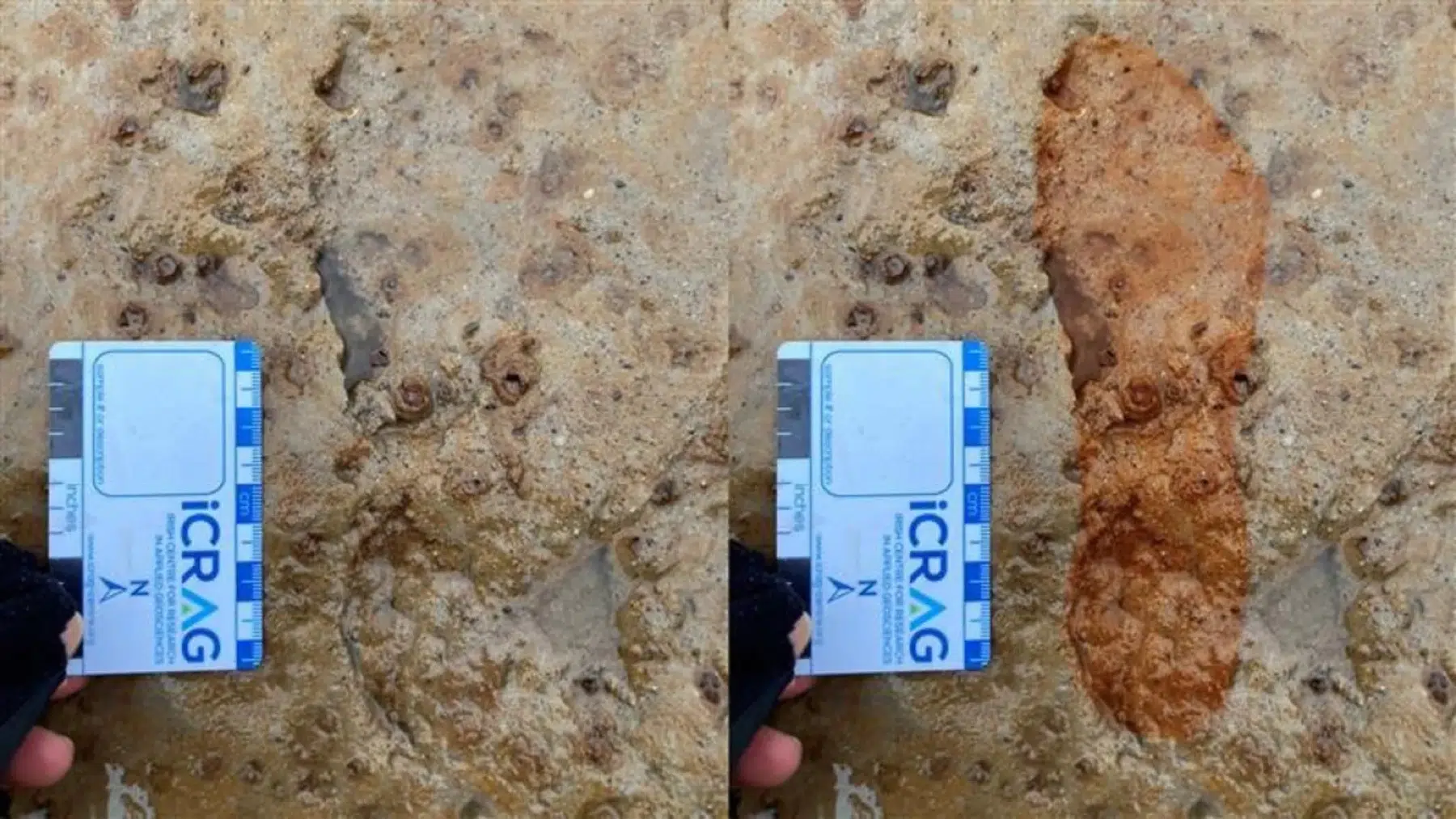
Marks in the clay. Clear shapes pressed into the surface. Not random cracks. Not debris dragged by the tide. Deliberate impressions, set into the ground.
The wind was still strong. The tide still shifting. Whatever had appeared could just as easily disappear again. The beach felt temporary. Fragile. As if it was offering only a short look before closing itself up.
A call that set everything in motion
On 26 January, Ivor contacted council archaeologist Bruce Mann. The message quickly reached specialists at the University of Aberdeen. By the following day, a team was heading to Lunan Bay.
Professor Kate Britton described what followed as a real archaeological emergency. An email arrived late at night. There were hurried phone calls. Plans made quickly. Equipment gathered in a rush.
On the way to the site, the team stopped at craft shops to pick up plaster of Paris. They knew the storms that had revealed the clay were still active. The same forces that uncovered the markings were actively destroying them.
When they arrived, the conditions were harsh. Wind speeds were more than 55mph (88km/h). Sand whipped through the air, stinging faces and equipment. The sea felt close. The dunes unstable. Time was not on their side.
Yet they began to work.
Footprints from 2,000 years ago
Radiocarbon dating of preserved plant remains confirmed what the team suspected. The markings in the clay were made about 2,000 years ago.
They were footprints.
Ongoing analysis identified prints from red deer, roe deer and other animals — alongside human footprints. A moment of movement across what was once a lush salt marsh, pressed into soft ground and sealed beneath sand for centuries.
Professor Britton explained that the sandy beach seen today used to be full of plants. Such an environment would have attracted animals. In turn, it would also have drawn humans, possibly for fishing or hunting.
The University of Aberdeen said similar markings have been identified at sites in England, including the Severn Estuary, Formby in Merseyside and Happisburgh in Norfolk. But there had been no previous record of a similar site in Scotland. Globally, there are very few sites like this.
Britton described it as a snapshot moment. A brief crossing of lives, captured and preserved by chance.
A coast that reveals and erases
The team recorded and mapped the site. They created detailed 3D models and made physical casts of the prints before the weather could wipe them away. Drone images were also captured to help establish a baseline for examining the rate of erosion along this part of the coast — and the risks to other potential sites.
The same winter storms that revealed the prints were actively destroying them at the same time. Without the quick action of the archaeologists — and the sharp eyes of two dog walkers — the markings might have vanished without record.
At Lunan Bay, the wind continues to move the sand. The sea continues to reshape the shoreline. For a short window in a stormy winter, the ground reopened and revealed footsteps from 2,000 years ago — then slowly began to close again.
Read the whole thing?
Get the week's signal, not the noise
Our sharpest reporting on energy, climate and nature — free, once a week.