
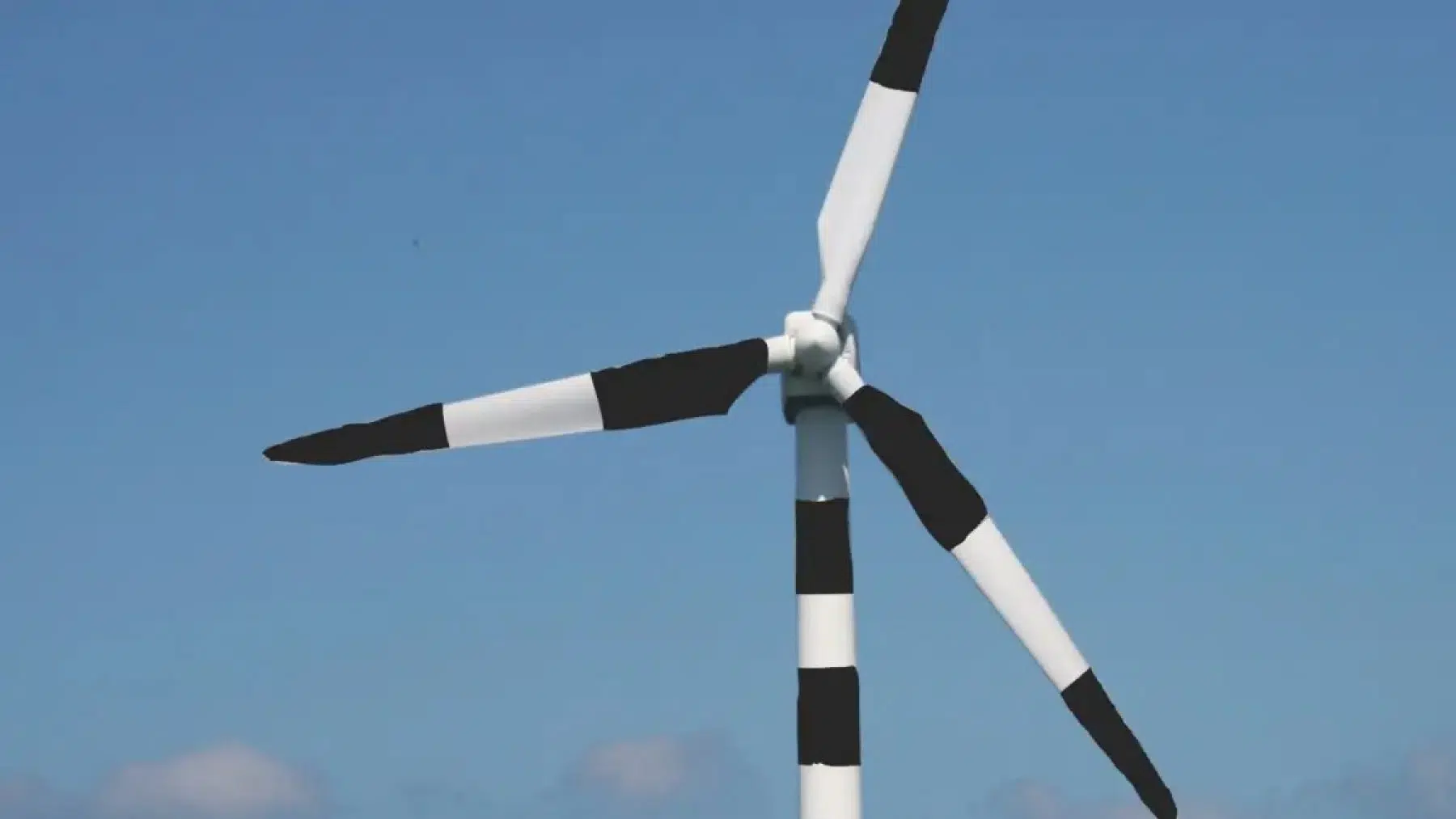
There’s an environmental downside to wind farming and that’s the number of wildlife fatalities and injuries caused by birds flying into wind turbine blades. A lot of research has been conducted into ways to mitigate the harm caused to avian life and experts believe they have a solution. According to avian experts, just one low-cost modification to wind turbines can have a significant positive impact, so if you see different-looking turbines cropping up in the US in the future, this is why.
Avian deaths are one of the biggest downsides to wind farms
Both onshore and offshore wind farm installations are harmful to birdlife, and it’s estimated that each turbine around the world is responsible for an average of four to 18 fatal bird strikes each year. This adds up to millions, and, understandably, the nature conservation sector gets upset about this.
Bird experts, called ornithologists, say that to protect them from colliding with moving turbine blades, we need to “see” as they see. When looking through the eyes of a bird, researchers realized that the blades needed to be more visually conspicuous. Quite simply, if birds can see the blades better, they can avoid them.
Several solutions have been suggested and tested over many years, some more complex than others, and it seems like one simple, low-cost measure could have a great impact on the reduction of avian deaths and injuries caused by wind farming activities.
A simple paint job could save millions of birds
The simplicity of the ornithologists’ solution is not the only plus side to what they are suggesting—it’s economical as well. Just painting one of the turbine blades black is enough to make them far more visible to avian life and it wouldn’t cost energy companies much to make it happen.
This concept is not new, although the patterning of the painting has evolved. A study conducted in Norway in 2020 found that painting just one of the three turbine blades black could reduce bird strikes by up to 70%, a truly worthwhile result.
See like a bird
Avian experts say the key to making turbines more conspicuous to birds is to work out what’s perceived in their field of vision. Professor Graham Martin, an ornithologist specializing in the sensory world of birds, and Alex Banks, an ornithology specialist at Natural England, went deep into avian vision research in a study published in Global Ecology and Conservation.
Professor Martin explained how the research had to adjust perspective:
“We see the world in a particular way, and we flatter ourselves that that’s how the world is. But we are prisoners of our own senses; other animals will see the world and extract other sorts of information.”
The scientists propose that increasing the visual contrast of wind turbines using black-and-white patterns will go a long way toward making wind power generation safer for birds.
A different innovation that is also safer for birds is a turbine unit that doesn’t even have blades at all.
Birds of prey are most at risk
Bigger species like eagles and vultures have the highest spatial resolution of any animal, meaning that they can perceive minute detail from great distances. They are particularly at risk of collisions with turbines because their eyes are focused downwards while flying and looking for prey.
Scientists point out that although the limits of visibility vary in all bird species, the direction of the highest spatial resolution projects laterally on either side of the head rather than forwards, such as humans see.
Why does the monochromatic patterning work to save birds?
Some may imagine that painting a wind turbine in bright colors would be the best way to make turbines visible to birds, but there’s good reason why the researchers have gone with the monotone option.
Birds use relatively low spatial resolution vision to fly forward and they are more attuned to changes in the ‘optical flow pattern’ than any details in particular. This is why turbines with painted blades, which create the most flicker when they’re rotating, are the best way to catch birds’ attention. Researchers say this measure should make the turbine detectable in a bird’s vision at least 30 seconds before a potential impact.
Considering the low cost of painting turbines and the demonstrable positive benefits relating to mitigating bird strike fatalities, there’s little reason for energy companies to not implement the measures to protect the environment. An ideal installation to apply the new bird protection method to in the future would be the tallest wind turbine in the United States.
Read the whole thing?
Get the week's signal, not the noise
Our sharpest reporting on energy, climate and nature — free, once a week.


