People believed that irreversible damage had been done when wind turbines were planted along the Norwegian coast.
Decades worth of flourishing growth was undone in months.
Environmentalists were up in arms, saying the terrain would stay barren for generations.
But green vegetation started springing up from the disturbed land. And it didn’t take decades.
Scientists monitoring the mountain landscape realized the recovery was accelerated and wanted to know why.
What was it about the site that proved environmentalists wrong?
What nature can handle: Ecological resilience vs. renewable infrastructure
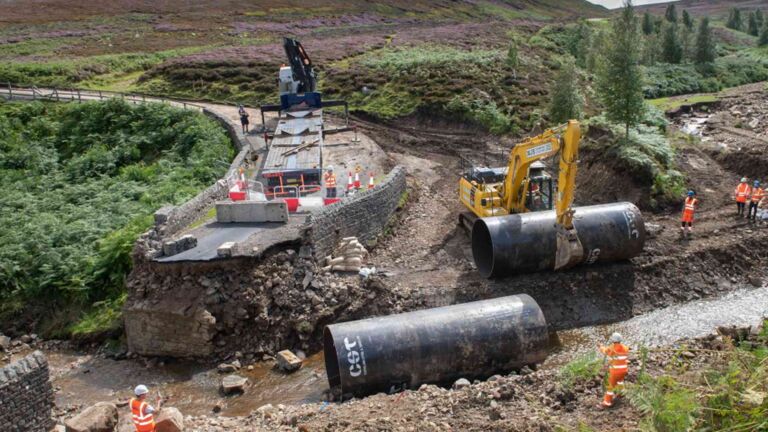
Installing a wind farm requires large-scale construction, like blasting and road installation. It’s impossible not to disturb the land.
Sensitive ecosystems can take decades to recover completely, if they do at all.
In the North, where soil layers over rocky, mountainous ground are thin, sensitive ecosystems suffer more than most.
Norway’s plants are resilient, having adapted to high winds and icy temperatures.
But this strength is nothing in the face of dynamite and earth-moving equipment.
Researchers monitoring wind farm sites reckoned on severe long-term vegetation damage. And as expected, vast tracts of ground were left exposed when the construction crews signed off.
Some areas were entirely stripped of mosses, lichens, and dwarf shrubs.
Environmental groups had major concerns about the spread of erosion across the previously pristine slopes.
Invasive plants could also have seized the opportunity to take over the vacant land.
It turns out that the alarm outweighed the emergency.
From dust: A fresh renewal to undo the impact of renewable energy
Vegetation monitoring teams had a field day in the field while monitoring growth post-installation.
Around locations like Smøla, Ytre Vikna, and Frøya, several “barren” areas began recovering much faster than expected.
Grasses, shrubs, mosses, and smaller alpine plants started reclaiming “broken” ground. And the “repair” process took place in 10 years—not the “generations” that were predicted.
In fact, not a single bare season was recorded. The “pioneer” species began stabilizing the gravel and blasted rock zones within the very first months post-installation.
Some disturbed soils actually created openings for dormant native species waiting for opportunities to thrive.
Rainfall and coastal moisture also helped stabilize the recovering ground surprisingly quickly.
The recovery became especially noticeable around restored roadside slopes.
A report from SINTEF said the ecosystem was not untouched or perfectly restored. Still, the feared ecological collapse never fully appeared.
What is so unique about Norway’s turbine fields that sets them apart in vegetation resilience?
A green explosion that revived not just the land, but the industry
A report from Aneo detailed what was taking place in Norway.
The sudden “green explosion” was not simply a wave of returning vegetation. It came back stronger than ever.
Some of the first plant organisms to arrive were mosses. They went to work heavily colonizing the ground within 10 meters of the turbines.
By carpet-bombing the exposed dirt, they locked the thin soil in place. They also acted as sponges, fostering a natural nursery for other plants.
Instead of invasive weeds taking over, the broken soil primarily activated ruderal species.
These plants’ seeds sit dormant in the soil for years, waiting for a disruption to trigger their growth cycle.
And they got their wish when the construction crews arrived.
Can we feel more positive about renewable energy infrastructure?
Researchers stress that wind farm construction still alters ecosystems in major ways.
Nevertheless, the feared permanent “dead zones” along Norway’s mountainsides never came to pass.
Instead, scientists observed a complicated recovery process already underway within years rather than decades.
Life returned unevenly, but far sooner than expected, in a form of revival.
Norway’s coastal wind farms now serve as important case studies for researchers.
We learned a lesson: damaged ground can heal itself without disturbance from the blades above.
Read the whole thing?
Get the week's signal, not the noise
Our sharpest reporting on energy, climate and nature — free, once a week.