At some point in our lives, most of us have been unfortunate enough to be stuck in traffic, sometimes even for hours. Whether you are heading to work, a date, or simply returning home, being stuck in traffic can be problematic, with many road users becoming impatient and reckless. A Zero Congestion system may be the answer to this increasing problem, especially in the U.S. Soon, the entire country could be saying goodbye to stop signs and red traffic lights, with some intersections allowing cars to “talk to each other.” Find out more below.
Addressing an increasing problem in the U.S.
According to a report, traffic congestion in America has reached a record high, with U.S. drivers losing significant hours annually. Urban regions are most affected, making daily commutes excruciatingly long and wasteful to the economy. The report adds that billions of dollars are lost in wasted fuel and time each year, highlighting the need to address this rising problem.
Beyond its economic impact, traffic congestion also contributes to:
- Increased stress and worsening mental health
- Decreased air quality due to harmful emissions
- Increased health problems, such as respiratory issues and even premature death
- Climate change
- Higher risk of traffic accidents
Now, a zero-congestion system is being embraced by more and more cities in the U.S., and soon, we could be saying goodbye to stop signs and red traffic lights for good, allowing cars to “talk to each other.”
Goodbye to stop signs and red traffic lights
In an attempt to address congestion problems faced by most cities, significant systems are being implemented to alleviate the issue. For example, New York City has implemented the $9 Congestion Relief Zone. Now, Smart Intersection systems are being explored by more and more cities, following the lead of Los Angeles, Pittsburgh, Seattle, and Nashville, which have already implemented the tech.
How it works
These intersections consist of high-tech traffic signals that engage with real-time road activity. Simply put, if traffic suddenly increases, the system will automatically extend green lights, and if a pedestrian is waiting to cross, a walk signal will be triggered more swiftly. Smart Intersections have the following key components:
- Edge computing and AI to analyze traffic trends
- Advanced detectors such as thermal sensors, cameras, and radar
- Adaptive signal control based on real-time data
- Connectivity of cars with signals and vice versa, allowing them “to talk” to improve timing
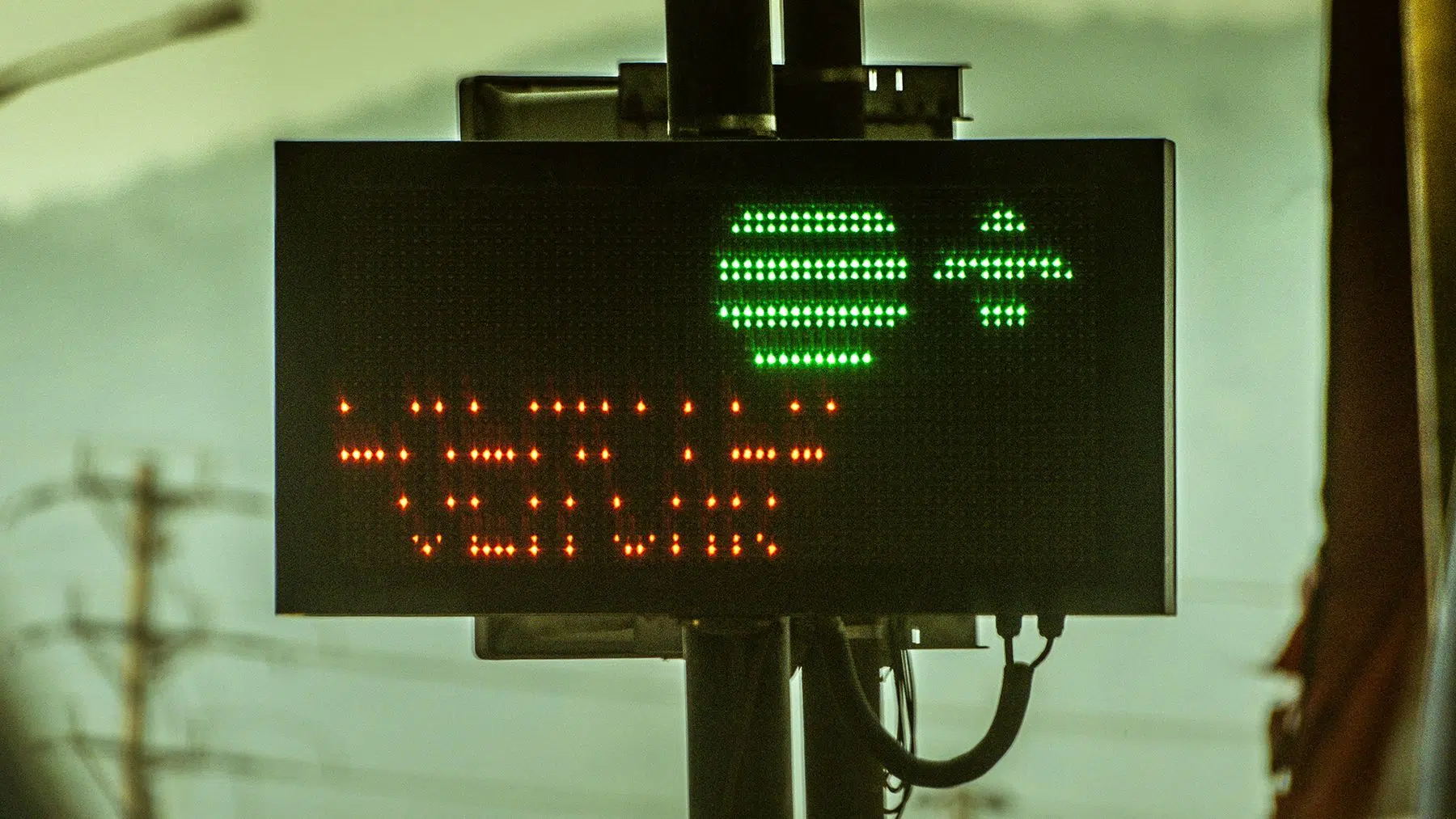
Other Zero Congestion Systems include implementing LED display screens at intersections. Both of these systems have advantages of their own, which are indicated below.
Advantages of the Zero Congestion System in the U.S.
According to Bibi LED, LED display screen systems offer the following advantages:
- Improves traffic efficiency
- More flexible content updates
- Faster response speed
- Information is displayed more clearly, such as emergency traffic announcements
- Enhanced traffic safety
- Improved intelligent traffic control
- Control and maintenance can be done remotely
- Decreased traffic congestion
These LED systems can be used on highways, at intersections, road sections, and bus lanes, and at toll stations. According to Urban SDK, Smart Intersection systems, decrease traffic delays, enhance road safety, and decrease harmful emissions. Unfortunately, there are still challenges to consider, such as:
- Cost and infrastructure
- Public understanding
- Privacy and security
- Technical compatibility
These zero-congestion systems can be truly beneficial for urban roads and beyond, as long as cities obtain the appropriate tools to measure, monitor, and enhance these systems. Businesses, such as Urban SDK, are there to assist urban regions in understanding smart intersection data and thus to manage it effectively. So, just like Seattle and Nashville, or even China and Singapore, we will all be living and driving in the future, which will be handy, considering that U.S. cities are implementing new speed limits.
Read the whole thing?
Get the week's signal, not the noise
Our sharpest reporting on energy, climate and nature — free, once a week.