
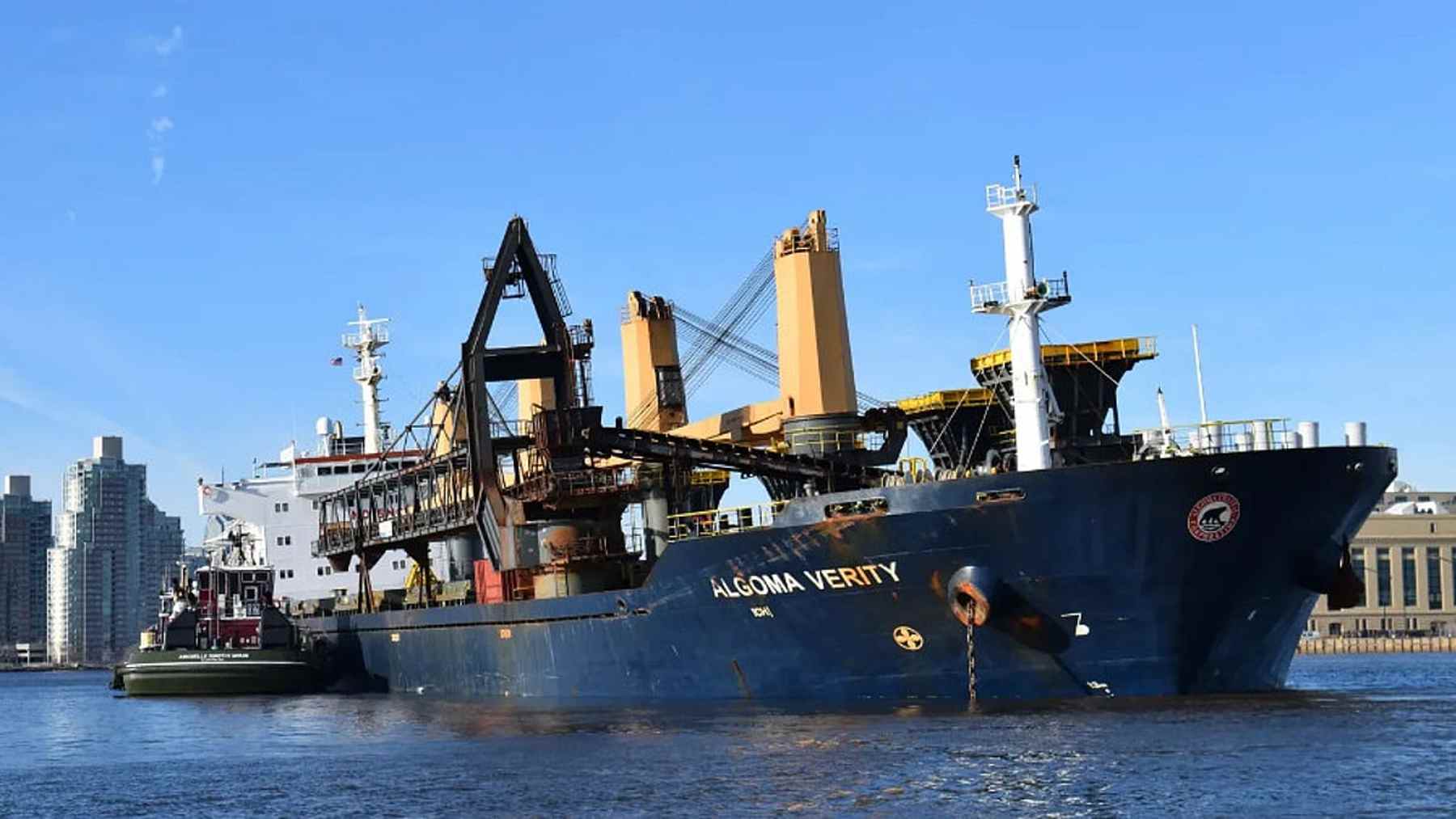
The evening of January 8 started as a routine run up the Delaware River toward a terminal well north of Philadelphia.
A 623-foot bulk carrier was hauling salt north through the dark water, a licensed river pilot at the conn.
At 6:13 in the evening the ship touched bottom.
Fifteen minutes later it touched again, harder, and stopped.
Nobody was hurt. But three days passed before the vessel moved again, and the damage estimate ran into the millions. What put a modern ship on the bottom of one of the country’s busiest commercial waterways was not a broken part.
How the pilot’s mental model steered the ship
The Delaware carries a flooding tide that pushes water upstream, and pilots lean on that push when working a heavy hull through bends. The ship had held about 12 miles downriver from Philadelphia, waiting for tidal conditions so it would have a slack or high tide when it reached its terminal about 22 miles upriver near Fairless Hills. The plan was ordinary. The help the pilot was counting on never fully arrived.
The actual tide level was 1.7 feet, significantly lower than the predicted 3.6 feet, which meant the current was likely weaker than the pilot anticipated. The pilot expected the flood current to push the ship toward the port side of the channel, leading him to overcompensate by staying to the starboard.
Investigators identified expectation bias as the likely driver: by their definition, it “occurs when a person responds in a way that is consistent with what they expect” rather than what is actually happening. The mental picture of the transit, not the water, was steering.
A difficult ship on a tighter than expected night
The vessel was a modern self unloader bulker, designed to move its own cargo ashore through internal conveyors and a swinging boom. It was carrying approximately 45,000 metric tons of solar salt and had a draft of 38.5 feet in a river channel 295 feet wide and 40 feet deep. That left very little water under the keel even when the ship was exactly where it belonged.
The first pilot reported the ship was handling like a deep draft vessel and warned the second pilot, who took over the trip, that it needed a lot of rudder to steer and that turns should be started early with the swing checked early. The second pilot told investigators he found the ship difficult to handle.
That combination narrowed the margin for error considerably. A deep hull, a tight channel and a current behaving unlike the forecast leave almost nothing for a correction aimed the wrong way.
Fifteen minutes and two groundings
The sequence was quick and hard to interrupt once it began. During the 18 minutes the ship transited from the Benjamin Franklin Bridge to the first grounding and on to the second, its heading never appreciably moved to port, with the exception of when the escort tug was pushing on the bow.
The ship first ran aground briefly at 6:13 p.m., then became stuck again at 6:28 p.m. The first grounding occurred less than half a mile north of the Ben Franklin Bridge, outside the channel, with the vessel coming to a complete stop on the second touch.
Internal inspections revealed that the bottom shell plating was ruptured, allowing water to flood four ballast tanks and one fuel tank. The Bahamas-flagged carrier was refloated on the incoming tide three days later and moored at Tioga Marine Terminal at the Port of Philadelphia. No pollution or injuries were reported.
What the river hides and what the report found
The final marine investigation report, issued in March 2026, put the case plainly. Investigators determined that the probable cause of this Delaware river grounding and the subsequent re grounding was the pilot maneuvering the vessel outside the channel into shallow water, likely because expectation bias led him to overestimate the current’s effect on the bulker’s movement. Damage to the vessel was estimated at $6.6 million, with 31 people on board and none hurt.
The report also faulted bridge resource management: poor communications among the bridge team were cited as a contributing factor. For a parallel look at how a single miscalculation compounds quickly, the incident where ramps gave way under a boiler on a canal bridge near Nancy shows how fast rated capacity becomes irrelevant once a variable changes.
The official report is worth reading in full for anyone who works on or around moving hulls.
Why a working method still put a ship on the bottom
This incident sits in a category that is genuinely hard to prevent with a single rule change. The mechanism is not a missing procedure but a working one applied to the wrong night. The pilot followed the logic of previous transits on that river, and the river declined to behave the way the tables said it would.
The remedies named in the report are unglamorous: training that reinforces active questioning of factors in the operational environment, recognizing conflicting cues and clear, unambiguous communication, all components of effective bridge resource management. The challenge of reading a moving environment under time pressure connects this grounding to a broader pattern, and even a pilot boarding a vessel faces risks that shared, spoken awareness helps reduce.
River pilots guide ships past this same stretch of the Delaware constantly, reading tide tables, watching the depth sounder, talking to the bridge team. Most nights the prediction and the actual river surface agree closely enough that the difference does not matter. The January evening this ship touched bottom was a night they did not.


