
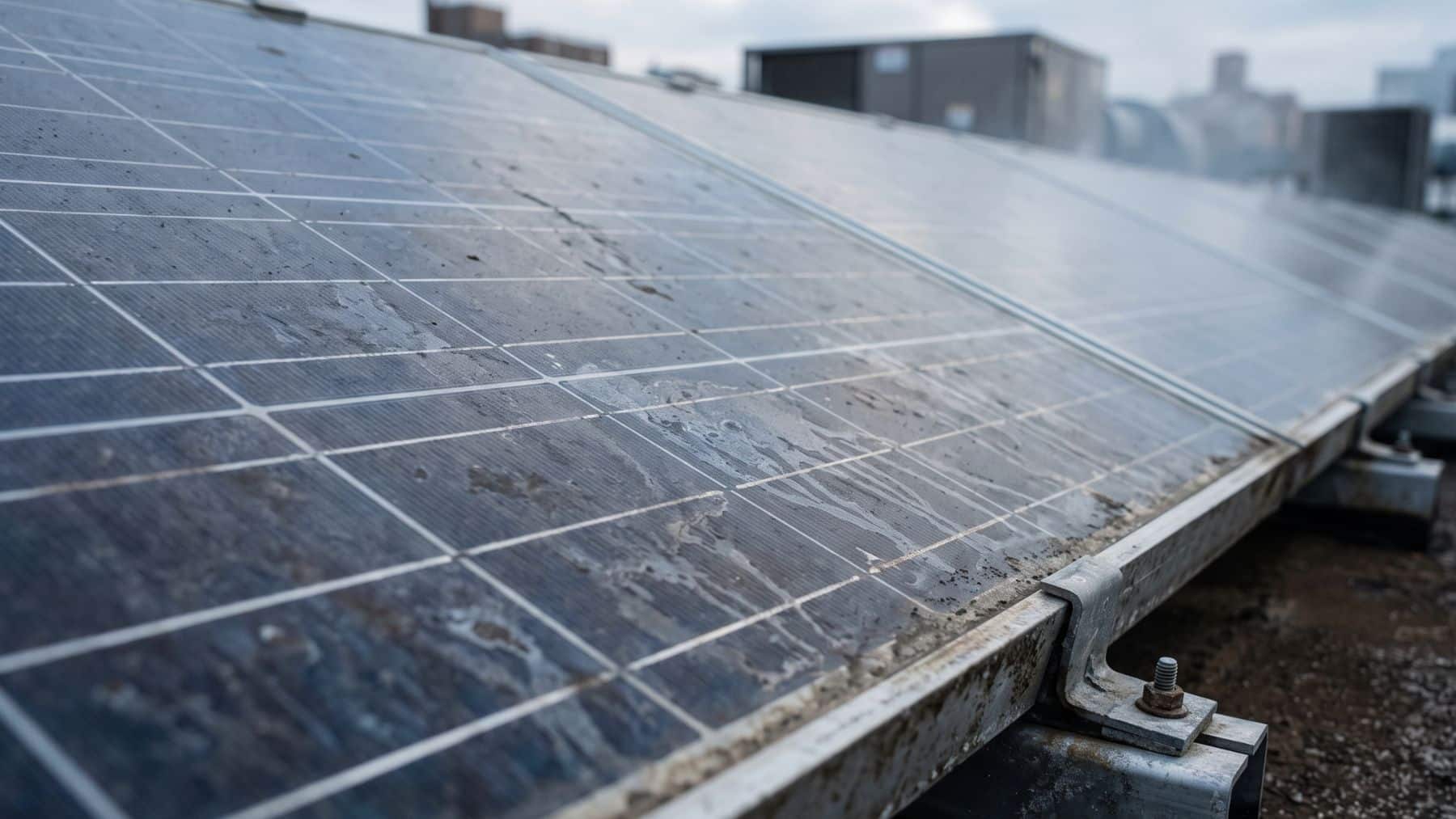
The installer drives away, the app shows green, and the first kilowatts roll in from a brand new rooftop array.
It feels like the start of 25 years of free power.
But something is already happening inside those panels, a chemical reaction that no salesperson ever mentions, and it begins the moment sunlight first touches the silicon.
The surprising part is not that panels age slowly over decades.
The surprising part is how fast the clock starts, and what is actually doing the ticking.
The number on the box is not the number you get
Every panel ships from the factory with a power rating stamped on its spec sheet.
A 400 watt panel is tested under perfect laboratory conditions: stable temperature, precise light angle, no wind, no dust.
The roof outside your window is none of those things.
Because real conditions differ from laboratory conditions, panels produce less output than their stated efficiency rating from the very first day.
That gap between the sticker and reality is not a flaw.
It is simply physics meeting the real world, and it sets the stage for something stranger still.
Something shifts in the first few hours
Inside a standard silicon solar cell, there are boron atoms.
Boron makes the cell conduct electricity the right way, and for decades it has been the backbone of the most common panel design on the market.
But boron has a flaw that only shows up once sunlight arrives.
Light induced degradation is a reduction in photovoltaic efficiency that occurs in the first hours of sun exposure, and it can reach losses of 1 to 5 percent in crystalline silicon panels following installation.
The culprit is a reaction between boron and oxygen trapped in the silicon wafer.
When photons strike the cell, boron oxygen complexes form stable defects that cut cell efficiency.
The panel did not break and nothing went wrong.
The chemistry simply settled into a new, slightly lower state, and it will stay there for the rest of its life.
Then comes the long slow slide
After that first year drop, the panel finds a steadier rhythm.
NREL studies show modern solar panels lose between 0.5 and 0.8 percent of their power every year.
Half a percent sounds like almost nothing, but it compounds year after year, the way a small leak in a roof adds up over a wet winter.
Climate accelerates the process.
Degradation averages around 0.5 percent per year in temperate climates and can exceed 0.8 percent in hot arid climates, where thermal cycling and UV damage take a heavier toll.
A homeowner in Phoenix and a homeowner in Seattle buying identical panels on the same day will own very different systems by year fifteen.
The real number after 25 years, and why it still surprises people
Here is the reveal most buyers never hear when signing the contract.
A panel losing 0.5 percent yearly will keep about 87.5 percent of its original output after 25 years.
A panel that made 300 watts on day one would still generate around 262 watts.
Manufacturers typically guarantee 90 percent of original capacity for the first 10 years and 80 percent for the remaining 15 to 20 years, so a panel can lose a meaningful slice and still sit inside warranty terms.
A major study covering 25,000 inverters across nearly 2,500 sites in 37 states found a median performance loss of 0.75 percent per year, higher than many sales estimates suggest.
And newer technologies bring their own wrinkles: P-type PERC cells can suffer light and elevated temperature induced degradation, with losses as high as 6 percent in the first year alone.
Solar farms that manage degradation carefully have shown remarkable results, much like the Minnesota sites that turned bare ground into thriving prairie under their panels.
Even floating arrays have surprised engineers, the way a Dutch lake project turned lifeless water into a habitat teeming with hundreds of species.
What this actually means for your roof and your savings
None of this means solar is a bad deal.
Panels from the 1980s tested recently show many still operating above 80 percent of original output after 35 to 40 years.
The 25 year figure is a conservative warranty period, not a physical lifespan limit.
Size the system slightly larger than your current need and factor in the first year dip when you calculate the payback period.
Ask for the degradation rate in writing before signing anything.
If your monitoring app shows a year over year decline greater than 1 to 2 percent, schedule a professional inspection, since infrared thermography can reveal hidden hot spots invisible to the naked eye.
The panels on your roof are not failing.
They are doing exactly what physics promised, aging slowly, still working hard, and on a long enough timeline still delivering genuine savings.
The only surprise is that nobody told you the clock started the instant the sun came out on installation day.


