
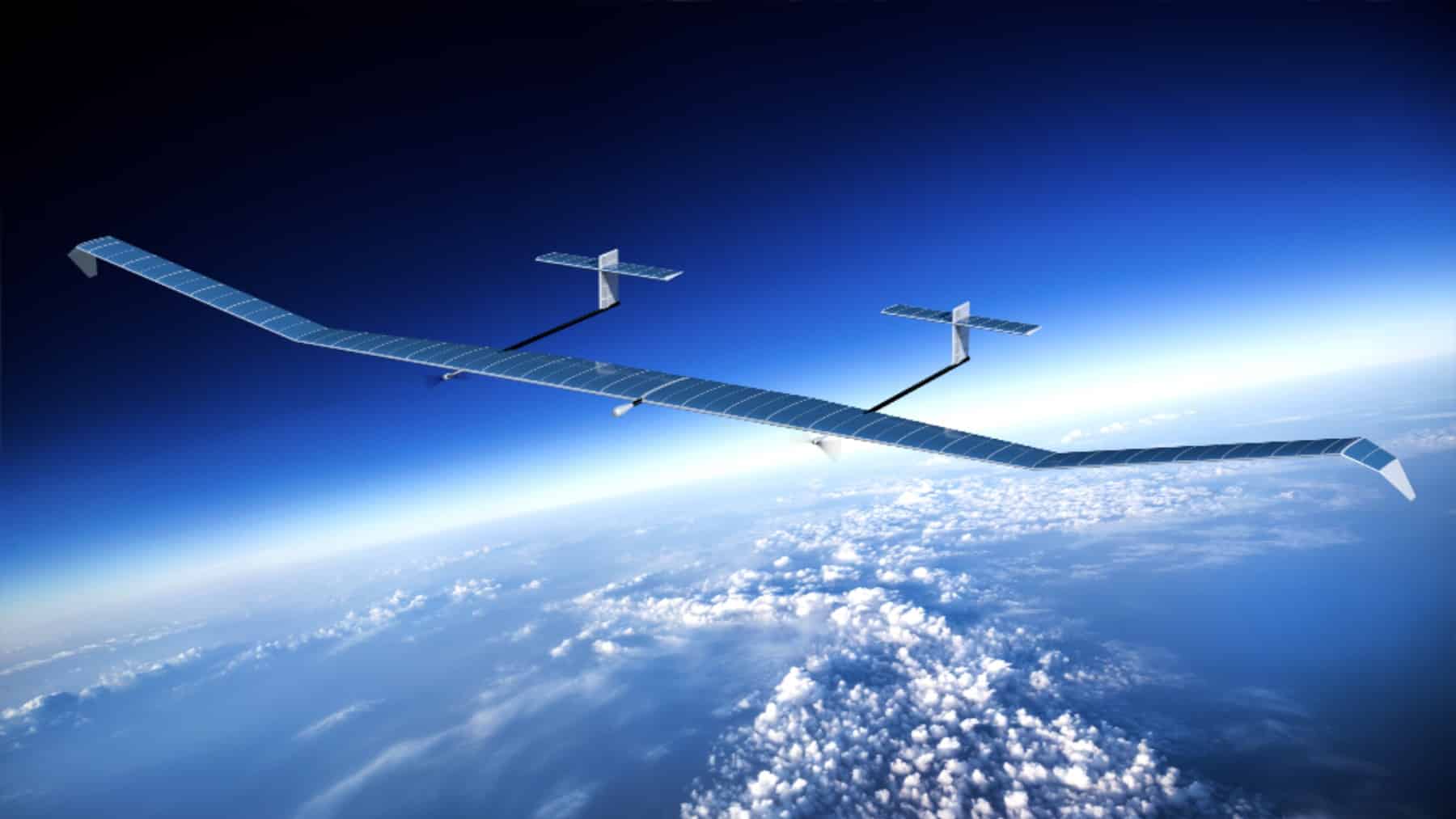
Nations across the globe have experienced the dire effects of climate change, such as long-lasting droughts and agricultural stress. Several industries are significant contributors to climate change, including the aviation industry. Now, thanks to the UK’s solar-powered plane, traditional aviation may never be the same again. This plane can stay aloft for months, becoming a second sun over Britain. Find out today how this innovative design works and how it addresses the disadvantages associated with traditional aviation.
It could be the end of traditional aviation
With the entire world under pressure to keep carbon emissions as low as possible, several innovative companies have developed ingenious designs to meet climate targets. One futuristic design has mind-boggling results and may even revolutionise traditional aviation as we know it. In the UK, this development will be particularly beneficial, given the numerous disadvantages associated with aviation.
According to a report by Greenly, there are significant environmental concerns associated with aviation, which include, but are not necessarily limited to:
- High emissions
- Aviation has a significant greenhouse gas emission rate
- Ever-increasing impact
- Emissions are exponentially increasing due to a high per-passenger emission rate
Now, all of that could change thanks to the UK’s solar-powered plane.
The UK’s solar-powered plane that can stay aloft for months
Aviation enthusiasts will know that Airbus is the largest civil aerospace company in the UK. One of its many subsidiaries includes AALTO, which is responsible for the design, manufacturing, and operation of the UK’s solar-powered plane, also known as the Zephyr. The Zephyr is a High Altitude Platform Station, or HAPS for short.
The Zephyr’s goal is to provide persistent, high-resolution earth observation together with Airbus’ Strat-Observer services, as per Airbus. This solar-powered plane is equipped with secondary batteries, which recharge during the day. Its endurance enables it to stay aloft for months in the stratosphere, where it operates above weather and traditional air traffic.
This plane has been developed in collaboration with the U.S. Army. The UK is in favour of teams lately, as the UK and China teamed up to create a ‘secret car,’ showing that it’s best to stay busy in both the skies and the roads. However, some might say it doesn’t come close to the Zephyr’s mind-boggling results
Mind-boggling results of the Zephyr
According to the American Composites Manufacturers Association (AMCA), the solar-powered plane has broken a record by achieving an uncrewed flight duration of 42 days. However, the Zephyr has other impressive key features as well, which include:
- Operation above 60,000 feet
- Day and night endurance in the stratosphere
- Ability to serve as a sky tower due to its connectivity payload
- Its low-latency connectivity has a coverage reach of up to 7,500 square km
- Carbon-neutral due to its solar energy system
- Ability to carry payloads of up to 50 pounds at 70,000 feet altitudes
Its utilisation as a communications relay platform could be lifesaving. According to Samer Halawi, the Airbus HAPS Connectivity Solutions CEO:
“Our connectivity services will provide a viable alternative and complement to terrestrial and satellite-based connectivity solutions, allowing for the first time low-latency and direct-to-device connectivity across vast geographies, and economically. Our sustainable technology allows us to save and improve people’s lives whilst ensuring a better outcome for our planet.”
The UK’s solar-powered plane is a highly innovative and revolutionary design, marking a significant breakthrough in the aviation industry. Should this design be scaled up, we could truly be saying goodbye to traditional aviation sooner than we may have thought. Mobility has also undergone some changes, especially in racing. The hydrogen screamers’ lineup aims to rewrite the future of F1, proving that the world is moving forward to more sustainable and eco-friendly solutions, one step at a time.
Disclaimer: Our coverage of events affecting companies is purely informative and descriptive. Under no circumstances does it seek to promote an opinion or create a trend, nor can it be taken as investment advice or a recommendation of any kind.


