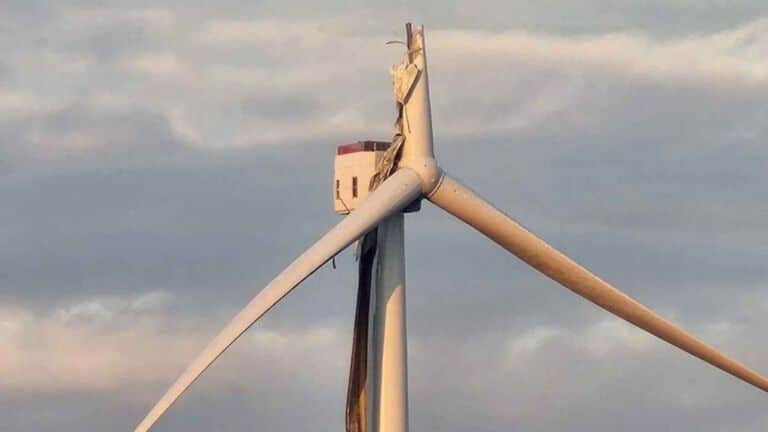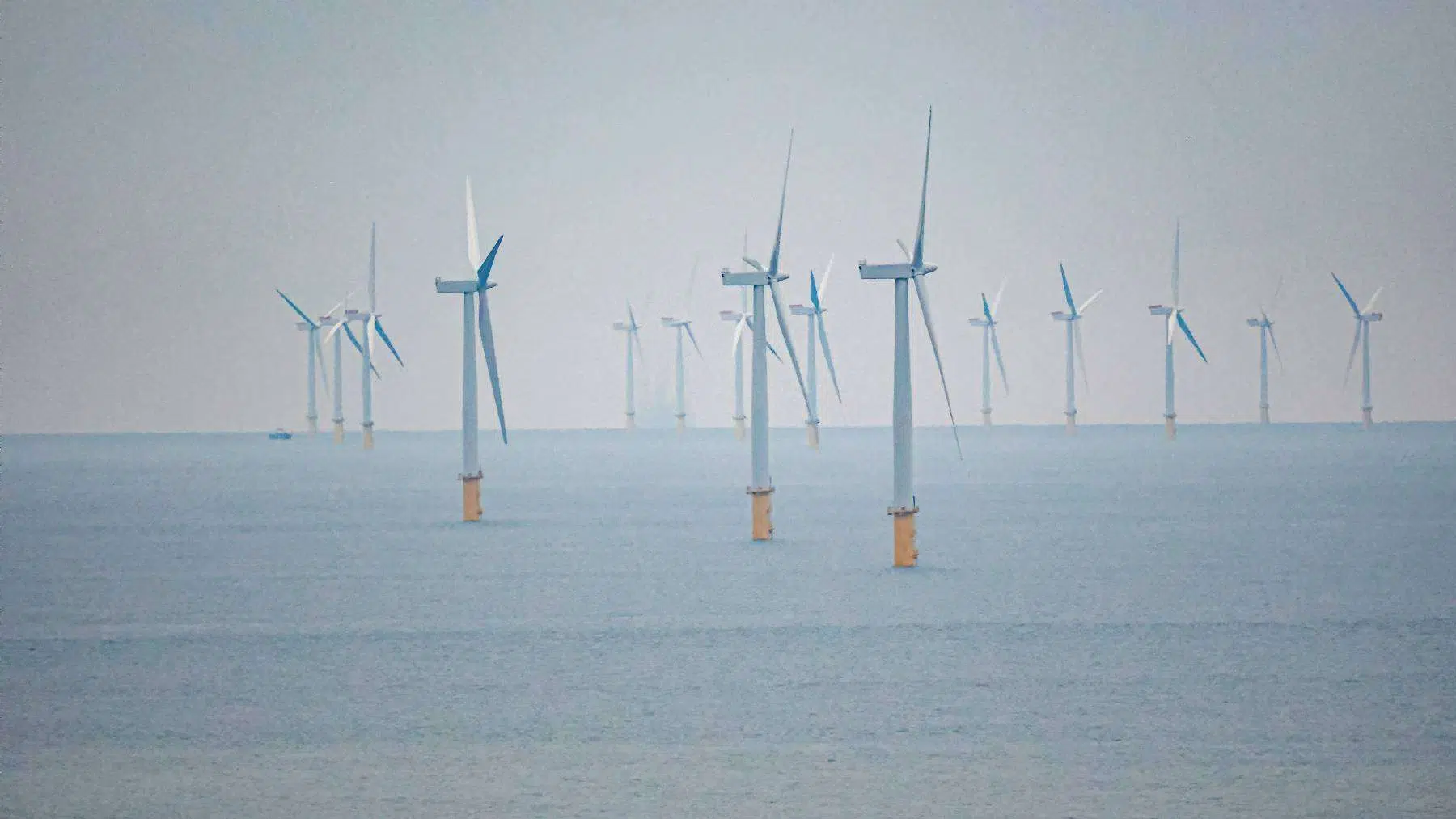
A major offshore wind farm is going up 27 miles off Virginia Beach. Workers are based on support vessels as they hammer 176 steel foundations into the ocean floor.
There is a specific strategy involved, with a double set of air bubble curtains encircling each pile to shield marine life from the construction noise.
Acoustic monitoring reveals a specific outcome. What effect are the bubble rings having on the underwater ecosystem?
How pile-driving creates acoustic pollution
Each steel cylinder needs heavy hydraulic impact hammers to drive it deep into the sediment, and the force required is massive. The impact creates shock waves that radiate outward into the waters of the Atlantic Ocean.
Whales, dolphins, and sea turtles live in an underwater world based on sound. Acoustic cues are how they navigate, source food, and communicate.
The noise caused by turbine construction disrupts these signals in a large radius around the site. At close range, the spikes in pressure can lead to temporary hearing loss or even physical injury. At longer ranges, fish and marine mammals are driven away from their feeding grounds.
From a depth of 85 feet, the sound does not only radiate horizontally. It spreads and bounces between the surface of the sea and the seabed, and the whole water column vibrates with acoustic energy.
A barrier of engineered air to save fish from construction noise
Contractors are using a fleet of specialized support ships with heavy-duty air compressors to muffle the sound of the hammering. On the decks, multiple high-capacity diesel compressors are connected to reels of hoses.
The sections that are deployed underwater are perforated along their length, then placed onto the seafloor to encircle the location of the foundation.
There are three types of hoses needed to create the bubble barrier. The buoyant supply hoses are placed along the surface from the ship’s air manifolds. The vertical riser hoses are used to transport the pressurized air to the floor. Then, long nozzle hoses drilled with evenly spaced small holes are positioned around the turbine foundation in two concentric rings.
Before hammering is allowed to begin, the compressors pump air through the lines until they are fully pressurized. Coastal Virginia Offshore Wind explains that the result is streams of dense bubbles emerging from the perforations and rising through the 85-foot seawater column. Two vertical walls of air are generated around the pile.
Frequency limits and seabed signals: Some effects cannot be controlled
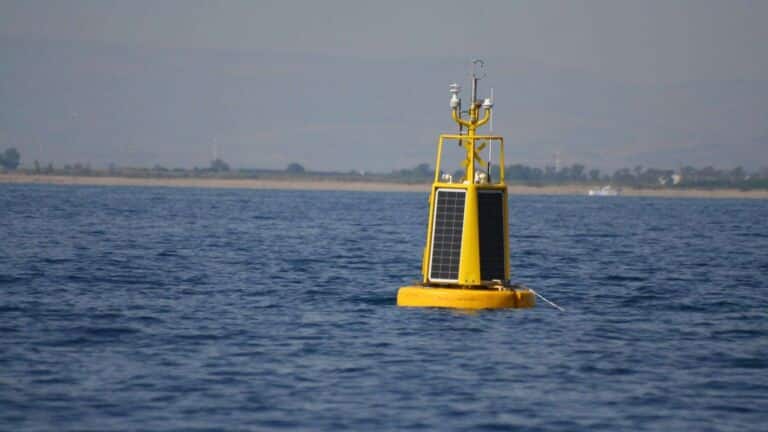
Hydrophone data recorded from pilot turbine installations shows exactly what the bubble walls do.
The air bubbles create a boundary of lower density in the water column, reported by the Pacific Northwest National Laboratory. When sound waves hit this barrier, the density change absorbs acoustic energy and reflects pressure pulses back toward the pile.
Measurements reveal that the bubble curtain is most effective at longer ranges, specifically two to five miles away.
It also works best on high-frequency noise above 200 Hz, where much of the sharp, damaging impact sound occurs.
There are seismic forces at play
However, underwater acoustic sensors also documented a major physical limitation. The bubble curtain only stops sound traveling through the water column. A significant portion of the pile driver’s mechanical energy enters the ocean floor directly, traveling through the seabed as seismic waves.
Seafloor geophone arrays recorded these ground-borne vibrations and confirmed that the bubble curtain provides zero attenuation for energy moving through the sediment.
While the double bubble curtain muffles sound waves passing through open ocean water, it leaves seabed vibrations completely unchecked.
For coastal installations, protecting ocean life requires managing two distinct environments: the water above and the earth below. As the effects become better understood, the future may see a new system to mitigate the seismic vibrations as well as the acoustic ones.
Read the whole thing?
Get the week's signal, not the noise
Our sharpest reporting on energy, climate and nature — free, once a week.